Showing posts with label friends. Show all posts

5.06.2025

The Curse of Creativity

Creative folks are some of my favorite people. I love artists. My dad is a woodworker, my mom a crafter and clothing maker. One of my aunts makes and sells handcrafted stuffed animals, and another aunt produces multimedia art combining photography and painting. One of my best friends is a DJ and a dancer. Throughout my adolescence and early adulthood, I surrounded myself with thespians and musicians. These are my people. As a writer and a DJ, I understand other creatives much better than humans with no artistic outlet.

When my wife and I first started dating, her artistic flair was one of the traits which attracted me to her. She was a photographer and photo editor. We knew early on in our relationship we would be able to work on our crafts separately together - independent in each other’s company. It was a beautiful symbiosis. Over time, I’ve discovered she’s more than a photographer. She’s also a painter and a jewelry maker.

As we are settling into a new house, her creative mind is overclocking. She is an overflowing fountain of decorative ideas: furniture and room colors and flooring and paint and … A couple weeks ago, she saw a picture of a mural painted in someone else’s home then decided she would do something similar in our living room. After receiving zero objections from me, she’s begun the project, still a work in progress. Last weekend, we bought a $5 end table at Habitat for Humanity and set it up in its desired location. Later that evening, she insisted we epoxy it to match the mural she’s painting. It’s now a swirly blue table and looks great.

She has a dilemma though. Her fount of ideas is relentless. It’s a never ending stream of consciousness with no off switch. I hear her say the words “What if we” at least a few times daily. These plans and thoughts and dreams erupting from her cranium are wonderful and delightful. Unfortunately, there isn’t enough time in the day to make all of her artistic longings become tangible.

I have similar struggles. As someone who has studied history and possesses an autistic knack for pattern recognition, it’s hard to watch the news and not guess what’s coming next. Sometimes my predictions are wrong - see my previous blog post for an example. But I can’t make it stop. My brain is wired to analyze if/then scenarios and morph those into digestible stories for others to consume. My furious creativity doesn’t cease at sociopolitical precognitions either. Any time I attend a baseball or hockey game, my brain constantly sorts through my internal jukebox to conjure which songs would better fit the moment than the songs selected by the stadium or arena’s in house DJ. And my writing … book ideas are piling up in the notes app on my phone and I know I’ll never live long enough to author all of them.

This is the curse of creativity. We are imaginative 24 hours a day. When we wake, when we sleep. When we struggle, when we thrive. Our brains are constantly visualizing new worlds, new words, new images, new melodies, and new possibilities. We can’t quit; it’s a part of what makes us who we are. To complicate matters - we all have day jobs. At least, those of us who haven’t retired have day jobs. Time card punches don’t stem the tide of creative musings. We get new ideas nearly all day every day. Some of us manage it better than others, and I am not one of them. But I try. My notes are meticulous and abundant. Book ideas, reminders to add certain songs into specific playlists, and board games I want to buy for family game night, I keep a record of it all. The noise never ends so I channel it as best as I can.

If this sounds like you, fear not. You are not alone. The curse of creativity is accompanied by a life of beauty, wonder, and awe. It might be devastating as much as it is comforting. In the creative curse you’ll find catharsis, healing, confusion, and purpose but only if you allow it. To thrive as an artist, you must always be ready because inspiration may strike at any (and often peculiar) moment.

My brother-in-law lives with us. He’s got a multitude of disabilities which prevent him from living independently. My wife is his caretaker and he’s our third wheel. Caring for and about disabled individuals can be frustrating so I attempt to have as much fun with him as possible. One of my methods to enjoy time together is to call him silly names. When I wake him up in the morning, or call for him to get shoes on so we can go somewhere, or bring him his bedtime snack, I’ll call him something absurd.

“Hey nacho cheese … ”
“Hey Larry Curley and Moe … ”
“Hey Macarena … ”
“Hey there Delilah … ”
“Hey Steven Michael Montgomery … ”
“Hey turducken … ”
“Hey spic n span … ”

Sometimes he’ll laugh. Sometimes he says “Stop iiiiit.” Sometimes he’ll let me know I scared him. Regardless his reaction, I always get a smile - enough to make the effort worth it.

Last night, with a banana in my hand, I approached his room intending to say “Hey dune buggy” but there was a short circuit between my frontal lobe and my lips because what I actually spoke did not follow my plan. When I say inspiration can appear at the strangest moments, the interaction with my bro-in-law last night is proof of concept. I blurted out some gibberish twist on dune buggy when the moment arrived. I handed him the banana while my hippocampus lit the beacons for Gondor. As I walked away pondering my verbal blunder I thought, “That would be a great name for the main character of a novel.” I unlocked my phone, opened the notes app, and created a reminder of an epic character name I need to use some time in the future.

What’s the name you ask? Well, an author needs to keep some secrets. I wouldn’t want to ruin the surprise.

3.11.2025

The Tolerance Paradox

It’s an accusation I’ve heard several times, almost always from conservative people when they’re called out for bigoted statements or behavior. Perhaps I’ve heard this statement more than most people because I’ve thrust myself into peculiar social circles. Yet it remains ready on the lips of the alt-right and self proclaimed white nationalists.

Boogie men (and women) lurk in the shadows and around every corner for these people. Their beliefs in superiority influence their thoughts and actions. It is their perception of liberals tolerating the things they hate which makes their protest ever more believable. In their minds, tolerance is the main tenet of liberalism. Therefore, any criticism of their beliefs from a liberal person is a display of intolerance out of step with the assumed progressive ethos.

I make no claim to being the representation of everything liberal. Some might call me a zealot but I aim to be more pragmatic in my approach of my personal politic. My bend to progressivism is rooted more in religious imperative than social preference. Considering the region where I live and the leanings of my family, it would have been easier for me to have remained a conservative, resting in the comfort of religious right spaces. Instead, I entered the narrow gate at a terrible cost of ridicule, isolation, slander, and abandonment.

Take my perspective for what it is: an observation. I speak for myself and actual validity among others from the left end of the political spectrum will vary.

The word “tolerant” is a bit misleading. Sure, I know many progressives who pride themselves for their tolerance of minorities whether it’s based on race, religion, or sexuality. But even for then, tolerance isn’t their true intention. They strive for acceptance. They accept queer folks, immigrants, people of color, Muslims, migrant workers, and any other marginalized community. They see the value and beauty in these underrepresented populations and tell them, “You’re welcome here.”

Those harboring bigoted ideals see this loving tolerance from progressive individuals and assume “If they tolerate that person and their deviant ways, they must tolerate me too.” Then they spout off something offensive and cry victimhood because their terrible perspectives weren’t tolerated.

Pure tolerance creates a paradox. It is impossible to be tolerant of all people in all situations because showing tolerance to some automatically treats another with intolerance. Sometimes it’s necessary to pick a side; choosing tolerance for one defaults to oppressing the other.

I’ll start with a completely neutral example. Nobody watches a boxing match and says “I hope they both win.” Such a declaration is absurd. Someone has to lose. It’s OK if you don’t know who to cheer for but you can’t expect two people to repeatedly punch each other and both walk away winners.

What if you have an islamaphobic person spreading anti-Muslim rhetoric? If I chose to tolerate their voice, I would be intolerant of Islamic people. And by default, tolerating the Islam faith means I’m intolerant of anyone who hates Muslims. I can’t play both sides.

This idea that our every thought (no matter how vile) must be tolerated flourishes on social media. We get caught up in the intoxication of reactions and replies. It feeds our dopamine addictions and fuels our selfish needs for admiration. The moment anyone responds critically or expresses disgust, our brains instantly feel discomfort. We have a biological need to explain anything that doesn’t fit the pattern of our preconceptions. One objection to our lesser id breaks away from the solidarity we crave so we rationalize it as someone being intolerant of our values. Someone utters “you probably shouldn’t say that” is met with “respect my freedom of speech.”

There’s irony when intolerant people demand tolerance.

Let’s be real though, I am not a tolerant person. I’m not tolerant of people who brand my disabled friends as lazy. I’m not tolerant of people who promote Russian propaganda. I’m not tolerant of people who describe everything they don’t like as woke. I’m not tolerant of gay jokes. I’m not tolerant of incels. I’m not tolerant of clergy who abuse women and children under the guise of godly authority. I’m not tolerant of people who think drag queens are more dangerous than automatic weapons. I’m not tolerant of book banners. I’m not tolerant of anyone who believes vaccines cause autism.

I am accepting though. I accept my queer friends and family members as wonderful people who were fearfully and wonderfully made. I also accept a homophobic individual’s rights to hate the LGBTQ community. I will not tolerate their bigotry though. I accept women’s place as equal and deserving contributors to all levels of culture. I also accept a misogynist’s grasp on patriarchy. I will not tolerate their arrogance though. Damn the man. I accept the diversity and strength of my non-white friends, celebrating their color and their cultures. I also accept a racist’s predisposition toward racism. I will not tolerate their prejudice though.

A chasm exists between tolerance and acceptance. You can’t tolerate everything but you can accept all things. Acceptance is possible for the people you love as well as the people you loathe. You can accept viewpoints conflicting with your beliefs. You can accept the practice of any religion, any gender identity, any education level, any political party, any national origin, and still not agree with them. It’s called being a decent human being. But I guess that’s considered “woke” these days.

11.01.2024

The Thing I Fear

For as long as I can remember, I was warned the Democrat candidate for president is the Antichrist. The earliest I remember hearing this is when Michael Dukakis won that label during his campaign against George HW Bush. Four years later, Bill Clinton was the new Antichrist, a claim I heard over and over for the next eight years. Through studying history, I’ve learned this phenomenon isn’t exclusive to my lifetime. John F Kennedy was also a target of Antichrist conspiracies. The same accusation was later levied against Al Gore then John Kerry.

By 2008, things changed. Discussions about the Antichrist running for president were no longer restrained to gossip in church hallways - it spread on the internet. Meme culture and Photoshop transformed Barack Obama into more than a rumored Antichrist into a visual representation of the satanic beast. Evangelical ministers were preaching warnings of Obama’s Antichristishness and posting videos of their sermons to YouTube. The unholy nature of Barack was a topic of conversation everywhere on social media, chat rooms, and message boards. Someone even published a book about it.

Internet amplified the religious fear mongering. It plagued Hillary Clinton and Joe Biden. You can even buy yard signs that say “Biden & his crime family are the Antichrist.” It’s now being applied to Kamala Harris – most recently demonstrated by David Rem at Trump’s Madison Square Garden rally last weekend.

It’s not true. None of it is. Sure some of these people have done things that conflict with Christ’s teachings or defy evangelical morals, but these people were not and are not THE Antichrist. So why did this happen? Why has the name Antichrist been bestowed upon every Democrat presidential candidate of modern times? Simple. One word: control.

This employment of fear has been ingrained in evangelical culture for longer than I’ve been alive. My dad told me stories of apocalyptic preaching and doomsday prophesies at revival services from his youth. I grew up with the threat of hell looming over me every time I dared question Sunday school lessons or denominational doctrine. I was raised in a constant state of terror, instilled with a belief dancing, uttering a curse word, watching an R rated movie, or a single sip of alcohol would topple me into a downward descent into eternal condemnation. This fear was used to control my behavior, programming me to dress a certain way, to talk like they talk, act according to expectations. Cloneliness is next to Godliness, right?

Fear arouses our fight or flight responses. It’s supposed to be a survival instinct, compelling us to act in times of danger so we might live to fight or flight another day. Do you know what happens when your formative years are spent in a in a constant state of agitated fear? Your psyche gets stuck in constant readiness to flee or do battle, your amygdala hyperactive in waiting for peril. Paranoia consumes you. Every criticism feels like a personal attack. You see boogie men around every corner. Any diversity of thought is a threat. Suddenly it makes sense any politician who doesn’t align with your moral compass becomes the antichrist and voting for them would be a one way ticket to the bowels of hell.

This perpetual horror isn’t healthy. It’s not good for our souls. It’s not good for our mental health. It’s not good for our spiritual communities, our workplaces, or our government offices. Fear is, as Frank Herbert wrote in Dune, the mind-killer and the little-death that brings total obliteration.

This year’s election feels different than times past. It seems as if everyone is scared – not just evangelicals. Liberals believe Donald Trump is a wannabe dictator intent on overthrowing the US government so he can rule like his friends Vladimir Putin, Xi Jinping, Kim Jong Un, and Mohammed bin Salman. Conservatives believe Kamala Harris is a demon and the Antichrist hellbent on sacrificing newborns, forcing children to get gender reassignment surgeries at school, replacing white people with illegal immigrants, and murdering Christians en masse.

The anxiety is palpable. Everywhere I go, I hear people expressing their fears about next week’s results. These worries range from understandable to absurd yet it seems everyone is afraid of something.

I still believe in a God who is love and that perfect love drives out fear. Yet I must admit I’m a little scared. Try as I might to do as the Bible teaches and cast my worries at the feet of my savior, I can’t escape the stressful and unanswerable questions of what will happen once all the votes are counted.

To clarify: I’m not afraid of history repeating itself. Records have shown humanity (collectively speaking) is not adept at learning from our mistakes. Dooming ourselves to failure is practically inevitable so this doesn’t scare me.

I am not worried a second Trump term will bring about the end of America. Empires rise and empires fall. If it doesn’t happen now, it will eventually.

I’m not worried Trump will blame a potential loss on cheating or fraud. He did it four years ago and he’s already laying the groundwork to do it again. Why be scared of something that is guaranteed to transpire? Likewise, I expect a repeat of the January 6th attacks if Trump loses. I know this so I’m not afraid.

Trump has said he’s going to use the full force of law enforcement to target his rivals and critics. Since I’ve often criticized Trump, that means I could be arrested and imprisoned as a dissident if he wins but even that doesn’t scare me. I know that if Trump is elected, he will follow the plans of Project 2025, a document that marginalizes people I love and threatens their safety and yet that isn’t the source of my alarm.

I don’t fear my religion being imperiled if Harris wins because I know she has no plans to threaten it. Even if she did, I know God’s got my back. I have faith no weapon formed against me will prosper.

Only one thing scares me and it has been gnawing at me ever since the MSG rally this weekend. I listened to the vile remarks of various speakers. Their words filled with hatred, racism, misogyny, and homophobia. When people say “Trump country” this is the kind of environment accompanying such claim. If Trump wins, I am terrified of what it says about my Christian siblings, my friends, and my biological family. Why? Because if Trump wins, it will be the evangelical vote that carries him to victory.

If Trump wins it means evangelicals love their golden calf more than their savior. If Trump wins it means Christians who supported and continue to support him believe his dishonesty, bigotry, jingoism, criminal convictions, fraudulent activity, and predatory behaviors are copacetic. If Trump wins it means the Christian moral standards are meaningless. If Trump wins it means the ends justify the results – that Christians are perfectly accepting of sin for a season as long as they are able to maintain their grasp on the reins of power.

In the Bible, Amos prophesied to the Israelites during an era similar to what the American church faces now: wealth and prosperity flourished, yet morality was fading fast. The poor were being exploited, the courts were corrupt, government leaders were evil, injustice was widespread, and vulnerable communities were oppressed.

Amos was the prophet of social justice. He condemned dishonest business practices, unfair wages, religious hypocrisy, and unethical treatment of others. He encouraged people to care for the less fortunate members of society and he demanded opposition to injustice, oppression, and exploitation of all forms. It is Amos who said “Let justice roll like a river, righteousness like a never failing stream.”

Jesus preached similar commands, most famously when he divulged the greatest commandment: to love God and love others. Jesus also commended those who fed and clothed the needy, provided hospitality to strangers, cared for the sick, and visited those in prison. He said “whatever you did for the least of these, you did for me.” He condemned anyone who withheld service and support for those in need or imprisoned.

Elsewhere, the Bible instructs its readers to do justice, love mercy, and walk humbly. It repeatedly instructs care for orphans, widows, and refugees. A thoughtful and diligent analysis of biblical teachings would reveal aid for underprivileged and marginalized people to be a primary focus of Christian faith. It would show an impetus to place the needs of the least of these above your own.

A Trumpian victory would demonstrate a modern church who places their own needs above the weak and needy. It would spotlight a church which perpetuates the cycles of injustice, exploitation, corruption, and oppression. It would expose a religious lust for power defiant of God’s commands. It would be an evangelical middle finger held high in the face of people Jesus commanded us to love.

This terrifies me.

As we wrap up the election season, I have an important question for my fellow Christians: who benefits from your vote? I’m not talking about the candidates, it’s obvious the person you vote for benefits if they’re the winner. Rather, who benefits from electing that person? If the people who benefit from your vote are people who look like you or people who share your beliefs, you’re misunderstanding the call of Christ to care for the least of these.

For me, I’m done believing the Democrat candidates are the Antichrist. I’m done falling for the cheap lies and fear mongering of those who are scared of losing power. If I take my faith seriously (which I do) I will follow the self-sacrificial call of Jesus and cast a vote that benefits those who have been persecuted and marginalized.

This is the path of Amos. Damn the man.

8.22.2024

Grounding

Something interesting happened at San Diego Comic-Con. The cast of Fantastic Four: First Steps graced the stage as a part of Marvel’s big presentation. That’s normal though. Nothing spectacular in what Marvel doing what they have been doing for more than a decade. The most intriguing moment is what transpired while they were on stage. During the F4 segment, actor Pedro Pascal had a moment of panic and reached out to touch the arm of co-star Vanessa Kirby. Understanding what was happening, she took hold of him and the two continued hand in hand.
To the inexperienced eye, this might seem like an innocent gesture, perhaps even romantic. After all, they do portray a married couple in Fantastic Four. It wouldn’t be the first time an onscreen couple developed a real life relationship. However, those of us who battle anxiety, depression, PTSD, and/or autism witnessed something familiar. We recognized the change in Pascal’s demeanor. We watched as one moment he was smiling and totally fine then a second later he most definitely was not fine. His look of panic has also flashed in our eyes. Sometimes for obvious reasons but often without cause. As we’ve struggled with mental health, we have faced occasions where our amygdala short circuited and triggered our fight or flight instincts. One second we’re OK then the next we need something to bring us back to earth.

Pedro Pascal has been open about his mental health struggles. He’s admitted anxiety being a part of his psyche since he was a child. In press interviews and red carpet events, you’ll often see him with his left hand over his chest, a coping mechanism he’s learned to keep himself centered. In extreme moments of panic, he needs to hold someone else. Not inappropriate touching condemned by HR offices everywhere, but a steady and platonic grasp - like holding the hand of a colleague. Vanessa Kirby understood the assignment and allowed Pascal to ground himself through her.

Unfortunately, the trollish side of the internet is mocking the situation. Some are claiming Pascal’s experiences with anxiety are fantastical inventions of his imagination. Others are saying it’s a sign of weakness. Meanwhile, I’m over in my corner of the universe with nothing but respect for Kirby and Pascal. One human in crisis expressing their vulnerability, and another human reciprocating their need with kindness. I have never wanted to be friends with Pedro Pascal more than I do now.

If the toxic half of the internet could shut up for a few minutes, there’s a couple lessons we could learn from Pascal’s interaction on the Comic-Con stage.

First: depression, anxiety, and trauma do not discriminate. It can strike anyone from any socio-economic class. It doesn’t care about your politics, your race, your gender, or your religion. No amount of success, wealth, fame, or acclaim can protect you from mental illness. It strikes rich and poor. It affects beautiful people as much as the ugly dudes. It weighs on the hearts and minds of CEOs and janitors. It is a curse upon the righteous and the unrighteous. And here’s the weird one - even happy people can struggle with depression. I know, because I am one of those happy depressed folks.

Pedro Pascal has a career many actors envy. He’s been the lead actor in celebrated franchises for Star Wars, DC, Marvel, Kingsman, Game of Thrones, and The Last of Us. He’s won a Screen Actor’s Guild Award, two MTV Movie & TV Awards, and a People’s Choice Award. He’s been nominated for Golden Globes, Emmys, Teen Choice Awards, and more. He’s universally loved and respected by those who work with him. He’s made enough money to retire comfortably. Yet despite all his successes, accolades, admiration, and popularity he still battles anxiety.

The other moral of Pascal’s time at Comic-Con is the importance of grounding. Electricians know grounding as a safety method of connecting a powered system to the earth. The therapeutic definition is much the same, but instead of electrical components it connects humans to the terrain. Grounding grounds us. In the simplest sense, grounding is nothing more than touching soil. Walking barefoot through grass or along a sandy beach, wading into a lake or river, lying down in a field or meadow.
One of my favorite podcasts shared a story from a listener who overcame a phobia by grabbing a handful of dirt and allowing it to fall through her fingers every time she had a fear induced panic attack. I have a therapist friend who advocates taking your shoes off outside at least once a day to improve your mood. I’ve even discovered an odd calmness after running my fingers through needles on boughs of pine, fir, cedar, and spruce trees. Psychologists and patients in treatment have praised the use of grounding to treat a wide variety of both mental and physical conditions: depression, anxiety, PTSD, insomnia, hypertension, and chronic pain. It’s not a cure for anything, but it’s an excellent boost when in distress. Kind of like a shot of espresso for a sleepy driver in the middle of a road trip.

Another form of grounding is human contact. My dad preaches the benefits of a good hug. As for Pedro Pascal, finding balance is as simple as holding someone else’s hand. There are times when the feel of the earth isn’t available, no forest or beach or lawn near enough to touch. In those moments, what you need most is the gentle kindness of someone else’s grasp.

It is my hope if you ever find yourself in a time of suffering you have someone like Vanessa Kirby near you, a person understanding and willing to hold your hand to steady your nerves and anxieties. I pray I never reject the needs of a fellow human when their emotional state necessitates a stable platonic touch.

8.14.2024

Bless the Artist

In the process of deconstruction, my relationship with the Bible changed. It evolved out of necessity. While some people deconstruct to get away from God, I deconstructed to follow God. I had to figure out how I could still take the Bible seriously when the loudest Christians around me (including many who taught me biblical lessons when I was a child) were not living the way scripture says they should.

How could I believe in the Jesus of the gospel when so many Christian influencers portrayed him to be a gun-toting, power-hungry, hate-filled, bro-dude wearing a red hat? How could I follow the texts so many of my elders claimed to be the exact voice of God when those same leaders actively defied the instructions contained in those supposedly sacred words? How could I embrace Basic Instructions Before Leaving Earth when much of the religious right wants to use it as a weapon to harm and control people I love?

This was not an easy exercise. It wasn’t (as celebrity pastor once Matt Chandler called it) a sexy thing to do. Deconstruction is often lonely and terrifying. It is painful and difficult. You lose friends, confuse family, and get ridiculed by the church faithful. In the end, you hope to find truth and freedom but those elements come with a cost. It changes you.

I won’t bore you with the step by step details of how I arrived at my renewed fondness for scripture. Instead, I’ll share the end result because it is (in my opinion) more stunning than anything I was taught in childhood Sunday School.

When I began this journey, I already knew the Bible was a collection of books: stories, poems, letters, records, and law written by at least 40 different authors over a time span of fifteen centuries. I understood every author wrote these books for a specific historical audience for a very distinct reason. It would be foolish to believe we (modern peoples) were the target demographic for these biblical writers. To better understand scripture, you must discover why the stories were originally told.

As I researched a way to answer this question of why, I began to see a pattern, an ongoing theme. Yes, it’s about Jesus. And yeah, it’s about how all these individual authors related to God. But there’s more. My faith was revived when I realized the Bible – start to finish – is a story of creation.

Most church folk will tell you the creation story is the first chapter of Genesis but it stops there. That can’t be it though. As you read the Bible (all of it and not just the parts that make you feel good) God is constantly doing something different. God is relentlessly creative. Sure it starts with creating something from nothing – the heavens and earth, the times of day, birds and fish, all of the animal kingdom, and people created in God’s image. After resting on the seventh day, God had more to accomplish. God wanted to make all things new.

The word “new” appears 280 times in the Bible (NIV translation), and you see this newness everywhere. When Adam and Eve left the garden, they were given new instructions separate from the rules of Eden. After the flood, God did something peculiar – a divine assurance was made, something not done by any other gods worshiped by humans. When God called Abraham, there was a promise a new nation would come from Abraham’s descendants. When the Israelites left Egypt, they were given new laws and new territory. God installed new leadership, new judges, new kings, and new prophets to lead the new nation into a new way of existing. The prophet Isaiah quoted God as saying “behold I am doing a new thing … making a way in the wilderness and streams in the wasteland.” When Jesus came, God established a new covenant. Jesus regularly spoke about new things. He told the crowds “You’ve been taught to do this, but I tell you something new and better.” He demonstrated a new way of living. At the end of his life, Jesus told his followers to change their focus from the nation of Israel to all nations. Peter was given visions which convinced him to break old laws and traditions in favor of something new. Paul was given a new name and a new profession. In his letter to the church in Corinth, he said we are made new creations in Christ. He told the Galatians church old traditions didn’t matter - what mattered is the new creation. The author of Hebrews detailed a new way of doing religion, a way we could approach God directly, making the old rituals of the high priest obsolete. And the book of Revelation foretold of a new heaven and a new earth.

This is beautiful to me. If God is real, then God is a creative God. If God is real, then God makes all things new. This is something I can believe in. This is something worth living for.

In the gospels, Jesus told his followers “If you believe in me, you’ll do the work I’m doing - and you’ll do even greater things.” To believe in Jesus, who Christians claim is God in human flesh, to follow him we will do what he did. To follow the footsteps of someone who taught new things and new ways, we must do the same. Jesus gave his followers instructions to continue God’s work of creation. Creating something new is perhaps the most holy thing a Christian can do.

So God bless the artist, the sculptor, the painter, the doodler. God bless the storyteller, the novelist, the raconteur, the poet, the bard. God bless the singer of songs, the vocalist, the rapper. God bless the musician, the instrumentalist, the producer. God bless the rhythm maker, the drummer, the beat boxer. God bless the photographer, the videographer, the audio engineer. God bless the crafter, the woodworker, the jewelry maker. God bless the actor, the actress, the costume designer, the director. God bless the artist.

Now ...

6.18.2024

Wedding Professionals

This is me and my friend Syafiq. Both of us are DJs. He’s a dance instructor and choreographer who’s just started officially working as a day-of coordinator. I’m a licensed minister. Naturally, our skill sets place us in the same universe. If you ask my teenage daughter, she’ll tell you Syafiq and I have the same vibe.
selfie courtesy Syafiq Fuller

We live in the world of weddings. If you’re getting married and need an officiant? We got you covered. Need a DJ for the reception? That’s us. Need someone to teach you to dance so you look like you know what you’re doing during your first dance? Syafiq is your man. Want help writing custom wedding vows? I can do that. Need someone to keep everything moving and organized? We’re available for hire. Taking it a step further - we both take pictures during our gigs which we give our clients for free as an added little bonus.

There’s something about the public display of love and commitment that fuels us and the music we play heals us. We love celebrating love. And that’s what we do at Fuller Entertainment. (Shameless plug: you should follow us on Facebook and Instagram.) If you or someone dependent on you is getting married, we’d love to hear from you.

It’s more than a wedding thing though. We are also available to play music for school dances, corporate events, private parties, religious celebrations, family reunions, bars, and coffee shops. As for the ministry side of things, if you want someone to officiate a comic book or ren faire themed wedding I’d be happy to help. Because I’m a geek and us nerds deserve love too.

And it’s still more than that. The real reason I’m writing this is because Syafiq is a great dude. He’s was the best man at my wedding and is one of the best men I’ve ever known. If it wasn’t for him, I wouldn’t be a DJ. Working with him over the years, I’ve learned a lot about his heart and what makes him tick. The compassion he possesses bleeds into everything he does. His goal as a DJ has also become my goal - to lift up and encourage others. We look for clients who ooze positivity. When we recommend photographers, stylists, and caterers, we suggest people who also believe in hope and promote humanity’s better nature. We aim to work with clients, venues, and other vendors with a spirit of collaboration. When a gig is over, we want to be able to tell everyone involved we look forward to working with them again - and be sincere in that statement.

This world is ugly and bitter enough as it is. Neither of us wants to contribute to the proliferation of selfishness and greed rampant in our culture. It might be the harder path to take but we would rather be a light in the darkness. This ideal has been hardwired into Syafiq’s fiber ever since the day I met him. He’s an amazing friend and I’m honored to share his business adventures.

For real though, we’d love to be the DJ and/or minister at your next event.

3.15.2024

The Disconnect and Ties that Bind Part Two

My maternal grandfather was genealogist. He started while he was still a teacher but his hobby became his passion after retirement. Not only did he track his own heritage as far back as he could go, he also studied the family trees of his kids’ spouses. He was fascinated by the family lineages of everyone he met. Thanks to his efforts, and the stories told by my paternal grandmother, I know as much about my family as possible.

I know my roots. I feel it in the lyrics of My Culture when Maxi Jazz raps, “Like a lifeline, I light lines ‘cause my compassion is deep for the people who fashioned me, my soul to keep and this is who I happen to be. If I don't see that I'm strong, then I won't be. This is what my Daddy told me, I wished he would hold me a little more than he did. But he taught me my culture and how to live positive. I never want to shame the blood in my veins and bring pain to my sweet grandfather's face in his resting place. I made haste to learn and not waste everything my forefathers earned in tears for my culture.”

From a passenger on the Mayflower, to Norwegian immigrants joining early settlers in Minnesota. The German, Irish, and Scottish ancestors. My distant Samoan cousins. Forefathers (and foremothers) who were farmers and pastors, advocates and survivors. Their stories twist my DNA and flow through my blood.

I know who I am. And yet, I don’t.

Comprehension of names, birthdays, occupations don’t tell a complete story. There is a limited amount to be learned from marriage licenses, immigration papers, and death certificates. I strive to leave a legacy worthy of my family but they are not my tribe. When my parents got married in the early 70s, they began a westward migration. I grew up completely disconnected from my heritage. Between my dad being a workaholic and our family living below the poverty line I barely knew my aunts, uncles, and cousins. I rarely saw my grandparents. My familial tribe had communities in Cheyenne and Oklahoma while I was the left coast stranger in the Emerald City suburbs.
image courtesy of the City of Marysville

My being is more defined by coming of age as a Seattleite during the grunge era than by my heritage. There’s a playlist in Spotify serving as the soundtrack to my life which will tell you more about who I am than you could learn from anyone sharing my surname or my mom’s maiden name. Separated from those clans, I had to find my own tribes.

I’ve been pretty open about the state of my childhood. It was not an enjoyable experience. I am still struggling with the trauma of being a bullied kid, of poverty, of undiagnosed mental illness, of religious fundamentalism. Finding my tribe was not an easy task.

On a five hour road trip with my dad last summer, he admitted his greatest fear while I was a kid was that he’d lose me. Which brings me back to the 1 Giant Leap song. In the second verse, Robbie Williams sang, “Hello Dad, remember me? I'm the man you thought I'd never be.” Then continued, “I'm the one who you told look don't touch. I'm the kid who wouldn't amount too much.” My parents didn’t think I’d ever be much of anything because they didn’t know if I’d survive long enough.

My father is a smart man. He could see my symptoms of depression before I recognized them myself. He knew the degree of which I was bullied and abused by my peers and didn’t know how to help. He watched as I slowly faded into the background and was terrified I’d become a suicide statistic.

I was raised in the boys will be boys era. When the kids who got their asses kicked were given the same punishment as the kid who dealt the ass kicking. When autism and neurodivergence were woefully misunderstood and under-diagnosed. When kids with learning disabilities were treated like bad students. When kids were better seen and not heard. When terms like nerd and geek were still vindictive insults. And I suffered all of it. If you ask my wife, I bear the scars and some of the wounds have yet to heal.

The saddest aspect of my lonely story is how the one place that should have been safe for me, the place that should have been most welcoming was just like everywhere else. My church should have loved me the way I was, the way God created me, but they could be just as hostile and ostracizing as the kids at school. Nowhere was safe.

So I found my tribe with the freaks and geeks, the outcasts and underdogs, the athletically un-gifted, the last ones picked, the tortured geniuses, artists and music makers, agents of chaos, the misunderstood wanderers, and anyone who never fit in or felt like they belonged.

A funny thing about life stories: they don’t always follow the hero’s journey. Life isn’t a three act play hitting all of the beats of plot and structure. There are unexpected turns warping our expectations. As the adage says: truth is stranger than fiction.

The church youth group of my youth wasn’t the happy home it should have been, but it was still home. No matter how desperately I tried, it was clear I was never going to be a part of the in crowd. However I was still in the crowd. Years, distance, and education have provided me a new perspective on this weird little tribe of teens inside our religious subculture. I am much more forgiving these days and a lot less desperate to fit in.

Because humans are tribal by nature, we always look to the best and strongest and bravest to lead and protect. In our strange tribe, that bigger stronger leader was never going to be me. It was a sociological impossibility. I was short, uncoordinated, poor, not conventionally attractive, and socially awkward. I was a weird little dork. Through time and space I’ve also come to realize the teasing they foisted on me wasn’t all mean spirited. Obviously some of it was, but some of it was good natured too.

I no longer blame them for their cruelty. It’s hard being a teenager. While I wasn’t like them, according to science we were identical. We were undergoing physical and neurological changes, our brain chemistry and hormone levels were constantly in flux, the rules transitioned from how we were treated as children to the way we would be treated as adults, culture around us was shifting throughout the 90s. We were all trying to find our place while figuring out who we were and how we related to each other all at the same time. It would be unrealistic to expect any of us to navigate such a confusing era with grace and perfect kindness.

Looking at that time of my life in the rear view mirror, once again I feel disconnected. Because I left. I got out. I moved away. All of those kids who were once my church family are practically strangers. They’re now pastors, teachers, missionaries, community leaders, realtors, mechanics, engineers, and doing their own things with their own families.

I don’t miss being the weird kid. I don’t miss the way my peers treated me like I was a second class citizen. I don’t miss being overlooked and maltreated. But I miss them. I miss the community we had. Despite the pain they caused me, I love these people dearly. In the midst of what was a tumultuous time of my life, my happiest memories all involve my youth group tribe. I will forever be bound to them through the shared experiences of our formative years.

Every now and then, I wonder if it would be feasible to get the old gang back together again. For us to collect in one place one last time. Jimmy and Sue. Kari and Dan. Shane. The twins. Megan. Nikolai. Pike. Nettles. Jennifer. Travis. Erin. Marcus. The younger siblings (Chris, Nathan, Adam, and Chad). Perhaps we could gather together a Dennys, order coffee and fries, chat for hours, then leave our tip among the avant-garde displays made from salt, pepper, ketchup, and coffee creamer. Like we used to do.
Sure, such a reunion is logistically impossible. But it could be fun. I am curious what it would be like to see them all again. If for no other reason, I’d want to do it for my culture.

3.14.2024

The Disconnect and Ties that Bind Part One

In the earliest records of human history, people formed in tribalistic cultures. Families, tribes, sects, and clans. Every ancient society on every continent has documented their beginnings in small groups warring over limited resources of food, water, clothing, and shelter. Whether nomadic or settled, humans coalesced into factions based on shared values and lineage.

For thousands of years, humanity flourished in tribalism. This gave us the epic tales of folklore. In them we find the gods and legends of Egypt and Greece; tales of heroes and dragons; adventures, explorers, Vikings, and warriors. The earth experienced plagues and cataclysms, but its inhabitants endured because their tribes were united with common purpose.

Neighboring populations didn’t always get along so the survival of our clans depended on the biggest, the bravest, and the strongest among us to lead, guide, and protect us from those who wish to do us harm. We looked to the smartest and most beautiful to continue our bloodlines. We created popularity contests out of necessity because their success meant we could live and hopefully thrive.

From the indigenous populations of Australia and America, to the biblical Israelites, to the Chinese dynasties, to the feudalism of Western Europe, we found our identities, our health, and safety in the numbers and proximity of our people. Over time, these sects grew. They became villages and hamlets, then cities and nations. Divisions and culture formed around heritage, religion, geography, language, mythology, tragedies, kings, and lords.

Then something funny happened. The Industrial Revolution made life easier. Citizens of industrialized countries migrated from agrarian lifestyles to urban developments. As culture modernized, we lost the need for strength and courage to survive. We no longer needed the muscles and calluses of manual labor to tend to our own crops. The talent and focus needed to stitch fabrics together became a hobby instead of a mandatory skill. We could get the food and clothing we needed from markets and mercantiles.

Who needs to build their own hoses when specialized laborers could do it for you? Who needs giants to protect us when the government has armies? Who needs a bodyguard when you can buy your own weapons? Why protect your outskirts with roving bands armed with spears and swords when walls and secure border crossings will work more efficiently?

The neighboring towns were no longer rival clans, they were fellow countrymen. Our enemies were further away. The ever-present dangers and perils of pre-industrialization was a thing of the past. We were new people with modern needs and worries.

However, our tribalism was still hardwired into the human brain. Our communities might not need to bond they way we once did to survive, yet the human spirit still craves the bonds of community. Without the impetus for a tribe that lives together and fights together, we created new tribes with different purposes. The popularity contests continued in different domains.

Middle school cliques, political parties, college alumni, fraternal organizations, religious denominations, athletic franchises, MMORGPs, artist co-ops, book clubs, chosen families, and countless other ways we can find a way to say “these are my people, this is my tribe.” Our clans are bigger than they used to be. We can find kinship with strangers thousands of miles away. We can bond with individuals we may never meet in ways completed foreign to our ancestors.
Image courtesy of Lukas Zischke

Even though we no longer need the smartest and strongest to lead us, we still seek them out - even if we don’t know them personally. We find our leaders in hero worship, celebrity gossip, reality TV, social media influencers, and ballot boxes.

Modern civilization is completely disconnected from how we functioned for millennia. At the same time, we are bound to the ways historical cultures shaped our brains. Try as hard as we might to escape our past, the past is never truly dead.

Because my brain thinks through a filter of movie quotes and song lyrics, it is music which helped me comprehend our anthropology. My Culture by 1 Giant Leap featuring Maxi Jazz and Robbie Williams specifically speaks of this connection between our heritage, our biology, and the functions of modernity.

“I am the sum total of my ancestors, I carry their DNA. We are representatives of a long line of people and we cart them around everywhere: this long line of people that goes back to the beginning of time. And when we meet - they meet other lines of people. And we say: bring together the lines of me.”


I will remember.

5.16.2023

Be Weird

Do you remember the first time you realized you were weird? I do.

It happened during the 1983/84 school year and I was four years old. My best friend in preschool was a kid named Marcus. While I thought I was friends with all of the kids in our class, Marcus was the only one who really treated me like I was his friend.

Show and tell was always a highlight - being able to see all the cool stuff other students brought. Their swag was always so much cooler than anything I had to share. Marcus proved it one week when he brought in the Millennium Falcon play-set. It was the big one that opened up and had space to stand action figures inside. It was so large he had to carry it with two hands.
photo courtesy Kenner


My mom and aunts took me to the theater for a Return of the Jedi showing the previous summer and I thought it was the best movie ever. I was obsessed with Wookiees, Ewoks, Sarlaccs, and Kowakian monkey-lizards (Salacious B. Crumb was my favorite character).

The most exciting Star Wars toy I owned was a speeder bike that exploded into four pieces when you pushed a button behind the seat. Then my best friend walked into our classroom with the most epic toy my young brain could have imagined. I was legitimately jealous. When it was his turn for show and tell that day, I spoke the word that Keanu popularized a decade and a half later. “Whoa.”

Was it really that awesome though? I thought so. And Marcus was proud of it. Unfortunatly, we were the only two students who had positive feelings about the Millennium Falcon. The other kids in our class were unimpressed. When our teachers asked if anyone had questions for Marcus, I was the only student to raise a hand. No one else cared. I watched Marcus deflate, his pride slowly evaporated.

These days, the same toy now sells for anywhere between $300 and $400. In hindsight, Marcus and I knew something about the magic of a galaxy from a long time ago and far far away. We were ahead of our time. Or rather, we were geeks out of place. Return of the Jedi might have been the most popular movie of 1983, but in our conservative evangelical ran preschool in our corner of suburbia, being a Star Wars fan made you a weirdo.

Marcus’ anticlimactic moment in the show and tell spotlight was the first time I realized I was weird. All our peers disapproved of his special interest except me. If he was weird for what he liked, then I was weird too.

Countless interactions with my church peers throughout my childhood and adolescence reconfirmed my oddities. I was the short kid, uncoordinated, and the last one picked in all of our competitive games. I was the theater geek, the quirky and socially awkward kid, the only one in church who read comic books. I was the lone fan of science fiction, fantasy, and horror. I was never elected into the leadership team even though I was one of the few kids who showed up to every event, entered every talent show, played every puding-through-the-nose game, attended every camp and retreat, and participated in every work and witness trip. By the time I graduated high school my role of the outcast was clear, I would never be a part of that inner circle.

Marcus was still around, as weird as always. But he was at peace with his weirdness. He found a way to lean into it and embrace it. He knew the cool kids in our youth group would never accept him, and he didn’t care. He and I walked away with his preschool show and tell defeat with different lessons. He was determined to never let the opinions of our church peers bother him again, while I desperately and fruitlessly sought their approval. It would take me another two decades to find the happiness in weirdness Marcus developed as a teenager.

Grandpa Budd’s funeral was last week. I watched online as Grandpa’s friends and my family entered with a pizazz rarely observed at such somber events. Many wore red clown noses, track suits were abundant, a few people walked into the sanctuary on stilts, and nearly everyone wore bright colors. After the funeral, they held a party with calisthenics and dancing. In the atmosphere of grief and loss, the room was filled with joy and energy. That’s the way Grandpa desired it. He wanted his family to be as loud and as fun as he was.

This is the side of my family who treated me to my first movie theater experience to see Return of the Jedi. This is the side of the family who taught me to enjoy Batman, Star Wars, Lord of the Rings, and The Matrix - but also "normal" things like travel and volleyball. Grandpa was an athlete and educator with an irrepressible thirst for knowledge and a goofy sense of humor. He gave me my passion for continuous learning and my insatiable wanderlust. He also gifted our whole family the freedom to be weird. Or as my cousin Wendy said, “Thanks Grandpa for being a total weirdo and ensuring that your family followed suit.”
photo courtesy my cousin Wendy


My life has been so much better since I learned the skills my friend Marcus and my Grandpa Budd had already mastered. Weirdness is an asset. My family has always been weird and it took me far too long to appreciate it. I’ve always been weird and I wish I gave myself permission to enjoy it sooner.

Be weird. It’s a beautiful thing to embrace your weirdness. If I have one mission in life, it’s to live out my God-given weirdo personality to help others find joy and peace in their own weirdish ways. To help you live weird.


More to read:

Marcus and Black Hole Sun
Marcus and cold weather
Remebering Grandma Budd

3.30.2023

Good Will Through Older Eyes

In the fall of 1997, 18 year old me had this massive crush on a girl I met through church. She wasn’t one of the popular kids from our youth group, a trait we shared. She could have been if she wanted to but I think she didn’t want to be a part of that inner circle. An outsider by choice. We hung out a lot and she was flirtatious. She was one of the few girls at my church that didn’t treat me like I was a weirdo. Did I need a sign to know if she was into me? Maybe. The sign was lit up in neon lights with all arrows pointed at her. If I had asked her out on a date, she would have said yes.

If.

The question of our romance remains hypothetical. A really big if. Why? Because I never asked her out.

The reasons are many. I was young and stupid. Naive. I might have had the ego and invincible arrogance of any normal newly minted adult, but I also struggled with soul crushing insecurity - a malady that would grow into diagnosed depression and anxiety as I got older. While I was 99% sure she liked me and would be willing to date me, that 1% chance was holding me back.
What if I was wrong? What if she wasn’t flirting? What if that’s just her personality? What if there was no meaning to her giggles and hair twirls while she stared at me? What if there was no emotion to the times she touched my arm or placed her hand on my back? Like a criminal trial, there was reasonable doubt. I couldn’t find her guilty of infatuation so I couldn’t sentence her to my adoration.

Like I said, I was young. And dumb.

My best friend, Jeff and I worked at a record store at the time. When the girl mentioned needing a job, I suggested she come work with us. She applied and with a good recommendation from me, she was hired. I was twitter-pated. Now I could see those eyes gazing into my deepest being six days a week instead on once a week. I could have longer conversations and feel her lingering touch more often than I had ever expected. We worked well together, occasionally took lunch breaks in tandem. I’d drop by when I wasn’t scheduled to see if she was still there; anything for a little extra time in her presence. Yet I still never asked her out. This awkward reciprocal flirting and unrequited romantic tension went on for months.

After work on Friday, December 5th, 1997, Jeff and I opened the store. He and I were the only two people employees for the first few hours of our shift. There weren’t many customers visiting that morning, so we had a lot of time to chat and goof off. When he and I talked our conversations were deeply philosophical, even if immature. Our topics usually fell into one of three topics: God, girls, and geekery. After all, we were straight dudes trying to figure out our places in this world. As for the nerd talk, Jeff was the dude who got me into comic books back in junior high. We bonded in high school drama club. We were both fans of horror and science fiction. After graduation, he and I were practically brothers, going to concerts, movies, and poker night together nearly every weekend.

That Friday, the girls topic narrowed down to one girl. The girl. The one I had been enamored with for most of the previous six months. He wanted to know why I still hadn’t asked her out. Even he could see she wanted me to ask her on a date.

I told him I couldn’t. He said I was an amateur. I told him she was beautiful, smart, fun, and different than any girl I’d ever known. He said he’d ask her out for me if I didn’t do it. I balked. I explained she was too perfect and I didn’t want to ruin what I had. He smacked the back of my head and said “Maybe you’re perfect right now” and suggested it was me I didn’t want to ruin.

How do I remember the exact day and date that conversation transpired? Because it’s the day the movie Good Will Hunting was released. After Jeff and I clocked out from work, we drove to the theater in Lynnwood and watched it. That was common for us, catching the movies we were most excited to see on opening night. We did it with everything from The Matrix to The Big Lebowski to The Mask of Zorro.

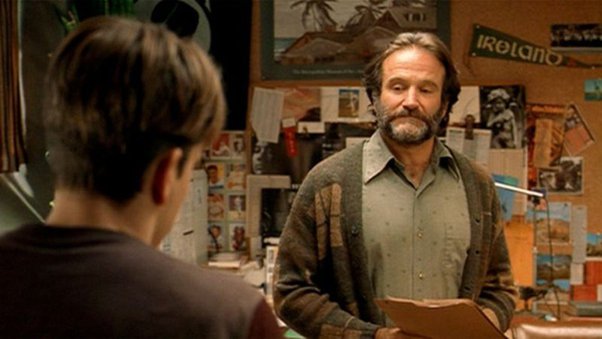
In the movie, Will (Matt Damon) told his therapist Sean (Robin Williams) about a recent date with a girl he liked. Sean asked if they were going on another date and Will said he didn’t know because he hadn’t called her back. Sean called Will an amateur.

Then Will said “Don’t worry about me. I know what I’m doin’. Yeah, but this girl was, like, you know, beautiful. She’s smart. She’s fun. She’s different from most of the girls I’ve been with.” Sean urged him to call the girl. Will continued, “Why? So I can realize she’s not that smart? That she’s fuckin’ boring? You know, I mean, you don’t. This girl’s, like, fuckin’ perfect right now. I don’t wanna ruin that.”

Sean replied, “Maybe you’re perfect right now. Maybe you don’t wanna ruin that. But I think that’s a super philosophy, Will. That way, you can go through your entire life without ever having to really know anybody.”
In the darkeness of the theater, Jeff and I turned our heads to look at each other. His expression matched mine. Jaw slack and wide eyed. Our earlier interaction matched the movie nearly word for word, just with less swearing. It’s as if Matt Damon and Ben Affleck were time travelers and they eavesdropped on our future discussion when writing this scene. We walked out of that theater questioning ourselves. “Did that really happen? Did we recreate the movie before even seeing in it? Was our life imitating art? And how could we recreate art with no prior knowledge of the art we copied?

The movie also made me cry. Seeing Matt Damon break down into tears as he and Robin Williams’ embrace at the end of the film is enough to melt the coldest heart. Good Will Hunting impacted me in other ways. Lines like “How do you like them apples” and “Go with the wrench” and “It’s not your fault” have become permanent parts of my vocabulary. As an autistic person I’ve always used song lyrics, movie dialog, and literary quotes as substitutes for original communication as a way of masking my social awkwardness. It’s called scripting.

It shouldn’t need said, but Good Will Hunting remains one of my favorite movies of all time. I’ve lost count of how many times I’ve watched it.

My oldest son has been struggling lately as he is trying to figure out how to adult. After he got some discouraging news recently, I figured he and I needed a movie night. Something to help him feel better. A reminder that it’s not his fault. Naturally, I chose Good Will Hunting. He’s roughly the same age now as when I first saw the film: halfway between 18th and 19th birthdays. He is, like I was, going through transitions, trying to discover who he is and what he wants from life. Confident yet insecure. Opinionated yet confused.

Thankfully, he really liked the movie. I don’t think my ego would have survived if he said it was dumb. Then we talked for a bit. Thomas already knew about the girl and the saga of me never asking her out. I’ve told him the whole story before because it includes one of the few times I believe I audibly heard God speaking to me. When the movie was over, he asked me if I regretted not asking the girl out, much the same way Will asked Sean if he regretted meeting his wife. I told my son no. I have a lot of regrets, but not asking that girl on a date isn’t one of them. We talked about a couple other things and Thomas let me know he felt better after watching the movie. Mission accomplished.

Aside from getting my son’s impression on one of my cinematic favorites, I also had an unexpected observation about myself.

The first time I watched this movie, I identified so much with Will. Unlike him, I wasn’t abused or shuffled around different foster homes. I had parents who loved me. I was not as violent. I didn’t smoke, didn’t drink alcohol. But I was insecure and angry like Will Hunting. Both Will the character and Nic the kid were well above average intelligence failing to live up to our potentials. I saw him as a more delinquent version of me. Repeat viewings never changed the connection I felt to Matt Damon’s creation. But something different happened last night. For the first time, I related more to Robin Williams character. I felt more like the therapist Sean than the patient Will.
It’s not 1997 anymore. I still need to improve myself. But I’m not the lost, insecure, and directionless kid I once was.

During the same counseling session where Will and Sean talked about Will’s date and the possibility of more, Sean said “You're not perfect. And let me save you the suspense, this girl you met isn't either. The question is, whether or not you're perfect for each other.” I feel this in my soul these days. Annie and I both know we’re not perfect people, but we are perfect for each other.

When Will challenges Sean, the therapist replied, “I teach this shit, I didn't say I knew how to do it.” If there was a line from Good Will Hunting that resembles who I am today, that would be it.

7.21.2022

The Hateful Faith

Growing up as a church kid in the 80s & 90s, I’m aware there are aspects of my youth most would consider abnormal. I’m OK with that. I have come to terms with the weirdness of my evangelical roots. Even though I’ve flown away from the nest, it’s still the beast who raised me.

While rote memorization of scripture is common in many religious communities, mine focused on recalling a select few verses stripped of context and prioritized word for word accuracy over a thorough understanding and the complete text. One of those verses came from the gospel of Matthew: “You will be hated by everyone because of me but the one who stands firm until the end will be saved.”

Unfortunately, like many other things, the focus on this verse was dumbed down and twisted. Many of my youth group peers interpreted it to mean “People hate us because we’re Christians. If people don’t like us, it’s because we’re right!” Rather than using this as a command to relax when mistreated, it became a self fulfilling prophecy. We can see it happening today: Christians who are hostile and rude to nonbelievers then celebrate victory when their vitriol is returned with anger.

“Hah!” They say. “I told you so. See, they hate us because we’re Christians.”

It’s as if those church kids I grew up with wanted their struggle to be against flesh and blood because it’s more tangible than the spiritual forces of evil in heavenly realms described in scripture. I used to hang out with guys who wanted a little more physical combat in their metaphysical spiritual warfare.

By the time I was in high school, I was prepared with years of reminders - they’re going to hate you. I was fully prepared for my non-Christian classmates to treat me like shit because I believed in Jesus.

Then something unexpected happened. The people who supported my faith the most were people that didn’t share my faith. Instead of hating me because I was a Christian, they were accepting of me, as I was, Christianity included.

Against all logic, those who hurt me most were people who supposedly shared my faith. I was never truly welcomed or accepted in my youth group. There, I was a weirdo, the outcast, the last one picked, the often picked on. The churches who taught me we were strangers and aliens in this world made me feel like an alien among them. Those who claimed the banner of Christ acting so unlike Christ.

Being a teenager is confusing for most everyone - my church home made those years even more perplexing for me. I was loved and respected by people who were supposed to hate me, but mistreated by the spiritual family who should have been my safe place.

I still believe following Christ is following an idea that miracles happen. My continuing faith in God is a true miracle as life has given me every reason to run the opposite direction. It’s for this reason I understand how and why anyone else makes that choice.

This has been the heart and soul of my deconstruction. How do I continue to love a God served by the same folks who have wounded me so deeply? How to I practice my faith when those who taught it to me act contrary to the doctrines they gave me? How do I heal from the wounds inflicted by people who should have loved me unconditionally? None of it makes sense yet I’m convinced answers are out there.

Some things never change. 25 years after graduating high school, the harshest and most hateful treatment I receive still comes from Christians. These people tell me to follow Jesus, and when I say I am, they reply “No, not like that.” These people trained me to love my neighbor but constantly remind me which neighbors they don’t love. They instructed me to act humbly while they pursued power. If I say “I love God,” they reply “No you don’t.” I tell them I’m leaving toxic communities and they respond with toxic behavior.

I get it. Deconstruction is the evangelical boogie man du jour. Celebrity pastors (a thing that should not be) rant about it being “sexy” or demonic. Even Christian musicians rant against deconstruction between songs. Speaking of which, when did John Cooper (of Skillet) stop preaching the gospel and become an asshole for Jesus?

These people cause so much pain, division, strife. Yet, if I take my faith seriously, I’m supposed to love them too. I’m obligated to love the friends, coworkers, acquaintances, and former mentors who curse, ridicule, and condemn me. I don’t know of any way to do that except love them from a distance.

My original plan for this blog post was to wrap it up with an observation about the anger and madness demonstrated by Christians in the public square of media and politics. The odium they display doesn’t surprise me because I’ve experienced their ire my entire life. If Jesus told his followers to prove their discipleship through their love for one another, the hateful behavior of mainline evangelicals is anti-Christ. That’s how I thought this post would end. Then something funny happened.

These days, it takes me a couple weeks to compose a blog entry. Writing the first draft, revisions and re-writes, grammatical editing, beta reads and feedback, a final round of corrections and adaptation, finally the selection and formatting of imagery - all before I click the publish button. Somewhere in the middle of this process, I managed to ruffle some feathers on social media because I shared a quote from a Lutheran minister. Predictably, it was my church friends who were most offended. Here’s the quote:

One of the hateful faithful is a former coworker and ex-Mormon. She felt it was her religious duty to rebuke me, condemn me, and eventually unfriend me. The weirdest part of the exchange is how her arguments against me were all built on false assumptions. She kept leveling accusations against me with no basis in anything I said or posted. Those claims she made include the following:
• That I’m violating scripture because I’ve given up meeting with other Christians.
• That I’m ignoring what God is telling me to do.
• That scripture is absolutely worthless to me.
• That I think the church is all bad.
• That scripture has nothing to do with my decisions or ideology.
• That I’m creating God in my own image.
• That I’m looking for the world’s approval.
• That I’m playing the victim.
• That I’m being led by feelings and bad theology.
• That I claim to have access to a higher spiritual plane no one else can reach.
• That my god is myself and my opinions.
• That I’m a part of a cult.


Her crusade against me is as meaningless as it is invalid. But that’s OK, she’s free to believe whatever she wants about me. The timing of her attacks were peculiar though considering I was in the middle of writing a blog about her kind of Christianity. Without realizing the irony of her own behavior, she was proving why I posted what I posted. The Bible told me I would be reviled because I follow Christ and so far, it hasn’t been wrong - even if the hatred is coming from other Christians like my former friend.

What’s the point of all of this? Well, if you tell me you feel like Christians hate you, it’s OK - they hate me too. If you don’t want anything to do with the institutions who claim to be followers of Jesus while acting nothing like Jesus, I get it. Me too. You’re not alone and I believe in a God who loves you even if their followers don’t. And no matter what people think of me or my theology, I will chose to love when everyone else chooses the opposite.

7.09.2022

Life, Liberty, and They’ll Never Take Our Freedom

Earlier this week, we in The United States of America celebrated a holiday indulging the pursuit of beer, brats, and things that go boom in the name of ‘Merica and freedom. Some called it the 4th of July and others called it Monday. My British friends call it Treason Day, but its official name is Independence Day.

After the seemingly unending string of mass shootings, controversial Supreme Court decisions, financial struggles of hyper-inflation, and revelations from the January 6 hearings, I know a lot of people who aren’t feeling patriotic. These events and emotions they stir make honoring the most patriotic of all holidays complicated. I had friends boycott it - not going anywhere or spending any money, no barbecues or fireworks. For those friends, I get it. Other friends decided to trudge on, not allowing the dismal state of our union to derail their traditions. They’ve always blown shit up (often with contraband purchased on reservations and ignited in placed banned by local governments) and will continue to do so. For these friends, I also understand.

This is not an easy era as we’re watching the events of future history books unfolding in real time. Being an American is convoluted right now. Actually, being a human in any nation is messy on its own, but the special mix of jingoism, xenophobia, faux patriotism, oligarchy, religious extremism, and the downward slide into fascism muddies the human experience even more. When it comes to holiday observance, I won’t judge anyone for their revelry or abstinence because there’s a lot of emotion and conflict going into these decisions. I also know it’s possible to be a proud American while being angry about what’s happening in America.

With these mixed sentiments in mind, I sat down Monday morning, opened Twitter, and shared my long winded thoughts which are far too verbose for the character limit of their typical constraints. I had some thoughts about life, liberty, and the pursuit of happiness which needed to be shared. The result was a tweet storm of my own bullet pointed design. These are those thoughts.

1. Freedom isn’t free. There are soldiers who died for it in war. And there are civilians who have died for it in protest. Freedom always comes with a price tag. In America, our freedom was built on the backs of slave labor and broken treaties with indigenous peoples. The scars of these sins are long and terrible, in some ways they still haven’t healed. The reward of freedom depends on what you’re willing to pay. Healing requires acknowledgement and repair. If ignorance or denial of history is your worthless payment, the rewarded freedom will be shallow and superficial.

2. Freedom isn’t universally applied. It seems easy if you’re a straight white Christian male like me. But that’s a vacant freedom. I might be free but what about others? Misogyny is liberty for men but oppression for women. Racism is liberty for the majority demographic but oppression for people of color. Homophobia is liberty for cis people but oppression for the queer community. Capitalism is liberty for the wealthy but oppression of those burdened by poverty. Christian nationalism is liberty for evangelicals but oppression of Muslims, atheists, Buddhists, or anyone of other faiths. How dare I celebrate a freedom not awarded to people I love unless I’m willing to fight for their freedoms too?

3. Freedom is not uniquely American. I’m aware my friends in the UK, Scandinavia, France, Germany, Italy, Australia, South Africa, Costa Rica, and Japan experience freedom too. Even under different forms of government and tax structures, freedom exists outside of the United States. Sure some foreign laws might be more restrictive than in the US, but some of their laws are more permissive. American exceptionalism isn’t patriotic. It’s not even free. It’s a lie and it’s arrogant.

4. Freedom isn’t the liberty to do whatever you want; it’s the ability to do justice when necessary. Sometimes, doing the right thing comes at the cost of self sacrifice. This concept should be familiar to soldiers, first responders, doctors, nurses, and anyone who has ran toward danger to save someone else in peril. Sacrificing my own freedoms for the benefit of others makes me freer. I’m grateful I live in a country that allows me to advocate for underprivileged and underrepresented communities. I might lose friends for taking a stand for equality (wouldn’t be the first time) or piss off people who love maintaining the status quo, but my government can’t stop me. I will be loud when it comes to Pride, anti-racism, neurodivergence, and deconstruction and don’t care if it means you respect me less. That’s the true cost of freedom.

5. Freedom cannot be promised by the temporary. Empires rise and empires fall. As much as I don’t want to live anywhere other than the USA, I’m fully aware this nation could easily crumble. If my hope for freedom rests in the hands of my nationality, then what am I to do if my government restricts my freedoms? Or if my country descends into civil war? Or if my homeland is invaded by a foreign enemy? I do not find freedom in America, I find it in Christ. This is a freedom I believe is available for anyone. From Communist China, to the war-torn Middle East, to favelas in Brazil. I’ve had the liberty to choose this freedom and I know not everyone will make the same choice. Forcing my beliefs on others isn’t freedom either. That’s tyranny. Unfortunately, this is the direction I see America heading. It might be nice for the rich & powerful, but it’s hell for my African American friends, for my brothers and sisters in the LGBT community, for many women I respect & admire, and for people who struggle with mental health.

I love being an American. But I also grieve for America. All these cosplaytriots, MAGA warriors, and religious right extremists are destroying the country I love. They have hijacked my faith to destroy my nation. They’ve hijacked my country to warp my religion. Every day I pray for this madness to end. This is why I am who I am. The scriptures I read says faith without works is dead. Because of that, I cannot rest in the security of my freedoms. I am obligated to support and fight for the least of these. It is my duty to speak up for the voiceless.

My freedom is a commitment. I will not shut up until the American promise of life, liberty, and the pursuit of happiness is afforded to all of my fellow Americans, including those who don’t share my religious beliefs, skin tone, gender, or sexuality.

2.26.2022

The Ongoing Work of Black History and Racial Reconciliation Part Two

“I live in an area with a lot of racism.” This is how he began the conversation, referring to his Midwest residence. He could have removed his hometown from the discussion and his statement would still be true.

The land once occupied by the Aryan Nations is about a half hour from where I live. The region around me has been a safe haven for neo-nazis and white nationalists fleeing Southern California for decades. I know what it’s like to live an area where racism is common. Whether it’s the Midwest or left coast, a hick town or concrete jungle, purple mountains or waves of grain, from sea to shining sea, racial prejudice is an unfortunate stain blemishing the fabric of America. Bleaching it only makes it worse.

This kid (I say kid because I’m old enough to be his dad) and I bonded a couple days earlier while eating lunch and talking about video games. Turns out his little brother is the same age as my oldest son and as I described my boy, he kept telling me “oh my gosh, he sounds just like my lil bro.” When I said Christian’s spirit animal is a sloth, this kid bust up laughing. “Same for my brother.”

His question was genuine. He wanted to know how to handle working with people who don’t like him because of his dark brown skin. “I live in an area with a lot of racism. How do you work in homes where people hate you. I mean, a couple weeks ago we went to this place and they wouldn’t even allow me in their house.”

The person who answered him is of Mexican heritage. Coolest guy in the world: bald and bearded, wears Hawaiian shirts every day, and tells stories the same way Michael Peña does in the Ant-Man movies. He prefaced his answer with assurances as someone who has experienced similar situations. He talked about safety and team support.

My new friend inquired how to behave when confronted with inescapable racism. I wanted to scream at the unjustness of his question. I wanted to say “You shouldn’t have to deal with this. People shouldn’t hate you. It’s not right.”

Life without hatred is a myopic dream. The world as it should be is not the world as it is. In times like these, wishful thinking is as useless as empty platitudes. I couldn’t respond to his valid concern with a fantasy about an equitable America that doesn’t exist. Instead, I gave him what is perhaps the whitest advice I could muster. “Kill them with kindness. Don’t give them any justification for their hatred. If they’re going to spite you, it’ll be because of their own prejudice and not for anything you do.”

Thankfully he understood the point I was trying to make. He’s a good dude and capable of maintaining that goodness in all situations. “I like that,” he said. It’s a shame this kid lives so far away. I could see myself being a good friend, falling into a mentor type of role for him.

I shared a story with him about working with people whose biases I found offensive. When I DJ, I don’t get to choose my clients, they’re assigned to me. A couple days ahead of a gig, I was meeting with bride and groom to talk about their reception party when the groom said something disgustingly homophobic. I walked away from that meeting discouraged I’d be playing music for the guy who hates people I love.

If anything though, I am intellectually consistent. I believe bakeries run by bigoted bakers should have to make wedding cakes for gay weddings. But if the roles were reversed, the baker is gay and the client is homophobic, I think the baker should still have to make the cake for the anti-gay wedding. I might not like this dude’s attitude about the LGBT community but I believe he deserves to enjoy his wedding day the same as anyone else.

Then I remembered something. There’s a PFLAG sticker on my laptop. I was going to show up at a venue with that laptop and play music for a homophobic guy with a sticker on my laptop supporting Parents Family and Friends of Gays and Lesbians. My attitude changed. I stopped feeling like I was stuck with this guy. No - he was stuck with me.

“You’re not stuck with racists." I told my new friend. "You might show up to work in their home but remember you’re doing a job. You’ll be there for a couple hours then you’re gone. You’re not stuck because you get to move on. But those bigots are stuck with you because they need you to do something only you can do.”
image courtesy of Citizen Ed

I’m not naive. I know he’s going to return home and start working with people who think of him as a lesser person because of his skin color. It won’t be everyone. It won’t even be a majority of people. Still, as far as I care, even one home where he’s mistreated on the basis of race is too many. People who hold so much contempt for someone they’ve never met makes me wish their dad was a little more like my dad.

This is why I fight for racial reconciliation.