Showing posts with label rants. Show all posts

4.11.2025

Lord, I pray I’m incorrect, please let my words be wrong.

This is gonna be a long read, but … Hear me out.

But first, a disclaimer. You might not like what I have to say and that’s OK. It is (at least for now) a free country and you’re allowed to disagree with me. A second disclaimer: everything I say could be wrong. In fact, I hope I’m wrong. If I am, feel free to rub it in my face later. Final note: my opinions here aren’t formed from watching too much CNN or MSNBC. I’ve heard that argument so frequently, I startded unfriending people who use it because it’s a cop-out straw man argument from someone whose position is too weak to support itself. Besides, I don’t watch any 24 hour news channels. I’ve formed these opinions from a combination of sources: a lifetime of studying history, reading project 2025, watching the president’s speeches, a list of the president’s campaign promises, historical footage, and court records.

It is my belief Trump has a plan and it has been wildly successful. I know a lot of my liberal friends will not agree with me but it’s true. He might (allegedly) have dementia. He might (allegedly) have an Adderall addiction. He probably is (allegedly) an sociopathic narcissist and a pathological liar. He has a history is saying the stupidest statements in human history. But even with all of that, he’s not as much of a dunce as he appears. He has a plan and putting it into action. So far it’s working.

Now to piss off my conservative friends: none of those successful plans are good. He doesn’t have a plan to save the economy. He doesn’t have plans to bring down the cost of groceries, gas, or health care. He doesn’t have a plan to protect Social Security, Medicare, or Medicaid. He doesn’t have a plan to bring an end to wars in Ukraine or Gaza. He has a plan to achieve his one and only goal: to become the supreme American authoritarian and follow in the footsteps of his heroes: Vladimir Putin, Kim Jong-un, Recep Erdoğan, and Mohammed bin Salman.

Don’t get mad at me for claiming the president wants to be more than president. I’m not accusing him of anything other than what he’s said about himself. When he terminated Manhattan’s congestion pricing in February, Trump himself declared “New York is saved. Long live the king.” In true trumpist fashion, most of his words were typed in ALL CAPS. In December of 2023, Sean Hannity gave a softball interview question hoping to dispel worries about Trump’s increasingly fascist and violent rhetoric. Hannity asked “You’re not going to be a dictator, are you?” Trump could have said no and move on. Instead he said, “No, other than day one.” Obviously this was meant to rile his critics - get them freaking out over his plans to be a dictator for a day. I’ll accept that he spoke in jest, but the best jokes are grounded in a sliver of truth. Heartsong wanted a dictatorship for more than a day, but had to remove the barriers first. That’s been his plan all along and we’re about a week and a half away from the fruition of his work.

Before I explain myself, we need to come to an agreement on one thing. Everyone does everything for a reason. The choices we make, the business we support, the places we travel, the food we eat, the clothes we wear, all of it is done for a reason. We might act out of familial or professional obligations. We might be influenced by our upbringing, our social circles, our religion, our heritage, our traumas, our mental health, or some conglomeration of all the above. The reason I do things are different than yours. Sometimes we agree in our reasoning but sometimes we don’t. Sometimes we understand opposing reasons but not always. Still, there’s always a reason we do what we do. This is true in elections; there is a reason I voted the way I did and a reason you voted the way you did and a reason those who didn’t vote abstained.

Last time I checked, Donald Trump was human. This means he is subject to the rule that everything is done for a reason. Everything he’s ever done had a purpose behind it. From dodging a draft, taking his daddy’s money, discriminating against black tenants, taking out a full page ad in the newspaper calling for the death penalty against five innocent teenagers, bankrupting casinos, cheating on all of his wives, running fraudulent charities and colleges, committing sexual assault and tax evasion, to the blatant corruption of his current administration - he’s had a reason for all of it. It is imperative we ask ourselves “Why’d he do that?”

Let’s jump in the wayback machine to last summer. In July, he spoke at a Christian event when he said the following: “Christians, get out and vote, just this time. You won't have to do it anymore. Four more years, you know what, it will be fixed, it will be fine, you won't have to vote anymore, my beautiful Christians. I love you Christians. I'm not a Christian. I love you, get out, you gotta get out and vote. In four years, you don't have to vote again, we'll have it fixed so good you're not going to have to vote.” Why would he say that? Why would Trump tell any audience they would never have to vote again?

More recently, why did he pardon those involved with January 6th attack on the Capitol? He could have pardoned them at the end of his first term but didn’t. He waited until day one of his second term. Why? Why would someone who voraciously campaigned on being the “law and order” candidate grant freedom to violent offenders who assaulted police and violated the law with reckless disorder? Then he granted freedom to the Tate brothers, a pair of notorious influencers who’ve been globetrotting to avoid criminal charges from a long list of accusations of sexual assault, rape, and human trafficking. Why?

Trump made efforts to maintain his promise of deporting every undocumented immigrant in the US but his administration has taken it further. The ICE raids have swept up business owners, military veterans, legal immigrants, and protected refugees. Why though? Why is the Trump administration revoking green cards and student visas without cause or warning? Why are they denying legal residents and citizens due process? Why is ICE acting without warrants and defying court orders? Why did he try so hard to end birth right citizenship? Why did he question the citizenship of Native Americans?
Why is he obsessed with tariffs? Why is he threatening our allies? Why does he want to annex Canada, Greenland, and Panama - with military force if necessary?

Allow me to answer some of those questions … hypothetically of course.

Trump wants to be the King of America - not in the sense like the UK has a king. He wants absolute control over the United States from the Arctic Sea to the Panama Canal. He wants power over his people the way Xi Jinping rules over China or Putin dominates Russia. He wants his every whim to be granted without question or challenge. He wants all Americans to kneel to his authority - not just his MAGA faithful. The only obstacle in his path to glory is the rule of law in checks and balances.

Much of what he wants to do (or is already doing) violates the constitution. Right now, the Supreme Court and the Legislative Sessions have the power to stop Trump. Whether they do or don’t is irrelevant because the power exists even if unused. If life continues as it is right now, Republicans are facing devastating midterm losses in 2026. With both houses flipped to favor Democrats the odds of impeachment, removal from office, and criminal prosecution becomes more likely. If Trump is to get what he wants, he has to fulfill the promise he made last summer: vote for him and you’ll never have to vote again.

While much of what the Trump administration has done in the last two and a half months has been illegal, there are two ways Trump could serve a third term (which he’s already expressed intent to do) and install himself as king. First, get a constitutional amendment ratified. It’s not impossible but highly unlikely as it would require a proposal from 2/3rds of both houses of Congress (where Republicans hold the slimmest majorities) followed by the approval of 38 states. In case you don’t want to do the math, I already did it for you - there are too many blue states to make this a realistic option. The second legal method would become available if Trump suspends all future elections. This avenue is only possible if he declares martial law.

Wait, hold up - I hear you saying. He’ll never do that. Really though? On January 20th, a review on the southern border was one of the plethora of day one executive orders Trump signed. This order asked two secretaries (Defense and Homeland Security) to review activity along the Mexican border and make a report with recommendations for the president due April 20th. The executive order also asked them to determine if the president should invoke the Insurrection Act of 1807.

On the surface, I support this. The president should request his advisors and cabinet to monitor hot button issues and expect them to deliver sound advice. Rational leaders would then analyze the situation and see the Mexican border had less activity during Biden’s administration than Trump’s first term, got even slower since Trump got back into office, and is calmer now than it has been in a decade. They would learn that most illegal aliens are those who entered the US legally then over stayed or violated the terms of their visas like Elon Musk. They’d discover most fentanyl crossing the border is smuggled by white US citizens. Their recommendations to the president should reflect those realities.

However, the two individuals assigned these tasks are not rational leaders. They are Pete the raging alcoholic with anger issues Hegseth and Kristi puppy killer Noem. They’ve been too busy violating the Espionage Act and leaking confidential war plans on Signal to actually look at issues along the border. Whatever suggestion they make for Trump on 4/20, I would be willing to bet they’ll recommend he invoke the Insurrection Act of 1807 which will direct the use of the military to secure the border.

Now, before you accuse me of jumping the shark with my prediction of martial law. I am smart enough to know the Insurrection Act and declaration of martial law are two different actions. While both involve the military, each can be and usually are used separately. You’re probably also wondering what the slew of pardons, mass deportations, and levied tariffs have to do with either insurrection or martial law. Slow down, I’m getting there.

Let’s start with deporting people that shouldn’t be deported. Trump knows he’s breaking the law. Marco Rubio knows these deportations are illegal. The courts have repeatedly ruled against them. None of that matters because they’re just testing the waters. Reopening Guantanamo Bay and paying El Salvador to house deportees in one of the most violent prisons on earth isn’t a matter of controlling immigration. Sure, they’re blaming Latinx people because they need a scapegoat but the reality is they’re testing the waters. They’re trying to see what they can do without consequence or accountability. They’re exploring how easy it is to make people disappear. It’s immigrants for now but it will not stop there.

Next up are the pardons. Not all of them were violent offenders but many of them were and still are. While the Secretary of Defense has no moral compass, the rank and file service members and military officers do. If military members refuse to follow unlawful orders, Trump will need his own private and loyal army willing to do whatever he wants. No better place to find one than in the 3%ers, the Proud Boys, and the Oathkeepers - the three militias at the center of the J6 riot. And since they’ve all been pardoned they’ll be the most loyal soldiers available.

Finally, the terror of tariffs. Economists, mathematicians, historians, political analysts, high school civics students, and anyone who watched Ferris Bueller's Day Off know tariffs are paid by the importers who pass that cost on to consumers. Trump’s will he/won’t he dance with Canadian and Mexican tariffs started chipping away at the stock market. His “liberation day” blanket tariffs lobbied onto every nation (except Russia) crumbled the markets which have been in downward spiral ever since. Major manufacturers announced factory closures and massive layoffs. Prices on everything are about to get really expensive and will skyrocket if nothing changes.

Trump had to know this would happen. If he didn’t, Howard Lutnick (Secretary of Commerce) should have known. Marco Rubio (Secretary of State) should have. Countless other advisors should have. With all that knowledge worldwide tariffs would tank the economy, such a move is intentional. He knew his economic plan would harm American citizens and he did it anyway. He knew it would irritate his base and energize his detractors - this is the reason he did it. This is his strategy.

Anti-Trump protests are nothing new. They were a constant presence during the 2016 campaign and a feature of his first term. They continued as he resumed office, increasing in both size and frequency. Trump needs this - more protests, more protesters. After the Insurrection Act of 1807 is invoked on the southern border, it’ll be easy to expand it to include major cities where protests have been biggest. However, what he needs most still hasn’t happened. So far, the 50501 and hands off protests have been peaceful. The Insurrection Act won’t be enough to quell the protests, Trump needs violence. As soon as the protests turn to riots, Trump will finally be able to enact martial law.

Unfortunately for Trump, the people protesting him are committed to peaceful opposition. This is where his militias come into play. He doesn’t need all of them, just a few here and a few there. As the size of protests expand, a handful of militant plants will be able to blend in with ease. They commit heinous acts - vandalism, assault, terrorism … and pandemonium ensues. Once the violence starts, martial law becomes the rule of the land. Dissent is criminalized and people begin disappearing. Normal law-abiding citizens will be arrested, hoods over their head, sent to foreign prisons or domestic labor camps without due process. Then finally, Trump can suspend all future elections and reign like a tyrant.

The crises aren’t a side effect of Trump’s politics. They are the purpose of his policies. Create chaos. Spark violence. Takeover. With political critics and opposition removed or silenced, he can fulfill the promise he made last summer: you’ll never have to vote again.

I could be wrong. I hope and pray that I’m wrong. For the safety of my friends and family, I would be giddy if I was wrong. But if I’m right? Well, I could be one of the law-abiding citizens who get disappeared.

2.24.2025

Don’t Eat the Dark

Pretend for a moment you’re a high school teacher grading term papers. You’re reading the work of a student that shows potential but doesn’t try hard. You can tell that this particular student composed two and a half pages of decent material but filled the rest of the assignment with frivolous filler words and repeated sentences so they could meet the minimum ten page requirement. That’s what reading “We Ate the Dark” was like.
“We Ate the Dark” is filled with an excess of flowery language. Adjectives and adverbs abound. While such parts of speech are not evil in small doses and they’re essential in some circumstances. However, the author here uses both to the point of absurdity, distracting from the actual story. She often employs multiple adjectives to describe one noun then continues to throw in some nonsensical similes and metaphors just for unwarranted measure. Like it wasn’t enough for her to say “the sun made everything gold” - she added a word saying “the sun made everything a violent gold.” And that’s the least harmless example. Every time a character saw the sky she had to describe it with a Parthenon of descriptors. Every human body part from fingertips to hair had to be verbally illustrated with over the top comparisons to the point of being inane and redundant. I’m sure she’s trying to flex her mastery of the English language but it comes across as storytelling ineptitude. She breaks the ‘show don’t tell’ rule like she’s hellbent on pissing off every editor in the publishing industry.

The author does not know when to quit. At one point she described something as appearing like a mirage then went on to explain what a mirage was, as if she wanted to use the metaphor but had to define the metaphor and employed extra adjectives to describe the definition. It’s all so unnecessary and the repetition is exhausting. Speaking of repeating vocabulary, she really likes the word sanguine. I understand using it once or twice but the quantity of its inclusion was garish.

There are two things that characters did over and over throughout the book: bite their lips until they’re red and dig fingernails into their palms until they bleed. Does she not know any other way to portray anxiety or stress? She spent an entire chapter repeatedly telling readers the main character was mad and wants to tell everyone why but never does it. In another chapter, several characters tilted their heads up at least a dozen times. But not just that chapter - they tilted their heads up countless times throughout the book. If I ever read the phrase “tilted her head up” in any other book I might enter a rage filled fugue state. I even used the ctrl+f function in my manuscripts to make sure that phrase doesn’t appear in any of the books I have written/am writing.

The unnecessary ornate language and never-ending repetition are not the author’s only literary sins. One side character isn’t given a name until the book is almost over. The story is told through multiple third person viewpoints except for one chapter about 90% of the way through the book when she painfully transitions to a plural first person narrative with a mix of “we” and “our” pronouns as the narrator. And the big climatic scene concludes with that bizarre chapter. While the rest of the book is over-described, the first person POV chapter is under-described. It’s so vague it seems the author didn’t know how to explain what was happening so she filled the pages with the literary equivalent of over-saturated terrible CGI common in big dumb action movies. She created an oversaturated story with detailed imagery of every miniscule item, texture and flavor permeating every page, only to give readers a blurry, meaningless, and confusing climax.

After that, the final 10% of the book was used for … I don’t know actually. I guess she intended it to tie up loose ends but no loose ends were actually wrapped into a bow. Most writers use this section of the three act structure to ramp down the action and resolve conflict. This author polluted her closing chapters by creating additional conflicts. Instead of completing storylines, the author creates new ones. One of the wrap up chapters contained a lengthy and pointless flashback of a main character. Then the next chapter presented another flashback (shorter but still frivolous) from a different character. Some side characters were theoretically present during this elongated closing but often ignored as if they were absent. In the end, there is no end. The story stops abruptly, a cliffhanger but not the good kind. It’s the most unsatisfying ‘the end’ imaginable. I’m sure the author was intentionally trying to set up a sequel or multiple sequels which (if they do or ever will exist) I have no interest in reading.

This is perhaps the worst book I’ve ever read, mind numbing from the beginning and torturous until the final page. Why did I continue to the next page and the next one and the next once I realized it was nothing more than a steaming pile of horse manure topped with a glittery bow? Is it masochism? Is it an unhealthy desire to finish anything I start no matter how unbearable?

No. I read the whole book because underneath the mountains of fluff and filler is a molehill of a good story. A murder mystery with queer representation, an alternate world, redneck fantasy, and magical realism. Despite my efforts to guess the culprit, I was wrong. While the reveal of the real perpetrator was anticlimactic, I was still surprised. Thematically, the book approaches topics of grief, trust, isolation, rejection, abandonment, and betrayal within the confines of a chosen family which are all worthy and valuable discussions unfortunately ham-fisted in “We Ate the Dark.”

Half of a star out of ten. It would have been better as a short story instead of a novel. The skeleton of a decent story is the only thing saving this book from a zero star rating.

9.08.2024

When Inspiration Strikes

What does it take to be a writer? Some would advise writing a thousand words every day. The logic is sound. Composing words at such a rate would allow an author to compose a new novel every three months. Other suggestions include setting a schedule, regular time slots each (or every other) day dedicated to your craft. A few authors are lucky enough to consider writing their main source of income and they treat it like a day job with built in weekends and vacation. My recommendation? Define what it takes on your own.

I say this because I am not a normal writer. The odds of becoming a writer were never in my favor. Let me explain.
Photo courtesy of Gratisography

As a kid, I loved to read and was able to consume books well above my grade level. However, I had (have?) a learning disability making reading a slow process. I must read and reread paragraphs and pages for the sake of comprehension. My brain often rearranges word order or insert nonexistent vocabulary changing the meaning of texts on the first read. My ADHD imagination frequently distracts me from the subject matter before me, either predicting what will happen next, question what I would do in similar circumstances, or drift entirely into unrelated universes. Despite my challenges, I’ve always craved a good story; it’s been a lifelong pursuit since childhood.

Reading is an essential skill for authors. Readers are better writers because they are influenced by the syntax and cadence of other authors. If you read my work, you might see my influences from the masters of horror: Stephen King, Dean Koontz, and Anne Rice. You could recognize the blend of fantasy and mythology I’ve learned from JRR Tolkien, CS Lewis, and Max Brooks. A little deeper and you’ll discover how my skills were shaped by the poetic approach of Jackie Hill Perry, Sho Baraka, and Jason Petty (AKA Propaganda) and the inspirational works of Rob Bell, Carlos Whitaker, Rachel Held Evans, and Donald Miller.

The reading prerequisite of becoming an author is in my wheelhouse, even if it takes me much longer to read a single book than most people. However, I’d argue the content of the books I consume stick with me longer than most audiences. I can still explain plot point by plot point my favorite book from fourth grade and the novel I loved most when I was 21. My brain is disordered but it’s also Pandora’s box for trivial things.

Ask my elementary and junior high teachers if I had the potential of becoming an author, most of them would laugh at you. They might tell you I had the imagination to tell stories but lacked the attention span to actually write a book. Worse, every single one of my former testers would tell you how much I hated writing. You would hear testimony of how I actively avoided writing at all costs, even skipping homework if it required too much pencil to paper labor. They would show you examples of my horrendous penmanship, bad enough to make the sloppiest handwriting appear legible in comparison. Maybe if you’re lucky, you would meet the lone teacher who discovered I could accomplish more completing assignments and tests orally than if I had to write it all on printed worksheets.

In addition to my learning disability and my diagnosed ADHD, I was also functioning (I use that term loosely) with undiagnosed autism. By default, I interacted with my peers and saw the world differently than neurotypical kids. Without an official diagnosis, I had zero supports to navigate my environment as an autistic individual. I had to figure out how to learn on my own terms because what schools were doing for me wasn’t working.

Imagine if you will: a neurodivergent nerd with learning disabilities, from an impoverished home life, who hated writing and was a slow reader, churned through a failing education system, and frequently the target of emotional and physical bullying. That child has more potential of becoming a comedian than an author. The odds were stacked against me. But look at me now.
Wait. I still do not like my odds. I am a parent with a full time job who moonlights as a DJ, is a licensed minister, enjoys taking my wife out on dates, and lives on a farm. Where do I find the time to write? No clue. There isn’t an adequate answer for that question. It’s a thing I do without understanding how I do it. Like I said, I am not a normal writer.

My autism and ADHD do not allow for boredom, turning hobbies into obsessions and often leading down rabbit holes. My slow reading rate takes me a month to complete a book a speed reader could burn through in a couple hours. My obligations chew through time like The Very Hungry Caterpillar eating its way to the end of its story. I don’t have the freedom to set aside a few daily hours for writing or research. I don’t have the time, patience, or energy to scribble down one thousand words every day. I can only write when inspiration strikes. I’m sure other writers also work in similar spurt patterns and yet I still feel abnormal. I’m not sure how common my revolving periods of calm and flurry is inside the writing world.

My first book, ‘Kingdom of Odd’ took a little over two years to progress from the composition of the outline to completion of the first draft, and another year to slog through three revisions after feedback from beta readers. During that time, my now eleven year old was compelled to invent her own story idea for an early reader book called ‘A Unicorn Wish.’ She created the characters and setting then I helped her create an outline. Sometime while writing ‘Kingdom of Odd’ my ADHD got eager and thought of a few (several) other ideas for future books including a Christmas themed ghost story, a science fiction tale about superpowers in a global pandemic, and a picture book about love and global cultures. Those thoughts were jotted down in my phone’s notes app and I continued to focus on Kingdom of Odd. By focus, I mean I got distracted again. Inspiration struck and my autism said “Now or never buddy.” I opened a new Word document and I frantically typed a full first chapter for ‘Only for a Day’ (the superhero/pandemic one) based on the brief outline I had stored in my phone a few weeks earlier.

Nothing to worry about though. I dove back into completing ‘Kingdom of Odd,’ provided copies to some beta readers then awaited their responses. With feedback pending, I fleshed out the outline of ‘Only for a Day’ and picked up composing story where the first chapter ended. This should be the path normal authors follow: write a book, finish a book, start the next book. But I’m not a normal writer. Because I also used this time to write a complete outline for ‘The 12 Ghosts of Christmas’ including character profiles for each of the twelve ghosts. My brain also invented a few more (several) book ideas: alien invasions, dystopian futures, alternate dimensions, revenge, time travel, ghosts, and a lot more.

It’s OK though, I was focused on ‘Only for a Day.’ Then the notes and recommendations for ‘Kingdom of Odd’ were delivered and I went through rounds of edits and revisions. In January of this year, I started querying the completed manuscript to agents and returned to writing the first draft of ‘Do Dragons Sleep?’ I know what you’re thinking, that’s not ‘Only for a Day.’ Correct. But I had the idea, I created an outline and had to start the new project or else my mind would revolt. So now I’m querying a young adult medieval fantasy novel, and juggling two rough drafts, one a modern science fiction for adults, the second a young adult coming of age story with Norse influences.

Sweet. I can bounce back and forth, right? Then my wife threw me a curve ball. She thought of a horror story and wants me to help her write it. We spent a couple nights compiling an outline and character profiles. I wrote the first chapter. Now I have three works in progress. Annie wasn’t done though: she also had a plan for a children’s book. She wrote the first draft then I proposed some revisions. We got feedback from friends and family, I rewrote the tale and she set out to complete all the artwork. Once she finished the pictures, I began formatting ‘Polly was a Wog.’ So four WIPs.

Then a couple weeks ago, I was listening to a discussion on a podcast about the fear of death. Naturally this spawned an idea for another book so I added it to my notes app. However my special blend of autism and ADHD couldn’t leave a small spark alone. A day later, my mental processes stoked the embers into a consuming fire leaving me no choice than to write an intro and first scene of ‘Thanatophobia,’ a home invasion horror story and my fifth WIP.

Here’s where I stand. One book in the query trenches, three books in progress (one without an outline), and one book written but unformatted. I still have horses to feed, kids two raise, a wife to love and cherish, two more DJ gigs scheduled, a two week vacation booked with foreign travel, occasional visits to an open mic night, blog posts to publish, and weekly therapy. I haven’t even mentioned my recent foray into spoken word poetry. How do I do it all? I really, truly do not know.

6.11.2024

Stolen

The veneration of soldiers as heroes is an honor reserved for military members who served - especially those who sacrificed their lives, health, safety, and sanity.
To be clear, I’ve never been a soldier. I’ve never served in any branch of the military. The Army recruiting office I visited as a 17 year old told me I was too underweight to join - which is funny now considering how chunky I’ve become as an adult. Regardless, the experiences of our armed forces is something I’ll never fully understand no matter how many stories I hear from people who actually served in combat. I can read history books, play Call of Duty, or watch war movies and none of it will compare to the horrors real soldiers endured.

The greatest insult to our veterans is the way this nation treats them. Our government is eager to send our soldiers off to war but hesitant to help those soldiers when they return home physically, emotionally, and mentally broken. War is hell, or so I’ve been told. But a greater hell awaits when the fighting is over and these warriors are abandoned to civilian life with missing limbs, bullet wounds, damaged hearing, traumatic brain injuries, and PTSD. They’re expected to figure it out alone in a country with shortages of mental health professionals and understaffed VA hospitals. We broke them then refuse to fix them. They need our help and we’ve turned a blind eye to their needs. That, in my opinion, is a bigger middle finger to our military personnel than any anti-war protest.

And for years I thought this is the worst we could do to those who served in the armed forces. I was wrong.

Then a draft dodging con-artist wormed his way into the presidency and championed himself as the only true hero the military needed while maligning POWs, families of soldiers killed in combat, and anyone wounded in the line of duty. Trump claimed avoiding STDs was his Vietnam. The man made repeated attempts to make it harder for veterans to qualify for benefits and tried to gut the Veteran Affairs Department budget every year he was in office. The VA staff shrank under Trump’s administration as 50,000 vacancies went unfilled creating severe staffing shortages and closures of clinics meant to help our veterans. When 100 soldiers reported concussion symptoms after an Iranian air strike, the former president brushed it off as mere headaches and said they were not significant injuries. He routinely skipped traditional visits to military ceremonies and battlefield memorials to play golf instead of honoring America’s fallen warriors. His Memorial Day and Veterans Day posts of social media were (and continue to be) abhorrent attacks against his perceived enemies while ignoring the real sacrifices made by our true military heroes.

Somehow this asshole who called our soldiers losers and suckers is lauded as the biggest supporter of the US military. How? Because this is the most insulting thing I could imagine.
This is stolen valor. Someone got confused because he never served. Donald was granted deferments thanks to a combination of his rich daddy’s money and a fake claim of bone spurs. His disdain for American soldiers is thoroughly documented. His face should never be associated with any form of military action.

It is my desire no one ever photoshops my face onto the body of a real soldier or prompts an AI generated image of me in military uniform. I hope no one conflates my respect for members of our military as my membership within their ranks. I’m just a civilian and that is all I’ll ever be. No matter how heroic I might someday become or the capacity to which I may contribute to the betterment of society, I will never be a soldier. I will never understand what it’s like to walk in their combat boots. I will never experience their commitment and sacrifice. If you want to celebrate a soldier, celebrate them - not me.

While we’re here, regardless of your feelings of the military and war, our veterans need and deserve support. There are ample opportunities for you to use your time and resources to help those in your community by reaching out to your local American Legion or VA.

7.09.2022

Life, Liberty, and They’ll Never Take Our Freedom

Earlier this week, we in The United States of America celebrated a holiday indulging the pursuit of beer, brats, and things that go boom in the name of ‘Merica and freedom. Some called it the 4th of July and others called it Monday. My British friends call it Treason Day, but its official name is Independence Day.

After the seemingly unending string of mass shootings, controversial Supreme Court decisions, financial struggles of hyper-inflation, and revelations from the January 6 hearings, I know a lot of people who aren’t feeling patriotic. These events and emotions they stir make honoring the most patriotic of all holidays complicated. I had friends boycott it - not going anywhere or spending any money, no barbecues or fireworks. For those friends, I get it. Other friends decided to trudge on, not allowing the dismal state of our union to derail their traditions. They’ve always blown shit up (often with contraband purchased on reservations and ignited in placed banned by local governments) and will continue to do so. For these friends, I also understand.

This is not an easy era as we’re watching the events of future history books unfolding in real time. Being an American is convoluted right now. Actually, being a human in any nation is messy on its own, but the special mix of jingoism, xenophobia, faux patriotism, oligarchy, religious extremism, and the downward slide into fascism muddies the human experience even more. When it comes to holiday observance, I won’t judge anyone for their revelry or abstinence because there’s a lot of emotion and conflict going into these decisions. I also know it’s possible to be a proud American while being angry about what’s happening in America.

With these mixed sentiments in mind, I sat down Monday morning, opened Twitter, and shared my long winded thoughts which are far too verbose for the character limit of their typical constraints. I had some thoughts about life, liberty, and the pursuit of happiness which needed to be shared. The result was a tweet storm of my own bullet pointed design. These are those thoughts.

1. Freedom isn’t free. There are soldiers who died for it in war. And there are civilians who have died for it in protest. Freedom always comes with a price tag. In America, our freedom was built on the backs of slave labor and broken treaties with indigenous peoples. The scars of these sins are long and terrible, in some ways they still haven’t healed. The reward of freedom depends on what you’re willing to pay. Healing requires acknowledgement and repair. If ignorance or denial of history is your worthless payment, the rewarded freedom will be shallow and superficial.

2. Freedom isn’t universally applied. It seems easy if you’re a straight white Christian male like me. But that’s a vacant freedom. I might be free but what about others? Misogyny is liberty for men but oppression for women. Racism is liberty for the majority demographic but oppression for people of color. Homophobia is liberty for cis people but oppression for the queer community. Capitalism is liberty for the wealthy but oppression of those burdened by poverty. Christian nationalism is liberty for evangelicals but oppression of Muslims, atheists, Buddhists, or anyone of other faiths. How dare I celebrate a freedom not awarded to people I love unless I’m willing to fight for their freedoms too?

3. Freedom is not uniquely American. I’m aware my friends in the UK, Scandinavia, France, Germany, Italy, Australia, South Africa, Costa Rica, and Japan experience freedom too. Even under different forms of government and tax structures, freedom exists outside of the United States. Sure some foreign laws might be more restrictive than in the US, but some of their laws are more permissive. American exceptionalism isn’t patriotic. It’s not even free. It’s a lie and it’s arrogant.

4. Freedom isn’t the liberty to do whatever you want; it’s the ability to do justice when necessary. Sometimes, doing the right thing comes at the cost of self sacrifice. This concept should be familiar to soldiers, first responders, doctors, nurses, and anyone who has ran toward danger to save someone else in peril. Sacrificing my own freedoms for the benefit of others makes me freer. I’m grateful I live in a country that allows me to advocate for underprivileged and underrepresented communities. I might lose friends for taking a stand for equality (wouldn’t be the first time) or piss off people who love maintaining the status quo, but my government can’t stop me. I will be loud when it comes to Pride, anti-racism, neurodivergence, and deconstruction and don’t care if it means you respect me less. That’s the true cost of freedom.

5. Freedom cannot be promised by the temporary. Empires rise and empires fall. As much as I don’t want to live anywhere other than the USA, I’m fully aware this nation could easily crumble. If my hope for freedom rests in the hands of my nationality, then what am I to do if my government restricts my freedoms? Or if my country descends into civil war? Or if my homeland is invaded by a foreign enemy? I do not find freedom in America, I find it in Christ. This is a freedom I believe is available for anyone. From Communist China, to the war-torn Middle East, to favelas in Brazil. I’ve had the liberty to choose this freedom and I know not everyone will make the same choice. Forcing my beliefs on others isn’t freedom either. That’s tyranny. Unfortunately, this is the direction I see America heading. It might be nice for the rich & powerful, but it’s hell for my African American friends, for my brothers and sisters in the LGBT community, for many women I respect & admire, and for people who struggle with mental health.

I love being an American. But I also grieve for America. All these cosplaytriots, MAGA warriors, and religious right extremists are destroying the country I love. They have hijacked my faith to destroy my nation. They’ve hijacked my country to warp my religion. Every day I pray for this madness to end. This is why I am who I am. The scriptures I read says faith without works is dead. Because of that, I cannot rest in the security of my freedoms. I am obligated to support and fight for the least of these. It is my duty to speak up for the voiceless.

My freedom is a commitment. I will not shut up until the American promise of life, liberty, and the pursuit of happiness is afforded to all of my fellow Americans, including those who don’t share my religious beliefs, skin tone, gender, or sexuality.

4.10.2022

Who’s to Blame?

Allow me to overstate the obvious: everything is getting expensive lately. The burdensome costs of basic needs are crippling the average American and if things don’t change soon, we will see a new boon for poverty and crime rates. Welcome to the third world ‘Murica. Was it worth it?

I’ll skip the statistics because I’m sure you’ve seen them. Those graphs comparing tuition rates and average annual incomes make it easy to see how working your way through college is a thing of the past. Access to higher education is increasingly unattainable without entering a lifetime of crippling debt. Or the charts showing the increasing new car prices year after year. Gone are the days of purchasing a reliable vehicle for a thousand dollars. You get what you pay for and many new cars cost more than their owners make in a year. More debt.

What about the necessities? Food, clothing, housing – all of it quickly becoming unaffordable for the average citizen. While a rich person and a poor person will pay the same amount for a gallon of milk, it’s more expensive for the person who makes less than $30k a year than it is for the person who makes $30k a week. Gas prices are making pedestrian commutes appealing. People with limited means are turning thrift shops into haute couture. And don’t even get me started on the real estate market, mortgage prices, or average costs of rent.
As someone who was weaned on Reaganomics then came of age in the relative peace and prosperity of the Clinton era, none of this makes sense to me. Well, actually, the numbers and statistics make sense. The natural unintended consequences make sense. The “I told you this would happen” makes sense. The functions of economic policies make sense (even if absurd). But the logic of it all doesn’t compute. The fact we allowed things to get so wild and out of control befuddles me. The believable concept of hard work being the keys to your future isn’t ancient history. I was raised in a world rewarding ingenuity and initiative. We don’t live in that world anymore. Our founding fathers’ ideal of life, liberty, and the pursuit of happiness now has a qualifying addendum: as long as you can afford it.

Why? How did we get here? Whose fault is it? Who’s to blame?

You could blame the president. He creates policy regarding foreign trade, interest rates, and where we get crude oil. You could blame Biden for not acting fast enough to hold back the tide of hyperinflation or for enacting laws you think exacerbate the situation. So sure, blame him but he’s only a small part of the problem.

You could also blame past administrations. The effects of presidential policies don’t end the day they leave office. Decisions made by one individual could have consequences that last decades. So sure, you could blame them but they’re only a small part of the problem.

You could blame Congress for passing legislation detrimental to the common interest of the average American citizen. Or criticize them for being so preoccupied with infighting and partisan chicanery they end up doing nothing to help the people they represent. So sure, you could blame them but they’re only a small part of the problem.

You could blame special interest groups and lobbyists financing our representatives who enact laws that benefit them but no one else. Big oil, big pharma, big banks, big tobacco, big guns, all prosper and escape accountability while the rest of us suffer. So sure, you could blame them but they’re only a small part of the problem.

You could blame massive corporations for abusing and controlling the market. Huge conglomerations buy out their competition and diversify their offerings so everything we buy is sold by a select few of these giants of consumerism. Kraft, Coca-Cola, General Mills, Disney, Johnson & Johnson, JP Morgan, Comcast, Luxottica, Pfizer, MetLife. We don’t like monopolies in theory but in practice they exist. They control the prices we pay for nearly everything. So sure, you could blame them but they’re only a small part of the problem.

You could blame the ultra-rich. People like Elon Musk, Bill Gates, Warren Buffet, Jeff Bezos, Mark Zuckerberg. They use their massive wealth to enforce their desires and avoid legal ramifications of anything shady they have (maybe, possibly, allegedly) done. Their riches protect them from the turmoil of our economic crisis – completely detached from the reality of normal American struggles. They manipulate our culture to fit their dreamscapes while the wealth gap grows wider. So sure, you could blame them but they’re only a small part of the problem.

You could blame utility companies. They continually raise rates, testifying before regulatory commissions these price hikes are urgent needs to remain in operation. Meanwhile, they’re raking in record profits and their CEOs live lavish lives on generous incomes. So sure, you could blame them but they’re only a small part of the problem.

You could blame Wall Street. These investment bankers, stock traders and analysts, hedge funds buyers, aggressive investors, corporate raiders, and people who profit on the misfortunes of others. They live, work, and play in a fantasy land where all of the rules are made up. They’re able to succeed while the rest of the economy crashes. And because our nation’s economic health is based on the winnings of the stock market gambling, they’re a protected class. These white collar crooks make money while the rest of us struggle. So sure, you could blame them but they’re only a small part of the problem.

You could blame the regulations that make it more expensive to operate a business. Or the businesses that exploited our environment and flaunted our safety making such regulations necessary. Or a workforce demanding livable wages. Or the staffing shortages in restaurants, retail stores, hotels, and other hospitality jobs. Or the mistreatment of low-wage workers. Or the supply chain issues. Or increased shipping costs. Or crumbling infrastructure. All little issues that contribute to the rising cost of goods and services. So sure, you could blame them but they’re only a small part of the problem.

You could blame our culture. For generations, we have lived beyond our means with expenses greater than our incomes - living off credit. We have transformed keeping up with the Joneses into a lifestyle. Our rampant consumerism and demands for instant gratification returns a self-sabotaging cost. The suppliers of the things we want and need know we will pay any price to get what we want and need. So sure, you could blame us but we’re only a small part of the problem.

The fact of the matter is we can’t blame one individual or a single group. Or at least we shouldn’t. There isn’t any one person or group of people responsible.

How did we get here? Whose fault is it? Who’s to blame? It’s all of the above. It’s the system that governs our lives. It’s unfettered capitalism. It’s rampant greed. It is flawed and corrupted. It only benefits the rich and powerful. We believed the myth of trickledown economics. We voted against our own interests over and over again. We did this to ourselves. We allowed it to happen.

If you insist on blaming something for our economic woes, make sure you blame *gestures wildly* everything.

1.12.2022

Deconstructed Church

(This post is the second in a series. If you haven't read the first post, please click here and do that now then come back to this.)


I need a deconstructed church. Wait, what?

The modern church - as it is in America, especially for conservative white evangelical America - isn’t working for a lot of people. Many people do need and enjoy it. Kudos if that is you. Or good luck. Or as my southern friends would say, “bless your heart.” Aside from the devout, there is a growing population of exvangelical people going through deconstruction.

On the other side (or in the midst of) detangling their faith they’re discovering a lonely landscape. Sure, they’re connecting on social media, but if the Covid pandemic has taught us anything, we’ve learned how online spaces are great but still a substandard substitute for actual in person communion. People are biologically wired to crave human contact - to drink and laugh together, to hug and high five, to cry on a friend’s shoulder or make love with our soul mate. Former youth group kids might give up on God but still miss the comfort and camaraderie of hanging out with their peers inside of a church.

Religious elders, clergy, and administrators have looked at the data of dwindling attendance numbers and the decline after kids reach adulthood is disturbing to them. They’ve been on a quest to find the cause and fix it once and for all. This inquisition has been ongoing since I was a teenager (and probably longer than that) so obviously, their efforts have not been successful. However, there is more to the study than pure numbers of people walking through church doors every Sunday. For reasons I’m unable to explain, the rest of this data has been ignored by church leaders.

This is the information that intrigues me, after all, I’ve worked as a data analyst and my analytical brain craves facts and figures.

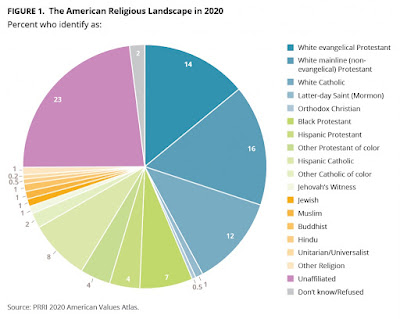
The study showed what we all know to be true: the percentage of churched Americans (meaning the number of citizens who regularly attend religious services) is shrinking. This number is the lowest it’s ever been in American history. Conversely, the Public Religion Research Institute shows “unaffiliated” to be the largest religious subgroup in America.

image courtesy of PRRI

When questioning people who claim to be unaffiliated, we see some curious trends. For those leaving Catholic, Mormon, and Protestant churches, the majority still believe in God. Many still practice regular prayer and/or meditation. Scripture is still a part of their lives. The most peculiar result I found was a small percentage of people who say they pray more and read the Bible more after leaving the church than they did when they were active members in a church.

The data doesn’t show how those studied feel about these results, but I bet they think they’re the only ones experiencing isolation. I wouldn’t be surprised if they’re surprised to see so many other unaffiliated Christians. I guarantee they feel alone and abnormal. Why am I so sure of my assumptions of their emotions? Because I’m one of them.

Ive faced so criticism for believing the way I do. Ive been told I'm backsliding and leading others astray. When I meet other Christians locally, they're usually the "Trump is awesome" variety, not the "it's complicated" type. I feel like a weirdo in most religious circles. I miss attending church but every time I go back I’m faced with this overwhelming sense I don’t belong there. Where can I go to escape the legalism, hypocrisy, and bigotry rampant in the evangelical world? Where can I find God without the baggage of the religious right?

This is why I want a deconstructed church.

10.10.2021

Deconstructing Love

True love waits. At least, that’s what I was taught when I was growing up. My adolescence began with the birth of grunge and graduated with the publication of I Kissed Dating Goodbye. In the years between 1991 and 1997, purity culture took root in evangelical churches, leaving its well intentioned mark (ahem, scars) on my generation. Looking back, I am fairly confident this is the source my emotional baggage and the reason I am a psychological mess.

My experience isn’t unique. Instagram, Tik Tok, YouTube, and Twitter are littered with the wreckage of grownups like me, who lived through the 90s, and flailed our way through the last 20 years wondering what the hell happened to us. One testimonial after another, first hand accounts, teary-eyed disclosures, secrets people kept buried for decades. Even the author of I Kissed Dating Goodby disavowed his book as garbage, apologized for the harm he caused, and delivered a TED Talk admitting he was wrong.

But why? What was so misguided about the pursuit of purity? How did messages about abstinence and love lead to an abundance of former youth group kids trying to navigate adulthood through sexual dysfunction, broken marriages, depression, anxiety, body dysmorphia, and abysmal self-loathing? I have some thoughts.
Photo courtesy of Gratisography

1. It used confusing terminology. Dating was discouraged as if it was sinful. They taught us dating and breaking up only to date and break up with someone new created an unfaithful pattern we would take into marriage, ultimately leading to an inevitable divorce. Instead, boys were told to court girls. The emphasis in courtship was to prepare you for marriage. Unfortunately, neither term (dating or courting) are in the Bible and such teaching completely ignored biblical wedding traditions. Sexual lessons resembled American Puritan values more than those of the first century church. Besides, there really isn’t any actual difference between the two. You can still break up courtship just like a dating relationship. Dating can prepare you for marriage just like courting. Courting is nothing more than a fancy term for dating. Condemning one in favor of the other is like kicking your own ass.

2. It misunderstood human biology and brain chemistry. As a result, boys were provided excuses and girls got assigned blame. The church took scientific ideas about hormones and attraction, made dozens of assumptions, then spit out restrictive rules with neither scientific or biblical basis. Boys like me were instructed to avoid all temptations, but we were also told we were helpless to resist our urges. Girls were never cautioned against their temptations, rather they were warned to not be a temptation for boys. When boundaries were pushed and broken, the same people who claimed boys will be boys also asked the girls what they were wearing.

3. It demonized everything. The music we listened to, the nooks and magazines we read, the movies and television shows we watched, all of it was painted with a broad brush of being inherently evil. Any mention of sex was taboo, depictions of romance in pop culture, and secular descripdeclarations of love were deemed the devil’s attempt to lead us astray. We were encouraged to boycott everything from Disney to Levi’s for their unholy embrace of love outside of God’s design. This fostered an unhealthy “us vs them” mindset which festered into the isolationist beliefs currently staining our world.

4. It turned modesty and purity into idols. The Bible frequently talks about having a pure heart. The lone biblical reference to dressing modestly was about about wealth - modesty over extravegance. I don’t want to claim that either are bad things. However, these admirable goals become problematic when they become the most important thing. Christians should strive to be Christlike above all other things. What good is remaining sexually pure if you’re dishonest? Does dressing modestly matter if you’re cruel to those who don’t? The book of 1 Peter says “be holy because I am holy.” Not “be pure.” When you preach “don’t have sex” more frequently than “pursue God” purity is an idol. When boys can wear tank tops but girls can’t, modesty is an idol.

5. It failed to teach the true meaning of love. The 13th chapter of Corinthians listed off qualities of love - the things it is and the things it’s not. You know what word isn’t there? Pure. Neither is the word modest. Yet somehow, the pastors and leaders running youth groups when I was a teen seemed to to preach and teach modesty and purity as if they were the essence of love. And waiting? The phrase “true love waits” was inescapable. While the first definition provided in Paul’s letter to the church in Corinth says “love is patient,” true love is more than just waiting. I love French fries but if I wait to long to eat them, they’ll get cold and gross. There is so much variety in both the meaning and application of love glossed over or deemed unimportant. Perhaps it’s the laziness of the conservative evangelical movement or the unfortunate inadequacies of the English language, but the depths and power of love were never discussed with my generation. We never pondered the mystery of how the word we use to explain how we feel about a romantic partner is the same word describing our appetite for pizza. True love doesn’t just wait. It’s committed. It’s a bond of friendship and intimacy. It’s familial and erotic. And it is a long suffering which ensures hardships and continues to love when everything else has given up. These truths were never a part of the Wednesday night youth group discussions at Marysville Nazarene through the 90s. Judging from conversations I have had with friends across the US; from stories told and retold through books, blogs, seminars, and videos by exvangelicals, I know my experience isn’t an anomaly.

Why does any of this matter? How did these teachings of purity culture warp how my generation viewed ourselves and approached relationships? What led these good intentions to cause so much damage? We can follow purity teaching to its furthest logical conclusion and we see this in the behaviors and outlook of my peers who, like me, grew up in 90s era churches.

Using confusing terminology creates confusing boundaries. At many Christian colleges, there was an impression that any boy asking a girl out for a date – even something as innocent as getting a cup of coffee – meant the boy was interested in marrying the girl. It left people clueless about the intentions of anyone thinking they’re cute or even saying “hi.” It made maintaining friendships with members of a different gender difficult, if not impossible. It led to numerous unhappy couples who rushed into marriage without learning the kinds of things you learn while dating.

Giving boys excuses for their behaviors while blaming girls for the same actions creates an environment where rape and sexual assault thrive. It fosters men’s worst proclivities, allowing them to be abusers with a free pass. This is why #yesallwomen, #metoo, and #churchtoo have all been trending topics over the past few years.

Demonizing every product of pop culture teaches kids to be ashamed for liking the things they like. They feel bad for listening to their favorite songs or watching a popular TV show. They hide their interests and nothing good happens in hidden shame. They grow up developing guilty pleasures and destructive addictions. Make the topic of sex taboo and you get people embarrassed to discuss it – even in the confines of an intimate relationship.

The focus on purity and modesty distract from other essential qualities: kindness, humility, fidelity, affability, honesty, and perseverance. Kids were instructed to be sexually pure but they weren’t taught how to be good people. They’re awkward and malicious but at least they’re virgins.

When the only message kids get about sex and love is “true love waits until marriage,” you get young adults in a hurry to get married just to have sex – like it’s the only reason to get married. They’re ignorant of the nuances, commitment, and passion it takes to have a healthy and happy marriage. They’ve been told to wait but not what to do when the waiting is over.

My generation took the tenets of purity culture and thought we had the secret to lasting wedded bliss and yet so many of us still found our marriages ending in divorce. Many of us abandoned the ideas of purity culture, evangelicalism, and even Christianity due to the harm caused by the faulty teachings of our youth. However, what hurt me the most and twisted my psyche in ways I’m still trying to untangle were the incompatible and contradictory elements of what I was taught.

One of the most fundamental beliefs of the Christian faith is God IS love. From the youngest ages, we were taught this through song: “Jesus loves me this I know, for the Bible tells me so.” Over and over, teachers and pastors and church elders reminded us: God loves you unconditionally. According to scripture, there’s nothing we could do that could separate us from God’s love for us. Then as we got older, we began hearing different messages from the church. Leaders started telling us we were unlovable. We were taught that we did not deserve love – especially if we didn't adhere to purity rules. God loves you but you’re worthless. God loves you but you’re undeserving.
Photo courtesy of Gratisography

This is one of the many reasons why I deconstructed. Despite a crippling deprecating image of self, I did everything right. I believed God loved me and I didn’t deserve it. I waited for marriage. I married a Christian woman. I remained faithful. I was active in church. I followed the doctrine of purity culture. And I still got divorced. Doing all of the “correct” things doesn’t guarantee success. Purity doesn’t inoculate you from the pain and suffering of broken relationships. Even the author of I Kissed Dating Goodbye ended his marriage. Purity teachings doesn’t work. Looking at the tattered lives of my generation, it’s safe to say it did more harm than good.

Now I’ve deconstructed what I thought love was. I meditated on 1 Corinthians 13. I studied every mention of love in scripture. I read all of the Bible stories of sex and marriage from Genesis to The Song of Solomon to Revelation. I concluded the evangelical church led me astray.

The Bible teaches all people – men and women were created in the image of God. If (as I was taught) we are unworthy of love, then God would also be unworthy of love as we reflect God’s image. This idea of being unconditionally loved by a worthless lover is illogical; I refuse to believe it. It is also completely unbiblical. The book of 1 John tells us “God is love.” If we bear his image, then humanity was created to love and be loved. We need love and deserve love.

It’s time to reclaim the definition of real love. The type of love that is selfless and kind. The love that is devoted in the midst of hard times.The love that celebrates the successes of others. The love that lifts and elevates their communities. The love that flourishes in equality and justice. Love that always protects, always trusts, always hopes, always perseveres. Love that loves the way God loves us. A love that loves when it waits and loves when it doesn’t wait. A love that deserves love.

The kind of love that craves Chinese food on a stormy night. That too.


ps: I love you

5.02.2021

How to Insult a DJ in Three Easy Steps

Do you want to insult a DJ so badly they laugh at you? Do three things:

1. Offer them a job 
2. Burden them with a majority of the overhead cost 
3. Keep most of their earnings for yourself

Yay capitalism.

I am speaking from the perspective of a former professional DJ and an audiophile who has friends currently working as DJs. Over the last few years, I’ve also had the opportunity to return to the profession supporting one of my best friends as he’s launching his own entertainment company.

Music has always been therapeutic for me. Being able to share it is like a drug - simultaneously calms me and makes me feel high. The DJ environment is a safe place for me. If there is a way I could make a little extra money on the side, I would welcome the opportunity to return to the world of wedding receptions, school dances, and house parties. Secretly speaking (after writing) my dream job would be working as an in house DJ for a stadium or arena playing the music during baseball or hockey games.

With these ambitions in mind, I created a job alert for “disc jockey” on Indeed. If I could find a way to maintain my current employment and supplement my income through music entertainment, how could I ever turn it down?

This last week, I discovered how I could turn it down. For the first time since I created the job alert, I got a notification of an available disc jockey job. Let’s call this a hard pass.
Image courtesy of Indeed

On the surface, this sounds like a great opportunity. Yet it falls apart under closer examination. Let’s dig deeper.

When I DJ’d for a similar company in 2002/2003, my starting wage was $70 a night with a raise to $80 after my introductory period. They also paid an extra $50 bonus if a client requested me when booking their event. In comparison, $150-$500 per gig appears to be better than what I was paid nearly two decades ago. For people who hire their entertainment through branded companies, this pay rate might be surprising. Parents of the bride routinely handed me $750 dollar checks incorrectly assuming most of that money would go to me. Johnny B’s is probably the same - whatever they pay their DJ’s is probably a small fraction of the total bill.

The job posting’s description of benefits and schedules are contradictory ideas. When you’re a DJ, you work weekends. This is a fact of the industry. No one gets married on a Tuesday at noon. School dances are not held on school nights. Company gatherings and holiday events are strategically scheduled to allow employees to get drunk at the party and spend the rest of weekend sleeping off the hangover before returning to work the following Monday morning. I’m curious how they can promise a flexible schedule when you're guaranteed to work Friday and Saturday nights and only those nights. Furthermore, there is no flexibility in your start and stop times. Your gig starts when your client demands. There’s no wiggle room or space for bargaining. You don’t get to tell a bride or CEO, “that time doesn’t work well for me.” If any flexibility exists, it’s either you work or you don’t.

These are not conditions I object to as it’s the nature of the beast. I understand companies who contract DJs have to pay for advertising and office space, so it makes sense to me how a majority of what clients pay goes to the company and not the DJ. I realize events hiring a DJ are only booked on weekends. Such scheduling would make it easy to maintain my regular job while making a little extra money entertaining strangers. I also posses the skills they require. I have DJ’d for corporate events, weddings, and private parties. When in front of an audience, I have the attitude and personality to keep a party bouncing.

Within this want ad, there is one line transforming it from an interesting possibility to a laughably insulting proposition. Five words: “Must have your own equipment.”

This single phrase disqualifies me from applying. I satisfy all of the other qualifications. A driver’s license, reliable transportation, over a year of actual disc jockey experience. However, I don’t own my own equipment. Therefore, I’m not a viable candidate.

Here’s the true insult: if I did own my own equipment, I wouldn’t want to apply for this job. Why would I want to work for another company and only get a small portion of the money paid for my services if I could do the same work and keep 100% of the profits for myself? Why would I bear the brunt of the overhead costs so someone else can make money off my labor?

Annie and I have discussed saving up money to buy equipment for myself and starting my own company. I did the research and math. It would take roughly $3000 dollars to build a basic yet functional set up to do my own gigs. If I charged $700 per night, I’d need to book five clients before I’d recover the start up cost. If I made the same investment and went to work for another company making $150 per gig, I’d have to work twenty events to pay it off. The choice is logical.

There is one small benefit to working as a contracted DJ for companies like these. They promote you for you. You don’t have to engage in any shameless self promotion. People hire the company, they assign the gig to you, client gets to know you by luck of the schedule, then hopefully they tell their friends about you. You become known by sheer force of contract. Unfortunately, companies like these ask their DJ to sign non-compete disclosures legally prohibiting them from working for another company or for themselves should their employment ever be terminated.

Establishing yourself as a disc jockey is a lot of hard work. Building your brand is time consuming and exhausting. Regardless of your talent or personality, customers can’t hire you if they don’t know you exist. Working for a company to help you build name recognition is an easy shortcut, but personally I’d rather put in the effort to do it myself.

So it looks like I won’t be working as a DJ on my own any time soon. However, if you need a DJ in the Spokane/Cd’A area, I know a guy. He’s a phenomenal DJ.

12.14.2020

American Irony

The Christmas story begins with a young girl, pregnant and not yet married. Her fiancé is looking for an out because she’s bearing another dude’s baby. He loves her but understands the scandal of raising a bastard child. People in their small town talk in whispers; rumors spread faster than urgent news. So the teen mom leaves home and visits a distant relative and stays with her for a few months while the gossip back home dies down. She and her fiancé soon marry but they do so quietly, avoiding the big celebration they had originally planned. The baby is born in the most unglamorous setting to be raised by his stepfather.

Can you imagine the mix of emotions Mary feels? She’s been looking forward to her wedding, but she never imagined it would be like this. Excited to be a mother, but this isn’t what she had panned. She barely gave consent, but how could she have said no to an angel considering the circumstances. How do you even raise the son of God? Most new parents are worried about the mistakes they’ll make. The pressure Mary felt to succeed would have been unbearable, especially for someone so young.

Fast forward a couple millennia. Imagine how the modern American evangelical would treat someone in the same situation: a pregnant teenager, she’s got a boyfriend but the baby isn’t his. How welcoming would the church be? In my experience, Christians have not always been as loving as we should be.

I’ve seen churches turn away rape victims for their indiscretions. I’ve seen pastors blame women for the violence committed against them. Purity culture told women they deserved it because of their immodest fashion choices, and that’s if their claims are even believed. Too many Christian folk are quick to doubt women who make accusations of rape, assault, and harassment – especially if the perpetrator was a member of the church staff, a pastor, an elder, or a deacon.

In my experience, teen moms have struggled to find safe haven in churches. I’ve seen pastors call children of single moms a consequence of their sin. I’ve seen girls removed from volunteer positions in church because they got pregnant out of wedlock. I’ve sat through Sunday school lessons and youth group devotionals demanding abstinence, and watched as youth leaders ignore the needs of kids who didn’t follow their advice. Too often, pregnant teens and single moms are either an object of scorn or of pity inside American churches.

I’ve heard slanderous labels like slut and whore lobbied at girls who became pregnant at young ages while the boys involved in making those babies never endure the same level or ridicule and rarely face any consequences. While never spoken out loud, the attitude I’ve observed in most churches is “boys will be boys and girls should know better.”

This is the irony of Christmas in America: we reject those made in the image of the One we believe breathed life into our entire universe. We mock the single pregnant teenager while worshiping the offspring of another single pregnant teenager. We alienate heroes raising illegitimate kids while our savior was the step-son of a humble carpenter.

Our nation is imprisoning immigrants and refugees on the southern border at unprecedented rates, separating children from their parents, and caging them in dismal quarters. Of the people I hear applauding this inhumane immigration policy, most have claimed to be followers of Jesus. They forget how Joseph and Mary once fled to Egypt with Jesus, themselves becoming refugees in a foreign land.

Dear church, what the hell are we doing?

To affirm the beauty, strength, and resolve of the Christmas story, we must treat the young women in our community who suddenly find themselves alone on the threshold of motherhood with the same dignity and respect we bestow upon Mary, the mother of God. From the women bringing their babies across the Rio Grande to avoid the gang violence in Honduras, to the Muslim girl escaping war in Syria, to the teenager assaulted by the pastor’s son, to the college kid who wasn’t careful.

What if we loved these vulnerable young women the same way Jesus loved his mom? What if we validated their humanity and their fears with encouragement and acceptance? What if we told them “You are blessed and so is your child,” the same words Elizabeth spoke to Mary? Could we inspire an entire generation of mothers to sing like Mary?

Maybe then we could see God do what Mary promised: “He has scattered those who are proud in their inmost thoughts. He has brought down rulers from their thrones but has lifted up the humble. He has filled the hungry with good things but has sent the rich away empty.”

What a wonderful world it could be.

Amen and merry Christmas.

9.03.2020

The Theory of American Everything Part 4: A Personal Lesson

Here is my theory of American everything: we are a nation birthed in rebellion and given the freedom to do, say, and believe anything we want. It’s what makes us the best country in the world, and it makes us the worst ever. 

Why does this matter? Because I share a trait with the common conspiracy theorist: I want my world to make sense. 

In times of unsettling changes, through momentous events or devastating tragedies, in the wake of upheaval, some individuals experience feelings of uncertainty and anxiety. The bigger world seems senseless leading people to feel disconnected and powerless. Then they hear about a grand conspiracy. For reasonable people, the tale is nothing more than a ridiculous or outlandish fantasy with no plausible basis in reality. Yet it is different for the theorist; they cling to it as it makes them feel special. They’re armed with the satisfaction of being one of the select few who have access to a secret truth. Any evidence to disprove their theory is interpreted as proof of the conspiracy. Anyone who doesn’t believe is either a part of the conspiracy or just needs to do their own research. They feel superior because they know something you don't know. The sensation is intoxicating.  

A never before felt sense of belonging leads some people believe the Freemasons are secretly controlling the course of historical events, or think celebrities are members of the Illuminati after rapidly rising from obscurity to superstar popularity. People feel powerful for the first time in their lives believing the moon landing was a hoax or alien aircraft has been hidden in a hangar inside Area 51. 

When events happens with an intensity, magnitude, or suddenness to alter the course of a culture, people look for answers. When a popular president was assassinated during a public parade, theorists rejected the official conclusion of a lone gunman and concocted complex conspiracies of a second or third shooter. When terrorists flew planes into buildings, theorists couldn’t believe a fire was hot enough to weaken the World Trade Center into catastrophic structural failure, so they invented ideas of planted explosive charges and called it an inside job. After every school shooting, theorists ignore the eye witness accounts and live video, declare it a false flag operation, and believe the victims were paid crisis actors. Their theories are absurd and easily debunked, yet it gives them what they want - to make sense of senseless tragedy. They want an explanation for the unexplainable. They want order for the disordered. 

I want the same thing. I want my world to make sense. However, this current era of history is completely illogical. I don’t understand how the nation who collaborated to build the first transcontinental railroad is the same nation who dreamed up pizzagate. I don’t understand how the American mindset which inspired great speeches like the Gettysburg Address also motivated tweets like covfefe. I don’t understand how the voters who claim celebrities shouldn’t share their political opinions elected a celebrity to be president. I don’t understand anyone who can’t see the racism behind statements like “I hit them with neo-Nazi. I hit them with everything. I got the white supremacists, the neo-Nazi. I got them all in there. Let's see. KKK, we have KKK. I got them all." I don’t understand why police officers continue to act like executioners with impunity over and over again. I don’t understand why people are so offended by the phrase “black lives matter.” And I refuse to accept any of this as normal. 

I need clarity because I’m a moderate voter living in the middle of Trump country and need to learn how to show my neighbors grace when they view people like me with disdain. Because I have four inquisitive kids who ask a lot of questions and I need to answer them when they want to know why people act with so much greed and hatred. Because I have a two day old baby and I am filled with grief over the America she has been born into. Because the violence and division in this country is antithetical to the life, liberty, and pursuit of happiness our founders conceived. Because I want to answer those questions which have no easy answers. 

Someday, history books will have to explain the Trump era. 2020 will be discussed in classrooms across America and students of the future will debate the effectiveness of our actions. When they ask why we did what we did, I hope their teachers explain it was because we were birthed in rebellion and given the freedom to believe the most ridiculous ideas imaginable. We were, as Lady Gaga would say, born this way.

1.23.2020

Protect Ya Neck: Sanity in the Age of Social Media

The internet is a weird place, both beautiful and ugly. It has given us the gift of social media, connecting distant relatives and old friends in ways we could have never predicted. That same gift is also a curse. The new possibilities that allowed people new methods to communicate gave other people freedom to communicate with the worst possible conduct. If you’re not careful, it would be easy to lose yourself as either a perpetrator or a victim in this wild west of online culture.

If you want to navigate the world of Social Media with your sanity intact, you need to follow the advice of the Wu Tang Clan: protect ya neck. Or as a decent therapist would tell you, set some boundaries.

These boundaries are a figurative fence around you, designed to protect your emotional state from those who would revel in provoking you. It looks different for everyone. What works for you might not be good for me, and what I do might sound absurd to others. Wil Wheaton deleted his twitter account to preserve his happiness – that was his boundary. Despite thousands of disappointed fans, he’s maintained this boundary because his well being is worth more than appeasing people who have zero vested interest in his personal life. I don’t need to employ those extremes, but I still need boundaries to prevent the ugliness of the online world from discouraging or demoralizing me.

To maintain my boundaries, I follow two rules. 1: I report spam, 2: I block trolls. That’s it. Pretty simple. These two rules help keep me healthy and happy.

Strangers send me ads or post suspicious links? I report them. An Instagram user tags me in a post letting me know how to get free followers? I report them. I’m followed by a Twitter user who is scandalously dressed in their profile picture? I report them. I get a Facebook friend request from someone I don’t know and all of their public posts promote their multilevel marketing business? I report them. I don’t have the time, patience, or energy to tolerate unsolicited shameless self-promotion.

Reporting people takes a little effort. Just a few mouse clicks and I feel like I’ve done my part to make social media a happier, healthier, and safer. Even if those goals are not achieved on the macro scale of society, it is accomplished in the micro scale of my soul. For my own personal sanity, all spam is reported.

As for trolls, it gets a little more complicated. I define trolling as a stranger making remarks or comments to someone they don’t know with the specific intention to provoke. It’s important to specify (for me) this is an act committed by strangers. Within the context of friendship, a little mutual teasing is expected and acceptable. I don’t object to friends or family making a harsh joke at my expense. A shared laugh is a great way to bond. However, if I don’t know you or understand your sense of humor, the space to joke around is more restrictive. The threshold between having fun and trolling is too easily crossed. When people abuse that line, I block. No questions asked. I do not have the time or energy to engage. If you’re the kind of person to make personal attacks against me without knowing me, then I don’t have any interest in what you have to say. Nor do I want you to have access to see what I post on social media.

When a friend recently posted praise of Kanye’s newest album, I replied to share my perspective – that the album really isn’t that good. Rhyming patterns, lyrical complexity, production values, all of it in my opinion is a lower quality that what Kanye is capable of creating. The only reason anyone is excited about it is because of Kanye’s professed conversion to Christianity. If it wasn’t a gospel album, none of these people would compliment it. One of the claims I made in that long thread was how I don’t believe Christians should have to tolerate bad art just because the art was made by other Christians. Apparently, my statement was unpopular. About a half hour later, a stranger to me (but a friend of my friend) replied back to me with an accusation and a link. He doubted my claim to dislike bad music and linked to one of my public Facebook posts which contained a video of John Mayer performance. In essence, he was saying I didn’t have the right to call Kanye’s album trash if I liked a song from Mayer.

Consider this. Some random dude on the internet was so offended by my opinion about Kanye West that he dug through eight months of my public posts searching for anything I might have said to use against me in some sort of gotcha-styled straw man argument. This is a perfect match for the definition of trolling as described by the University of Nebraska-Lincoln: “creating discord on the Internet by starting quarrels or upsetting people by posting inflammatory or off-topic messages in an online community. … someone who purposely says something controversial in order to get a rise out of other users.” He didn’t like what said so he sought to create discord. Start a fight. Get a rise out of me. Why should I reward him by defending myself or retaliating? It’s far more responsible to bock the troll.

These are the boundaries I’ve set for myself to protect my mental health. I don’t expect anyone else to follow the same rules, but I would hope everyone has their own boundaries. It’s good for us. As my friend Jen frequently says, “I have healthy boundaries for my benefit and yours.”

Be prepared though, once you create guidelines for how you maintain your boundaries, not everyone will understand or appreciate them. In fact, some people will be offended. I could return to the kerfuffle over Kanye as an example. I had a private chat with the trolling stranger’s mutual friend later that evening when he asked about our interaction.


I have a different opinion. If you’re so angry at someone else’s opinion is that you have to dig through nearly a full years worth of random post to find something that you think contradicts their claim? That’s childish. You don't have to agree, but I'm gonna protect my neck.

1.13.2020

Narcissism Speeding

Highway 195 connects Spokane to Pullman as a two lane roadway for most of the distance between the two cities. Northbound and southbound lanes of traffic occasionally diverge, and in some uphill stretches one lane splits into two to allow faster cars to pass slower traffic. With good weather, clear road conditions, and other drivers maintaining the speed limit, a student at WSU could walk out of a classroom and make it to the downtown Spokane in an hour and a half.

People also tend to speed on this highway. The scenery isn’t the most interesting vista in the world, just gentle rolling hills covered with farmlands. From one small town until the next, it feels like driving through emptiness where you’re more likely to see tumbleweed than speed traps. However, the speed traps do exist and the road is often patrolled by Washington State Patrol and sheriffs from both Spokane and Whitman counties. We were able to witness both the speeder and the cop on a recent road trip.

An impatient driver attempted to pass me in one of those uphill sections. I had cruise control set at the speed limit but still moved into the right hand lane for slow pokes because it is the courteous thing to do. A white SUV came up fast behind me but not fast enough. The two lanes merged into one while I was still out front. I remained set at the speed limit so I didn’t feel any shame or guilt making him slow his roll. He tailgated me for a few miles until the road split again, the last of the two lanes for southbound traffic before Rosalia. He started merging into the slow lane prior to its actual existence and passed me before I had a chance to move out of his way.

OK, fine, whatever. At least he wasn’t tailgating me anymore. By the time I drove past the Rosalia exit, the white SUV was out of site, but it wouldn’t be the last time I saw him. Up another hill and around the bend, I saw some flashing red and blue lights. Someone got pulled over. As I got closer, that unknown someone became someone I recognized: the white SUV. I laughed. He was pulled over for speeding, obviously. If I had to guess, I’d wager the officer clocked him at least ten miles an hour over the limit. This occasion would not be the last time I saw that white SUV.

Driving on, the twinkling lights disappeared from my rearview mirror. Out of site, out of mind. Annie and I continued our conversation and our trip to the Pullman area. I didn’t think much of the speeding/tailgating driver exchanging his license and registration with the WSP officer – none of my business. Or at least I temporarily gave up my thoughts of him.

image courtesy of Inlander

Less than ten minutes later, he provided reason to ponder his presence again. I glanced in the rearview and noticed a white vehicle coming up behind me at a high rate of speed. Another couple seconds and his identity became clear – the white SUV again. I was still using cruise control. Still set at the speed limit. I moved into the slow lane as soon as one became available and the white SUV immediately zipped by me. I couldn’t help but hope for another speed trap in the miles ahead of us.

I understand that roads have speed limits and speeding is an infraction of which law enforcement has the right (duty?) to pull over and fine offending drivers. I also realize speeding is the most common traffic violation. People speed. It happens. They get pulled over and receive tickets. Sometimes they show up in court to dispute the charges. This is all normal.

However, returning to the same offence immediately after being penalized for it isn’t normal. A normal person would think “Oops, I got caught; I should check myself before I wreck myself.” Or something like that. Most people would recognize the error of their ways and correct their behavior, even if temporarily. Normal behavior would be learning from the mistake of speeding, and drive within reasonable speeds with hopes to avoid another ticket.

Narcissism doesn’t operate with this logic. One of the most common signs of pathological narcissism is a failure to learn from your mistakes. Instead, they would think it is their right to speed and the real problem is the police officer. Or they might think there was nothing wrong with the way they were driving. “It’s not my fault,” they say, “it’s not a big deal.”

In that brief interaction and observation of the lead-footed captain of a white SUV on the way to Pullman, I recognized the real problem in America: pathological narcissism. It infects every corner of American society. From schools to office buildings, from churches to marketplaces, and at every level of elected position from municipal councils to the President of the United States of America. We, the people are a little too self-absorbed. We feel entitled, like we deserve everything we want and our desires are insatiable. We overestimate our talents and embellish our achievements. We are obsessed with wealth and power, filled with greed and envy. We belittle people we don’t like, attack those who disagree with us, and fear those who are different. We are arrogant and demanding, expecting more from others than we are willing to give.

Welcome to America, what can you do for me?

Or maybe, just possibly, I’m reading too much into one lone speeder along highway 195. It is conceivable that I’m projecting my frustrations with the current state of our nation onto this one excessive driver.