Showing posts with label random thoughts. Show all posts

8.19.2025

What’s My Problem?

I have a problem.

I have one completed young adult fantasy novel: written, edited, beta read, edited again, revised, and formatted. My attempts to find an agent have (so far) been unsuccessful. I’m pondering options between a complete rewrite, continued queries with the book as is, or pursuing self-publication.

That’s not my problem.

While in the query trenches I started writing my next book, a speculative fiction novel about a pandemic and superpowers set in Seattle. Then last year during the holiday season, I began the first draft of a Christmas themed horror story (for which I previously had an outline ready) which is also set in Seattle. Both of those books are somewhere in the middle stages of composition. I’m bouncing back and forth between them based on my emotional state. Am I in a scary mood or an action mood?

But that’s not my problem either.

My brain is always active, even when I’m not writing. New ideas abound. There is a note in my phone’s notes app with a list of sixty-six story ideas. They range from kid-lit to adult audiences. A few of them are ideas my wife and I want to collaborate on, one is my 12 year old daughter’s idea. They are mostly horror stories, science fiction, and fantasy tales with a few thrillers. Some of them have brief blurbs, some have more fleshed out descriptions with character names, and a few have full-fledged outlines waiting for me to place fingertips to keyboard.

Even that isn’t my problem.

There is a spreadsheet saved on my laptop with every character name I’ve ever used. Completed novel, work in progress, synopsis, outline, blurb, random notes. All of it has been combed through for every named character, living or dead, speaking on nonspeaking, human or animal. It is a simple spreadsheet with two columns, one for the character’s identity, and one for the title of the book where the character appears or is mentioned.

Obsessive, but not a problem.

Yesterday, my list of sixty-six grew to sixty-seven. This morning, I composed an outline for this new inspiration. As if that wasn’t enough (thanks to my autistic power to hyper focus) I wrote the first draft of the first chapter for my sixty-seventh WIP during my lunch break.

We’re getting closer to my problem but this still isn’t it.

What’s my real problem? Is it ADHD? Possibly. Is it the autism? Also likely. Is it the abundance of potential, multitude of unfinished projects, and the sheer volume of material in limbo? Absolutely. But the biggest problem from all of it?
I don’t know what to do with any of it. Call it choice paralysis. Call it SQUIRREL! Call it biting off more than I can chew. Call it an overactive imagination. Call it wishful thinking. Call it procrastination. Call it anything you want.

Whatever it is, clearly, I have a problem.

4.22.2024

A swing and a ...

It is baseball season. Which means my brother is probably recording for his First Pitch Strike podcast. And if he’s not working on the podcast, he’s probably watching baseball. I know for a fact he was in Denver yesterday to watch the Mariners annihilate the Rockies in their home stadium.
Baseball runs in my family. My dad was a pitcher in high school. Growing up, the Mariners were broadcasted somewhere in our home, either on TV or the radio - sometimes both. The voice of Dave Niehaus is the sound of my childhood. Even though I didn’t play baseball, there was nothing more special than a trip to the Kingdome to watch the boys of summer play, fireworks ignited every time one of the M’s hit a home run. During my nephew’s high school days in Cheyenne, he was a star pitcher and he’s now returned to join his old team’s coaching staff. So far, two of my five kids have entered the world of America’s past time. Last summer, my eleven year old’s softball team took first place in their league.

Peewee baseball/softball is a bizarre creature. I’d call it organized chaos but there is very little organization present. I’ve observed this curiosity twice now and it wouldn’t surprise me if our youngest follows her older siblings’ footsteps.

First there’s t-ball: everybody swings and everybody runs. Sometimes they run even when they don’t get a hit. This phase is pure comedy. There are kids who don’t know what to do when they hit the ball so they stand at home plate until one of the adults drags them to first base. Other kids run the wrong direction after the hit. Inevitably, the helmets are far too big for some players, permanently obscuring their vision. Once on base, nearly every kid will keep on running until they reach home.

Years later they have it figured out. Uniforms fit and teams are sponsored by local businesses. There are strike outs and line drives. Fielders dive for balls and runners slide into bases. Kids stop swinging at every pitch, they make fewer errors, and teams become more competitive. Wins and losses suddenly matter.
Between these two stages there is another form of the game, one where the rules don’t matter and the goal is giving players experience. This is the transition time, the first year without a batting T. Coaches pitch for their own team and batters are up until they get a hit. Strike one? Cool. Keep going. Strike 13? It’ll happen eventually. Keep trying. Batters at this age are given infinite strikes. The moment their bat makes contact, everyone cheers - even if it’s a foul ball.

In the creation of a novel, there are phases. First is the raw work: plotting and planning, researching, drafting, editing, rewriting, beta readers, and more editing. Eventually you figure it out. There’s a contract signed with a publisher - perhaps with one of the big five or a small regional press or you decide to self publish. Then one day, an author walks into their favorite book store and finds their novel under new releases, debut authors, or local writers. There are no real wrong paths here. Publishing a book is a gargantuan task.

But somewhere between those two stages is something different and a million times more chaotic. Publishers don’t accept submissions from authors but they will accept them from agents. If an author hopes to get traditionally published, they need to find an agent who will sell the book to a publishing house. To secure an agent, authors submit queries to various agents. It is time consuming because every agent wants something different. If you’re not prepared for rejection, it can also be a little soul crushing.

Writers on social media jokingly call this period the query trenches as if we’re dug in for battle and we must be careful not to lift our head above ground at the wrong time.
But for me, it feels a little like peewee baseball - that first year after the batting T is removed. I get infinite pitches. I send agents information about me and my book. That’s the pitch. I’m swinging every time. I’m aiming for the fences. If your query isn’t a good fit for an agent, or they’re just not interested, they send you a rejection letter - usually a form email. That’s a strike. However, don’t despair - just like little leagues, there are no strikeouts. I get another pitch. I get another chance to swing. If it’s another strike, I’m still up to bat.

The writing community is a lot like those little league teams. As soon as an author gets a hit - an agent request for a full or partial copy of their book, or makes an offer of representation, everyone cheers. We don’t care if that author is a friend or a stranger or a competitor. A success for them means we have a chance when it’s our turn to bat. That’s what we do in the trenches. We root for other writers while we swing at pitch after pitch after pitch. From the first rejection to the fiftieth, the only way we can strike out is if we quit playing. As long as our heart is in the game, there’s always another agent.

I’m not a big baseball person. Not like my dad, brother, and nephew. I’ll attend an occasional Spokane Indians game and make it to as many of my kids’ little league games as possible. The only time I’ll watch baseball on TV is if the Mariners are playing. Being an M’s fan is a labor of love. It is truly a practice of long suffering. Perhaps being a fan of the best team to never win the World Series prepared me for the query trenches. At the end of every season, Mariners fans confidently declare “next year will be our year.” In a similar fashion, after every rejection, I tell myself “here’s to the next one.” I step back into the batter’s box ready to take another swing.

3.15.2024

The Disconnect and Ties that Bind Part Two

My maternal grandfather was genealogist. He started while he was still a teacher but his hobby became his passion after retirement. Not only did he track his own heritage as far back as he could go, he also studied the family trees of his kids’ spouses. He was fascinated by the family lineages of everyone he met. Thanks to his efforts, and the stories told by my paternal grandmother, I know as much about my family as possible.

I know my roots. I feel it in the lyrics of My Culture when Maxi Jazz raps, “Like a lifeline, I light lines ‘cause my compassion is deep for the people who fashioned me, my soul to keep and this is who I happen to be. If I don't see that I'm strong, then I won't be. This is what my Daddy told me, I wished he would hold me a little more than he did. But he taught me my culture and how to live positive. I never want to shame the blood in my veins and bring pain to my sweet grandfather's face in his resting place. I made haste to learn and not waste everything my forefathers earned in tears for my culture.”

From a passenger on the Mayflower, to Norwegian immigrants joining early settlers in Minnesota. The German, Irish, and Scottish ancestors. My distant Samoan cousins. Forefathers (and foremothers) who were farmers and pastors, advocates and survivors. Their stories twist my DNA and flow through my blood.

I know who I am. And yet, I don’t.

Comprehension of names, birthdays, occupations don’t tell a complete story. There is a limited amount to be learned from marriage licenses, immigration papers, and death certificates. I strive to leave a legacy worthy of my family but they are not my tribe. When my parents got married in the early 70s, they began a westward migration. I grew up completely disconnected from my heritage. Between my dad being a workaholic and our family living below the poverty line I barely knew my aunts, uncles, and cousins. I rarely saw my grandparents. My familial tribe had communities in Cheyenne and Oklahoma while I was the left coast stranger in the Emerald City suburbs.
image courtesy of the City of Marysville

My being is more defined by coming of age as a Seattleite during the grunge era than by my heritage. There’s a playlist in Spotify serving as the soundtrack to my life which will tell you more about who I am than you could learn from anyone sharing my surname or my mom’s maiden name. Separated from those clans, I had to find my own tribes.

I’ve been pretty open about the state of my childhood. It was not an enjoyable experience. I am still struggling with the trauma of being a bullied kid, of poverty, of undiagnosed mental illness, of religious fundamentalism. Finding my tribe was not an easy task.

On a five hour road trip with my dad last summer, he admitted his greatest fear while I was a kid was that he’d lose me. Which brings me back to the 1 Giant Leap song. In the second verse, Robbie Williams sang, “Hello Dad, remember me? I'm the man you thought I'd never be.” Then continued, “I'm the one who you told look don't touch. I'm the kid who wouldn't amount too much.” My parents didn’t think I’d ever be much of anything because they didn’t know if I’d survive long enough.

My father is a smart man. He could see my symptoms of depression before I recognized them myself. He knew the degree of which I was bullied and abused by my peers and didn’t know how to help. He watched as I slowly faded into the background and was terrified I’d become a suicide statistic.

I was raised in the boys will be boys era. When the kids who got their asses kicked were given the same punishment as the kid who dealt the ass kicking. When autism and neurodivergence were woefully misunderstood and under-diagnosed. When kids with learning disabilities were treated like bad students. When kids were better seen and not heard. When terms like nerd and geek were still vindictive insults. And I suffered all of it. If you ask my wife, I bear the scars and some of the wounds have yet to heal.

The saddest aspect of my lonely story is how the one place that should have been safe for me, the place that should have been most welcoming was just like everywhere else. My church should have loved me the way I was, the way God created me, but they could be just as hostile and ostracizing as the kids at school. Nowhere was safe.

So I found my tribe with the freaks and geeks, the outcasts and underdogs, the athletically un-gifted, the last ones picked, the tortured geniuses, artists and music makers, agents of chaos, the misunderstood wanderers, and anyone who never fit in or felt like they belonged.

A funny thing about life stories: they don’t always follow the hero’s journey. Life isn’t a three act play hitting all of the beats of plot and structure. There are unexpected turns warping our expectations. As the adage says: truth is stranger than fiction.

The church youth group of my youth wasn’t the happy home it should have been, but it was still home. No matter how desperately I tried, it was clear I was never going to be a part of the in crowd. However I was still in the crowd. Years, distance, and education have provided me a new perspective on this weird little tribe of teens inside our religious subculture. I am much more forgiving these days and a lot less desperate to fit in.

Because humans are tribal by nature, we always look to the best and strongest and bravest to lead and protect. In our strange tribe, that bigger stronger leader was never going to be me. It was a sociological impossibility. I was short, uncoordinated, poor, not conventionally attractive, and socially awkward. I was a weird little dork. Through time and space I’ve also come to realize the teasing they foisted on me wasn’t all mean spirited. Obviously some of it was, but some of it was good natured too.

I no longer blame them for their cruelty. It’s hard being a teenager. While I wasn’t like them, according to science we were identical. We were undergoing physical and neurological changes, our brain chemistry and hormone levels were constantly in flux, the rules transitioned from how we were treated as children to the way we would be treated as adults, culture around us was shifting throughout the 90s. We were all trying to find our place while figuring out who we were and how we related to each other all at the same time. It would be unrealistic to expect any of us to navigate such a confusing era with grace and perfect kindness.

Looking at that time of my life in the rear view mirror, once again I feel disconnected. Because I left. I got out. I moved away. All of those kids who were once my church family are practically strangers. They’re now pastors, teachers, missionaries, community leaders, realtors, mechanics, engineers, and doing their own things with their own families.

I don’t miss being the weird kid. I don’t miss the way my peers treated me like I was a second class citizen. I don’t miss being overlooked and maltreated. But I miss them. I miss the community we had. Despite the pain they caused me, I love these people dearly. In the midst of what was a tumultuous time of my life, my happiest memories all involve my youth group tribe. I will forever be bound to them through the shared experiences of our formative years.

Every now and then, I wonder if it would be feasible to get the old gang back together again. For us to collect in one place one last time. Jimmy and Sue. Kari and Dan. Shane. The twins. Megan. Nikolai. Pike. Nettles. Jennifer. Travis. Erin. Marcus. The younger siblings (Chris, Nathan, Adam, and Chad). Perhaps we could gather together a Dennys, order coffee and fries, chat for hours, then leave our tip among the avant-garde displays made from salt, pepper, ketchup, and coffee creamer. Like we used to do.
Sure, such a reunion is logistically impossible. But it could be fun. I am curious what it would be like to see them all again. If for no other reason, I’d want to do it for my culture.

1.05.2024

Of Gods and Reasons to Persevere

Norse mythology is unique, filled with gods who were powerful, clever, daring, but also a little weird. Actually… a lot of weird.

Other mythologies also had strong, brave, and intelligent gods. From India to Egypt to Greece, worshipers believed their dieties to be the most worthy of adoration because the gods would always be gods. There was no forever for the Norse gods though. The end of the gods was hardwired into the mythology.

Ragnarok was coming.
Their virtues didn’t matter.
Odin’s wisdom would not be enough to avoid it.
Thor’s strength would not be enough to stop it.
Frigg’s compassion would not be enough to prevent it.
Tyr’s bravery would not be enough to hold it back.
Heimdallr’s heightened senses would not be enough to protect the other gods from it.
Loki’s trickery would not be enough to change it.
Idunn’s youth would not be enough to delay it.
Forseti’s pursuit of peace and justice would not be enough to subdue it.
Ragnarok would be their demise.

There were no other alternatives. The Norse gods were destined to fall. They were imperfect and jealous of each other. They argued and held grudges. They won battles but also lost battles. Yet the Norse people honored them. They revered their doomed gods. They knew their gods would die and still remained devoted.

In our modern world, I don’t know how many of us would stay hopelessly loyal to a guaranteed lost cause.

Growing up in the Christian faith, I was raised to believe in a God who was omniscient, omnipotent, & omnipresent. Infinite knowledge, infinite power, and infinite presence. The God I was taught to worship was defined by love, compassion, justice, and mercy. This is the God of all gods, the one who spoke the world into existence, an unchanging being who would reign for eternity. Scripture assures the living God to be perfect and undefeated. However, scripture never promised perfection and success for mortals. We believe in a God who could intervene on our behalf, but the intervention is never a sure bet.

We are flawed and broken. Stubborn and impudent. Greedy and vengeful. Human nature is host to the whole spectrum of good and evil, vice and virtue, success and failure.
Norse peoples were promised gods who would fail. Christians are promised a God who would succeed. Meanwhile on earth, we are promised neither. Instead we are given a choice. Do we follow the bandwagon and hitch our hopes to the best chance of victory? Or do we follow what we believe to be right even if it ends in disaster? Success is never stipulated.
Authors with a completed manuscript are not guaranteed a book deal.
Scientists are not guaranteed their theories will be proven.
Painters are not guaranteed their master work will ever be sold.
Teachers are not guaranteed students who pay attention.
Students are not guaranteed good grades.
Police are not guaranteed they solve crimes.
Criminals are not guaranteed they will evade arrest.
Prosecutors are not guaranteed a favorable jury vote.
Politicians are not guaranteed an electoral win.

Your religious faith, political leanings, gender, financial status, ethnicity, sexuality, physical ability, and social standings could help or (depending on the situation) hinder your chances but none of it guarantees anything. Failure is always possible.

For a decade, I’ve been fighting a battle that often feels like an inevitable defeat. The way I’ve been treated, described, slandered, and maligned frequently casts me as the loser. It’s taken a serious toll on both my physical and mental health. Sometimes it seems the giant I face is too big to defeat and I’m fresh out of stones for my slingshot.

Yet I trudge onward. I remain devoted. Why? Because it’s the right thing to do. Because the stakes are too severe for me to give up. If the Norse believed in Gods who were a bunch of losers, if first century Christians believed in a flawless God who could save them from persecution even if it never happened, I can hang on. If there is a chance of failure, no matter how probable, there is also a chance of victory.

My hope isn’t in a promised destruction nor is it in perfect divine holiness. My hope is in the possibility of that which is never promised. I hope to win but realize I could lose.

4.10.2022

Who’s to Blame?

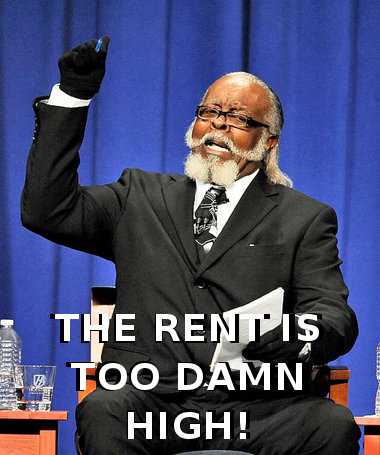
Allow me to overstate the obvious: everything is getting expensive lately. The burdensome costs of basic needs are crippling the average American and if things don’t change soon, we will see a new boon for poverty and crime rates. Welcome to the third world ‘Murica. Was it worth it?

I’ll skip the statistics because I’m sure you’ve seen them. Those graphs comparing tuition rates and average annual incomes make it easy to see how working your way through college is a thing of the past. Access to higher education is increasingly unattainable without entering a lifetime of crippling debt. Or the charts showing the increasing new car prices year after year. Gone are the days of purchasing a reliable vehicle for a thousand dollars. You get what you pay for and many new cars cost more than their owners make in a year. More debt.

What about the necessities? Food, clothing, housing – all of it quickly becoming unaffordable for the average citizen. While a rich person and a poor person will pay the same amount for a gallon of milk, it’s more expensive for the person who makes less than $30k a year than it is for the person who makes $30k a week. Gas prices are making pedestrian commutes appealing. People with limited means are turning thrift shops into haute couture. And don’t even get me started on the real estate market, mortgage prices, or average costs of rent.
As someone who was weaned on Reaganomics then came of age in the relative peace and prosperity of the Clinton era, none of this makes sense to me. Well, actually, the numbers and statistics make sense. The natural unintended consequences make sense. The “I told you this would happen” makes sense. The functions of economic policies make sense (even if absurd). But the logic of it all doesn’t compute. The fact we allowed things to get so wild and out of control befuddles me. The believable concept of hard work being the keys to your future isn’t ancient history. I was raised in a world rewarding ingenuity and initiative. We don’t live in that world anymore. Our founding fathers’ ideal of life, liberty, and the pursuit of happiness now has a qualifying addendum: as long as you can afford it.

Why? How did we get here? Whose fault is it? Who’s to blame?

You could blame the president. He creates policy regarding foreign trade, interest rates, and where we get crude oil. You could blame Biden for not acting fast enough to hold back the tide of hyperinflation or for enacting laws you think exacerbate the situation. So sure, blame him but he’s only a small part of the problem.

You could also blame past administrations. The effects of presidential policies don’t end the day they leave office. Decisions made by one individual could have consequences that last decades. So sure, you could blame them but they’re only a small part of the problem.

You could blame Congress for passing legislation detrimental to the common interest of the average American citizen. Or criticize them for being so preoccupied with infighting and partisan chicanery they end up doing nothing to help the people they represent. So sure, you could blame them but they’re only a small part of the problem.

You could blame special interest groups and lobbyists financing our representatives who enact laws that benefit them but no one else. Big oil, big pharma, big banks, big tobacco, big guns, all prosper and escape accountability while the rest of us suffer. So sure, you could blame them but they’re only a small part of the problem.

You could blame massive corporations for abusing and controlling the market. Huge conglomerations buy out their competition and diversify their offerings so everything we buy is sold by a select few of these giants of consumerism. Kraft, Coca-Cola, General Mills, Disney, Johnson & Johnson, JP Morgan, Comcast, Luxottica, Pfizer, MetLife. We don’t like monopolies in theory but in practice they exist. They control the prices we pay for nearly everything. So sure, you could blame them but they’re only a small part of the problem.

You could blame the ultra-rich. People like Elon Musk, Bill Gates, Warren Buffet, Jeff Bezos, Mark Zuckerberg. They use their massive wealth to enforce their desires and avoid legal ramifications of anything shady they have (maybe, possibly, allegedly) done. Their riches protect them from the turmoil of our economic crisis – completely detached from the reality of normal American struggles. They manipulate our culture to fit their dreamscapes while the wealth gap grows wider. So sure, you could blame them but they’re only a small part of the problem.

You could blame utility companies. They continually raise rates, testifying before regulatory commissions these price hikes are urgent needs to remain in operation. Meanwhile, they’re raking in record profits and their CEOs live lavish lives on generous incomes. So sure, you could blame them but they’re only a small part of the problem.

You could blame Wall Street. These investment bankers, stock traders and analysts, hedge funds buyers, aggressive investors, corporate raiders, and people who profit on the misfortunes of others. They live, work, and play in a fantasy land where all of the rules are made up. They’re able to succeed while the rest of the economy crashes. And because our nation’s economic health is based on the winnings of the stock market gambling, they’re a protected class. These white collar crooks make money while the rest of us struggle. So sure, you could blame them but they’re only a small part of the problem.

You could blame the regulations that make it more expensive to operate a business. Or the businesses that exploited our environment and flaunted our safety making such regulations necessary. Or a workforce demanding livable wages. Or the staffing shortages in restaurants, retail stores, hotels, and other hospitality jobs. Or the mistreatment of low-wage workers. Or the supply chain issues. Or increased shipping costs. Or crumbling infrastructure. All little issues that contribute to the rising cost of goods and services. So sure, you could blame them but they’re only a small part of the problem.

You could blame our culture. For generations, we have lived beyond our means with expenses greater than our incomes - living off credit. We have transformed keeping up with the Joneses into a lifestyle. Our rampant consumerism and demands for instant gratification returns a self-sabotaging cost. The suppliers of the things we want and need know we will pay any price to get what we want and need. So sure, you could blame us but we’re only a small part of the problem.

The fact of the matter is we can’t blame one individual or a single group. Or at least we shouldn’t. There isn’t any one person or group of people responsible.

How did we get here? Whose fault is it? Who’s to blame? It’s all of the above. It’s the system that governs our lives. It’s unfettered capitalism. It’s rampant greed. It is flawed and corrupted. It only benefits the rich and powerful. We believed the myth of trickledown economics. We voted against our own interests over and over again. We did this to ourselves. We allowed it to happen.

If you insist on blaming something for our economic woes, make sure you blame *gestures wildly* everything.

4.22.2021

Through the lense of a former 90s youth group kid.

If you're a long time reader you probably know I grew up in a conservative evangelical church. I was also a teenager in the Seattle suburbs during the grunge era. Those years were the Wild West of youth ministry. Youth pastors today want to be relatable and relevant. Youth leaders back then wanted to know how much crazy shit they could get teens to do before the kids revolted. If youth pastors were mad scientists, we were the guinea pigs.

One of the most predominant highlights of any church youth event during the 90s is what I’ve lovingly (and regrettably) described as pudding through the nose games. They didn’t actually consist of slurping pudding through your nose, but the nasal consumption of a Snack Pack was always a possibility. These games were designed to induce a gag factor, inspire PG-13 levels of comedic violence, or encourage what modern youth leaders call “purple.” No idea what I’m talking about? Allow me to provide some examples.

The Toothpick Lifesaver relay. Teams lined up boy/girl/boy/girl with toothpicks in our mouths. Without using our hands, a package of Lifesavers had to be passed toothpick to toothpick from one end of the line to the other. And we had to start over if the candied fruit flavored ring was dropped. First team to pass along all 14 candies through every member wins.
image courtesy of Sterling College

Or The Chip Race. In this game, a boy and girl held a potato chip between their lips while trying to reach the finish line before the other couples. If the chip broke or was dropped, the pair had to start over.

Or Wink’em Blink’em. Everyone of one gender stood in a circle while kids of the other gender sat in front of them with one empty seat. The person behind the empty chair winked at someone who tried to escape the grasp of the person standing behind them to sit in the empty seat. Originally, the rules stated the fleeing player would be stopped with a tap on the shoulder but my generation never liked rules. When we played this game (it was a favorite at Marysville Naz) we played it like a full contact sport. The standing player could use any means necessary to stop the runner. Nights with Wink’em Blink’em on the itinerary usually ended with pulled hair, scratches down the back, torn t-shirts, and rug burns on the knees and elbows. Ironically, the popular kids were more likely to be tackled or dragged than the uncool kids like me.

Or the Caterpillar Relay. Teams laid face down and shoulder to shoulder on the beach to form a human caterpillar. (Note: I said caterpillar, not centipede. That's something wildly different.) The person at the end of the end of their team's line rolled over all of their teammates to the front of the line where they resumed the face down position as other players rolled over the top of them. New competitors began rolling as soon as they were the last in line. First team to get their whole caterpillar across the finish line won.

Or Eat That Food. This was played like Name That Tune but with food. Teen versus adult volunteer took turns claiming they could eat a food item in a certain number of bites, each challenge lower than the previous. If that number reached a point where one player couldn't eat the food in fewer bites than the other, they dared the other player to "Eat it." If a player scarfed the item within the promised number of bites, they won. They would lose by failing to complete the challenge or throwing up. I saw people eat a whole can of spam in one chipmunk-cheeked bite, pour an entire tin of Altoids into their open maw, chomp a foot long raw carrot with a diameter of their in three bites, cram a king size Snickers in their mouth while drinking a can of Pepsi, and chug a large jar of applesauce in a single gulp. There was always a garbage bin on stage for vomit.

And Shaving Cream Wars. A section of the football field was cordoned off to separate spectators and warriors. Teenaged campers and adult leaders purchased hundreds of cans of shaving cream to battle each other in a one vs all battle royale. Combatants ran around with aerosol cans of shaving cream, filling their hands with foam, and smearing it into the faces and onto the bodies of other willing participants. Extreme players Duct taped their shaving cream cans into their hands with fingers hovering above the spray triggers.
image courtesy of Baltimore Sun

Between the inappropriate entertainment, the purity culture teachings, and attempts to dictate what kinds of movies we could watch or music we could listen to, my generation was subjected to an ongoing clash of contradictions and double standards. It is no surprise why so many of my peers have left the church in the decades since then.

Youth group was weird enough bit summer camps is where it got really awkward. Teen camp had a different theme every year and games were tailored to match the theme. One year our theme was “The Doctor is In.” Bed pans (if you couldn’t already tell where this was going) were used in a majority of the games that year. One of those bedpan games was a root beer relay. Teams lined up 20 yards away from a bedpan filled with root beer. Everyone was given a straw to hold with their mouth. First person in their team’s line ran to the bedpan, laid face down with hands behind their back, and drank through their straw. As soon as they sucked up as much root beer as they could, they ran back to their team and the next person sprinted to lie down and chug through their straw, then repeat until their team drank all of the root beer. First team to finish a half dozen 2 liters won.

If you’re thinking it would have been funnier for the camp organizers to use Mountain Dew, I agree. However, despite the shades of violence and confusing sexual boundaries, there were still lines that Nazarenes were not brave enough to cross.

I thought this game would be easy. I could guzzle a can of Dr Pepper in one shot - proved it a couple times before. Drinking soda should be easier with a straw, right? Wrong, so very wrong.

When my turn came, I ran the 20 yards as fast as my scrawny teenaged legs would carry me. I laid down in the prone position, hands clasped behind my back, dunked my straw into the warm brown liquid, and began to sip. Then I discovered something: I couldn’t drink. I could barely breathe. Gravity pulled my body weight down onto my lungs and I lacked any alternative to support that weight because my hands were clasped behind my back. The position of my hands also stretched out my chest cavity and tightened my pectoral muscles making it difficult to expand my rib cage. My ability to draw a breath was smothered.

Instinctively, my brain knew breathing was more important than drinking soda. My desire to live outweighed my hopes to win a pudding through the nose game. I couldn't drink even if I wanted to. I got up, ran back to my line, and hoped everyone else on my team had better luck than me.

To be clear, while I was scrawny weakling, I was also healthy. I kept fit by spending summers hiking all over the Northern Cascades and walking/biking everywhere during the school year. I didn’t have asthma, didn’t smoke, didn’t suffer any underlying health issues. I was a normal (even if socially awkward) teenager, spry and energetic. Yet despite everything in my respiratory favor, I still struggled to breath when laying prone with my hands behind my back. I can’t imagine doing the same thing with a police officer kneeling on my neck.

I have frequently pondered this story from my youth while watching the Derek Chauvin trial over the last couple weeks. It’s been heavy on my mind. Watching the videos, listening to testimony and cross examination, I keep imagining myself in George Floyd’s place.
image courtesy of Dazed & Confused Magazine

Laying prone with your hands behind your back isn’t like getting a back massage as Chauvin’s lawyer claimed during closing arguments. If it was difficult for me to breathe in that position as a healthy teenager with no weight on my neck, logic leads me to believe it would impossible for George Floyd to do the same under the weight of Derek Chauvin.

That is a conclusion any reasonable person should be able to understand. Thankfully, the jury agreed.

2.06.2020

The Diz-Files

Ever since Disney acquired Fox, rumors are swirling. Marvel fans have been speculating when the Fantastic Four and X-Men characters would be making their cinematic debuts under the official banner of Disney. Movie buffs are speculating which Hollywood stars will be portraying our favorite mutants. I even contributed my fan casting for a new Fantastic Four. The studio merger award a lot more to Disney than comic book heroes though. One of Disney's biggest gains was the original content Fox has produced over the years. With the launch of Disney Plus last fall, they heavily promoted one Fox property more than any other: The Simpsons.

It's cool. I can watch The Simpsons any time I want. Any episode from any season. All of the “Doh!” And “Eat my shorts” I can handle. To be honest though, I haven't watched The Simpsons in years. Despite seeing their thumbnail every time I open the Disney Plus app, I really haven't thought much about it.


Until this morning. For the first time since the deal between Fox and Disney was finalized, I pondered the marriage of the two companies. "If Disney owns Bart and Homer now, who else to they own?" I wondered. Fox created some amazing and groundbreaking shows over the last 30 years since The Simpsons debuted in 1989. What other incredible programming is available under the Disney umbrella?

I started thinking about some of my favorite shows from years passed. Does Disney own 24? Quick google check: yes they do. What about MadTV? Check google again ... nope. Fringe? Also no. The X-Files? Google says yes! Is The X-Files available on Disney Plus? It was one of my favorite shows when I was in high school. My parents didn't let me watch it so I'd have to sneak in episodes when they were busy or away from home. I'd love to introduce my oldest son to it - he'd probably dig the show.

Disney Plus, do you have The X-Files? Looks ... and ... no. Bummer.

Now that I realized the ownership of one of my all-time favorite shows belonged to Disney, my mind flooded with more questions.

Will The X-Files ever be available on Disney Plus?
How does Chris Carter feel about his creation changing ownership? It's like his career went full circle since he started his screenwriting career at Walt Disney Studios.
What if Disney hired Carter to write and direct for a Marvel film? He could do something cosmic like Nova. Or the sci-fi horror blend of Moon Knight would fit his style.
What does the future hold for The X-Files? Chris Carter has ideas about what is next but it's dependent on the participation of Gillian Anderson who has said she is permanently done with the show.
Reboot? Is that possible? What would a Disneyfied reboot of The X-Files be like?
What about crossover appeal? Between Marvel's shared universe and the Unified Pixar theory, Disney is big into interconnectedness. Just imagine what kind of synergy we could get from the FBI investigating the unsolved cases of Disney's paranormal phenomena. Could you see Mulder and Scully flying to Hawaii to search for a furry blue alien? I can.

image courtesy of Discussing Movies

Speaking of Mulder and Scully, are they Disney princesses now? Please tell me they're Disney Princesses.

Whatever Disney does with The X-Files, I'll be watching with no lights on. I hope the Smoking Man's in this one.

1.13.2020

Narcissism Speeding

Highway 195 connects Spokane to Pullman as a two lane roadway for most of the distance between the two cities. Northbound and southbound lanes of traffic occasionally diverge, and in some uphill stretches one lane splits into two to allow faster cars to pass slower traffic. With good weather, clear road conditions, and other drivers maintaining the speed limit, a student at WSU could walk out of a classroom and make it to the downtown Spokane in an hour and a half.

People also tend to speed on this highway. The scenery isn’t the most interesting vista in the world, just gentle rolling hills covered with farmlands. From one small town until the next, it feels like driving through emptiness where you’re more likely to see tumbleweed than speed traps. However, the speed traps do exist and the road is often patrolled by Washington State Patrol and sheriffs from both Spokane and Whitman counties. We were able to witness both the speeder and the cop on a recent road trip.

An impatient driver attempted to pass me in one of those uphill sections. I had cruise control set at the speed limit but still moved into the right hand lane for slow pokes because it is the courteous thing to do. A white SUV came up fast behind me but not fast enough. The two lanes merged into one while I was still out front. I remained set at the speed limit so I didn’t feel any shame or guilt making him slow his roll. He tailgated me for a few miles until the road split again, the last of the two lanes for southbound traffic before Rosalia. He started merging into the slow lane prior to its actual existence and passed me before I had a chance to move out of his way.

OK, fine, whatever. At least he wasn’t tailgating me anymore. By the time I drove past the Rosalia exit, the white SUV was out of site, but it wouldn’t be the last time I saw him. Up another hill and around the bend, I saw some flashing red and blue lights. Someone got pulled over. As I got closer, that unknown someone became someone I recognized: the white SUV. I laughed. He was pulled over for speeding, obviously. If I had to guess, I’d wager the officer clocked him at least ten miles an hour over the limit. This occasion would not be the last time I saw that white SUV.

Driving on, the twinkling lights disappeared from my rearview mirror. Out of site, out of mind. Annie and I continued our conversation and our trip to the Pullman area. I didn’t think much of the speeding/tailgating driver exchanging his license and registration with the WSP officer – none of my business. Or at least I temporarily gave up my thoughts of him.

image courtesy of Inlander

Less than ten minutes later, he provided reason to ponder his presence again. I glanced in the rearview and noticed a white vehicle coming up behind me at a high rate of speed. Another couple seconds and his identity became clear – the white SUV again. I was still using cruise control. Still set at the speed limit. I moved into the slow lane as soon as one became available and the white SUV immediately zipped by me. I couldn’t help but hope for another speed trap in the miles ahead of us.

I understand that roads have speed limits and speeding is an infraction of which law enforcement has the right (duty?) to pull over and fine offending drivers. I also realize speeding is the most common traffic violation. People speed. It happens. They get pulled over and receive tickets. Sometimes they show up in court to dispute the charges. This is all normal.

However, returning to the same offence immediately after being penalized for it isn’t normal. A normal person would think “Oops, I got caught; I should check myself before I wreck myself.” Or something like that. Most people would recognize the error of their ways and correct their behavior, even if temporarily. Normal behavior would be learning from the mistake of speeding, and drive within reasonable speeds with hopes to avoid another ticket.

Narcissism doesn’t operate with this logic. One of the most common signs of pathological narcissism is a failure to learn from your mistakes. Instead, they would think it is their right to speed and the real problem is the police officer. Or they might think there was nothing wrong with the way they were driving. “It’s not my fault,” they say, “it’s not a big deal.”

In that brief interaction and observation of the lead-footed captain of a white SUV on the way to Pullman, I recognized the real problem in America: pathological narcissism. It infects every corner of American society. From schools to office buildings, from churches to marketplaces, and at every level of elected position from municipal councils to the President of the United States of America. We, the people are a little too self-absorbed. We feel entitled, like we deserve everything we want and our desires are insatiable. We overestimate our talents and embellish our achievements. We are obsessed with wealth and power, filled with greed and envy. We belittle people we don’t like, attack those who disagree with us, and fear those who are different. We are arrogant and demanding, expecting more from others than we are willing to give.

Welcome to America, what can you do for me?

Or maybe, just possibly, I’m reading too much into one lone speeder along highway 195. It is conceivable that I’m projecting my frustrations with the current state of our nation onto this one excessive driver.

12.06.2019

On the line between Good & Evil

Fiction authors have a daunting task when telling a believable story. They want their readers to feel connected to their world as if they are observers inside the novel. Actions must adhere to a consistent set of rules either bound by the laws of physics or stretched beyond science in ways obedient to the world the writer created. Motivations need explainable reasons complimenting the plot points and characters’ personalities.

Then there are the characters. Protagonists can’t be too good and antagonists can’t be too evil. A talented scribe finds the delicate balance between these opposed forces of right and wrong which tug at the characters and influences their lives in a way the same forces affect us in the real world. When done correctly, these mixed characters become some of our favorite figures in books and movies: the flawed hero and the sympathetic villain. We love them because we can relate.

We fail to understand the hero who is pure goodness because we do not know any people that saintly in real life. We are unimpressed by pure evil villains because we have never seen someone that wicked in our personal interactions.

The best stories have heroes who make mistakes. They have fatal flaws. Their history is littered with choices they regret. They do not save the day because of their inherent goodness, they do so reluctantly. They become heroes because they made a decision to be better than their past selves.

The best stories have villains whose treachery is born from the nature of their environment, not the depths of their soul. We recognize their behavior is wrong but we empathize with them because we know we might do something similar if thrust into the same predicament. We understand our own potential for selfishness and deceit and how easy it would be to commit to misconduct under less fortunate circumstances.

We know flawed heroes and sympathetic villains in real life. We are friends with people who have inflicted great harm with good intentions. We commend people who demonstrate heroics by being in the right place at the right time. We work with people who do their best to live righteously yet fail, disappointing the people they love the most. And we have family members who followed a destructive path only to find redemption and use their pain to help others going through similar struggles. If heroes and villains exist in real life, they are our parents and siblings, our kids and partners, our colleagues and neighbors.

If we search our hearts, we can find the same qualities inside ourselves. We see our good deeds along with the bad. We are both the hero and the villain in our own stories, sympathetic to our past and flawed in our future. This fragile existence between holy and profane is what makes us human. It gives us great stories to tell at parties and pass along to our grandchildren. It allows us to relate to others and find healing in the two most powerful words in the English language: me too.

8.28.2018

Sola Scriptura: Training a Child.

The biblical book of Proverbs is a poetic collection of wise sayings, often comparing the difference between prudence and foolishness. Many of these Proverbs are familiar to us regardless of religious background. Inside the church, some Proverbs are more popular than others – picking and choosing applicable verses.

For example, the beginning of chapter 22 addresses finances in one form or another. It begins with the claim a good reputation is better than wealth, then later it says the rich rule over the poor. The chapter describes both the wealthy and destitute as equal creations of God. It promises humility is rewarded with riches and generosity leads to blessings. It warns against sowing injustice (you'll reap calamity) and oppressing the poor for selfish gain (you'll come to poverty).

Christian culture has embraced the sixth verse from this chapter as the prescription for child rearing. "Train up a child in the way he should go, and when he is old he will not depart from it."

If you ask a faithful Christian about how to raise kids, they probably know this verse. It is repeated to new parents in every denomination, read in church parenting classes, and is the advice offered by pastors to parents with rebellious teenagers. But if you ask those same individuals about the rest of the chapter, their knowledge is probably limited to the lone verse about training their child. Rare few people would quote for you verse eleven: "One who loves a pure heart and who speaks with grace will have the king for a friend." Even rarer, you will have an explanation of verse six in contexts of the surrounding passage or ancient cultures and traditions. This is the challenge of reading scripture with Western eyes.

Sola Scriptura is a doctrine common among protestant and evangelical denominations. It proposes that the bible is the one and only trusted source for rules, instruction, and practice. Question anything, the answer is found in scripture. Adherence to sola scriptura takes the bible literally and clings to biblical inerrancy - a teaching of the bible being free of error or fault. This is the culture in which I was raised: the bible is perfect, perceived contradictions is a misunderstanding of the reader, scripture is the only source of wisdom, and every word was literal fact.

As I got older, sola scriptura grew confusing and impractical, which brings me back to Proverbs 22:6. Train up a child in the way he should go. The NIV translation reads, "Start children off on the way they should go," and the NLT says, "Direct your children onto the right path." Train them. Start them. Direct them. All point to the same result: they won't leave it when they're older.

Taken literally, it made sense with my family. My parents were spiritual leaders for my brother and me. They insisted on church attendance. Prayed for us, read us bible stories, and theological issues with us. When we grew up, Aaron and I remained Christians; as adults, we have both been active in ministry. We did not depart from the path.

Statistically speaking, the Casey family is an anomaly. A study from the SBC indicated 70% of teens actively involved in evangelical youth groups quit attending church within two years of graduating high school. Other research shows a shrinking number of adults identifying as Christian and a growth among religiously unaffiliated citizens. Surveys have revealed many young adults abandoning the faith of their youth during or after their freshman year of college. Taking Proverbs 22:6 literally, we must assume their parents didn't train them in the way they should go.

My experience disagrees this interpretation.

It worked with my parents, but the same isn't universally true. Not all the kids I grew up with still believe in God. I remember their parents and what it was like in their homes. They instilled Godly values too. They made every attempt to direct their kids down the correct paths, yet their kids still strayed. Their kids abandoned the road. Their kids left the faith. Their results disprove scripture. They trained up their kids in the way they should go and their kids did not follow the path. Does that mean their parents didn't really train them up in the way they should go? It sure looks like they did. What went wrong that my parents got right? My folks made a lot of mistakes, so how did Aaron and I hold onto a faith so many of our peers abandoned?

What about PKs? Pastors and preachers should be better equipped to lead their offspring into a legacy of Christian belief. Yet the children of clergy can end up running away from faith as adults, and often do. Rebellious pastor’s kids are unfortunately common, raised on a path they refuse to follow.

How many devoted Christians have prayed reverently for the deliverance of their wayward children. Drug addicts, alcoholics, abusers, and apostates who once attended their houses of worship like good little children? How many of these faithful have agonized over where they failed, hopeless over their kid’s eternal fate.

What happens when you train a child and they rebel? That question has plagued me ever since I became a parent. That question led me to doubt sola scriptura doctrine. I mean, we can't possibly take this passage literally if the literal application doesn't work. It presents other issues too, problems beyond contradictory experiential evidence.

It is incompatible with doctrine of free will - the belief that God allows humanity to go our own way. It defies the teaching of Jesus: "Enter through the narrow gate. For wide is the gate and broad is the road that leads to destruction, and many enter through it. But small is the gate and narrow the road that leads to life, and only a few find it." Literal interpretation of Proverbs 22:6 insists the path you follow is not your decision, it is the result of how you were raised. With a literal approach, you’re incapable of choosing to enter the narrow gate unless their parents taught you to do so. Biblical literalism here also removes any opportunity for personal responsibility. After all, one could claim "it's not my fault my life is messed up, my parents didn't train me up in the way I should go."

It is incompatible with doctrine of predestination - the belief that God has already determined the destiny of everything before it ever happens. It defies the letters of Paul who wrote, "For those God foreknew he also predestined to be conformed to the image of his Son" and "He predestined us for adoption to sonship through Jesus Christ." Literal interpretation of Proverbs 22:6 insists it is parental actions, not God's selection that sets a course for a child's destiny. If we adhere to this, we supplant God's will with our own. If you truly believe in predestination, then it shouldn't matter what a parent does or doesn't do because grown up kids only remain on the path if it is where God ordained them to be.

Here is what I have determined: we (as humans) don't really know what we're doing. Our best option is to do the best we can do with the tools we've been given. I believe that is what my parents did. I also believe that is the choice made by the parents of my friends who did not remain devout. The divine fate between choice and destiny is something I will never fully understand. Looking at scripture alone to find an answer is absurd. If you tell me you interpret the bible literally, I want to know. What happens when you trained a child in the way they should go but they depart from it?

Does this mean I am rejecting or abandoning scripture? Of course not. I still see the bible as holy, sacred, and divinely inspired. However, I am abandoning many of the conservative and fundamentalist teachings about the bible. I am rejecting the idea that the way we've interpreted the bible is perfect.

So, I'll do my best. I will work to be the best dad I can be. I will teach my kids about my faith and lead them to the best of my ability. Then I will hope for the best outcome. Because if God has already determined their path, then what will be will be. And if the path they choose is truly their choice then I cannot be responsible if they decide something different than what I directed.

I might not believe in a literal interpretation of Proverbs 22:6 anymore, but I still take it seriously. It is my duty as a Christian father to lead my kids. Maybe they won't stray from the path. Maybe they will. And perhaps, just maybe, my idea of the path they should follow isn't the way they should go. I'm open to the possibility God has other plans.

8.13.2018

Two Towers

On the drive to work this morning, I noticed a cell tower standing in the field north of Cabellas. Actually, I saw two of them in the same empty lot - close enough that you could fly a paper airplane from one to the other. I've passed this plot of land more times than I could count and never recognized the two towers standing there to transmit my LTE signals. I've seen them, but I've never noticed them.


They're there. And they've been there for a long time. Yet I've driven by time and time again completely oblivious to their presence. They have a purpose, fully functional. I can make and receive phone calls because they exist. I'm usually streaming a podcast while I drive that stretch of road, which means my smartphone is accessing the internet carried by one of those cell towers.

I got my first cell phone in 2002. It was a part of a T-Mobile promotion for DirecTV employees. I filled out the application on my lunch break, selected the device and calling plan - voice only, no texts. The only game I could play on it was Snake. In the years since then, as mobile providers expand their coverage and fight with each other to build the most reliable network, the population of cell towers have exploded. They now dot the landscape of every city, town, and village across America. They've become so common they're often overlooked.

Let's be honest though. It's probably best that we ignore the sight of the towers providing our cell reception. They're ugly constructions, not architecturally appealing in any way, shape, or form. They're hideous enough, some people attempt to disguise them as trees like the one near the Daybreak Coffee stand at Prairie and Ramsey in Hayden. However, the nature costume is clearly artificial looking; it's even more garish than the standard cell tower.


Whether incognito or undisguised, cell towers are an eyesore, one we have become so accustomed to seeing they blend into the scenery. On most days, we can pretend they don't exist.

As I turned onto Seltice to cross the Spokane River and continue my morning commute, I observed that which I've repeatedly disregarded. Two cell towers. For the first time since signing my contract with T-Mobile sixteen years ago, I pondered the existence of these towers I've long taken for granted.

It made me think about time travel. What if we jumped in our DeLorean and went backwards thirty years? In 1988, my dad is probably playing a pinball machine in Godfather's Pizza while the jukebox plays Richard Marx's Hold On to the Nights. Cinephiles were in line for tickets to see Young Guns after enjoying Die Hard and Cocktail earlier in the summer. Anyone using satellite service for their television had a twelve-foot diameter dish in their yard. Mark Langston had a great year as a pitcher despite the Mariners finishing last place in their division. A few individuals used cellular phones on a 1G network with bricks that took ten hours to charge and only provided a half hour of talk time. Cell service was a luxury at a cost greater than what most Americans could afford, and cell towers did not dot the countryside.

Could you imagine going back in time and trying to explain a cell tower to a resident of history? Or even attempting to describe one to a younger version of you? Or what if a traveler from the past came to our time and saw these ugly base transceiver stations lurking behind office buildings, attached to billboards, or freestanding in the middle of fields? What would they think? How would we justify their presence? Would they return to their era and convince everyone we need to rethink this cell phone thing?

I am thankful I'm able to carry around one small device in my pocket that replaces a multitude of gadgets my younger self would have never been able to manage. I am grateful my phone is also my camera, video camera, calculator, compass, altimeter, GPS, voice recorder, Walkman, planner, and so much more. I appreciate being able to read the news, listen to the radio, research for my book, watch a movie, take classes, keep in touch with old friends, and go shopping all from the convenience of my iPhone. It's amazing that I can do those things from almost anywhere. However, not all the wonders of our technological advances are beneficial or aesthetically pleasing. Sure, I'm used to seeing mobile phone masts scattered in every community. I've practically become numb to them. However, I sometimes miss seeing unobstructed views of mountains, forests, pastures, and rolling hills. Sometimes, I am disgusted by the towers and monuments of digital progress.

Days like these, I wonder what tomorrow holds. Will the archaeologists of a future society dig up the ruins of our civilization to discover ancient cell towers then describe our people as primitive for using such crude structures to communicate with each other?

6.01.2018

Questioning a Questionable Policy

Last week, Roger Goodell released a statement detailing an NFL rule change prohibiting protests during the National Anthem. This specifically targets predominantly black players who have been kneeling during the Anthem during the 2016 and 2017 seasons - athletes who are trying to use their platform to bring attention to police violence against the African American community.

Even my team protested, image courtesy of The Christian Science Monitor.

Regardless of how you feel about these protests, even if you disagree with them, you must admit the players won. They wanted to bring attention to this issue and it's become a hot-button topic. With so many pundits and politicians and football fans all over the world talking about it, players like Colin Kaepernick brought their concerns to the forefront. Their mission is incomplete, but the conversations they sparked are victories.

Until now. Per the NFL’s new rules, these protests will be penalized. Goodell released a statement explaining these changes and reading it left me with several questions. And I'm confused. Can someone please explain?

1. The statement opened with a remark that the league is committed to work with the players to strengthen communities and advance social justice. How does threatening players translate into working with them? Furthermore, how does banning protests advance social justice issues? And why are civil rights protests more punitively disciplined than troubles like rape, domestic violence, and child abuse? Yes, I realize the league has rules determining punishment for players who beat their kids, wives, and girlfriends, but the adherence to these rules have been inconsistent if applied at all. Will the application of the protest rule be as lenient as the guidelines for players arrested for violent crimes? If the NFL really wanted to advance social justice, shouldn’t they work harder to protect women and children?

2. The rule requiring players and team personnel to be on the field has been removed allowing those who don't want to stand during the anthem to be somewhere else. They can "stay in the locker room or in a similar location off the field" until the National Anthem is over. How vague. How do you define a similar location off the field? Will this turn into a boundary pushing game where protesting players work their way down the entrance tunnel to see how close they can get to the field without being on the field?

3. The official statement mentions fines for the club if any of its staff does not stand for the Anthem while on the field and "appropriate discipline" for league personnel who do the same. Again, this is incredibly vague. What are the fines? What does appropriate discipline include? Why fine the club instead of the player? Isn't that manipulative? Other reports suggested teams would be imposed a yard penalty for protesting players. When would that penalty be applied? During the first possession? At the discretion of the opposing team? What if both teams have players protesting? Do those penalties cancel each other out? Or do both teams take a hit? Does the number of yards a team loses depend on how many players protest? And is the fine a flat rate? Are clubs fined the same amount if a player protests as they would if a coach protests? Is there a bigger fine for repeat offenders? Will they publicize the appropriate discipline against league personnel who chose to protest?

4. I'm happy that Goodell addressed the false narrative that protesting players were unpatriotic. To support the claim that protesters are patriotic, he mandates a patriotic demonstration. How does that make sense? Is forced patriotism really patriotism?

5. The NFL has consistently been losing TV ratings. Fewer and fewer fans are watching games, and with this new rule in place they stand to lose even more viewers. Are they ready for the lost revenue? Are they ready for the backlash? Are they ready for the players who (reportedly) will be protesting by refusing to play? Did they really think this through? Are they prepared for the unintended consequences?

5.21.2018

Down the Rabbit Hole

Conspiracy theories fascinate me. Not because I think they have any validity, rather, I am interested in the psychopathy behind it. I want to understand what twists a mind to the point it readily embraces the most preposterous ideas, how they can cling to beliefs so easily disproven. I don’t believe the moon landing was faked, that the earth is flat, that 9/11 was an inside job, or that Obama was born in Kenya. Those theories are ridiculous and the evidence to support those claims are laughable. Yet the people who believe these conspiracies intrigue me.

When presented with a conspiratorial idea, the skeptic in me is quick to dismiss the theory. There’s usually a simpler and more logical explanation. Even with the Trump presidency. As much as I don’t like our president, I tend to view the most outlandish claims about him with skepticism. He’s corrupt enough on his own, I don’t think his opponents need to make up stories to make him look bad.

Then a couple weeks ago, I awoke earlier than normal and began to skim through Twitter. I watched a few videos and read a few news stories. Everyone seemed to ask the same question: has Rudy gone crazy? I don’t think he has. And as I read various accounts, watched and re-watched the mind-blowing interviews where Rudy contradicted all of Trump’s previous claims, I began to (as the saying goes) connect the dots. I clicked the new tweet button and began to type:

All this Giuliani chaos seems absurd right? It doesn’t make sense. Even Politico posted a headline claiming he’s playing into prosecutors’ hands. Some people think Giuliani is bonkers, which is possible but there might be a better explanation. And one I think is far more logical. So, follow me down the rabbit hole. What if Giuliani is doing all of this on purpose? And what if he hasn’t gone rogue? What if this is Trump’s legal game-plan?

Throughout the course of the Russia investigation (AKA: WITCHUNT!) there’s been talks of pardons. Trump has already made two questionable pardons: Joe Apario and Scooter Libby. He’s also hinted at pardoning more. The pardon talk is (allegedly) a sign to his loyalists to keep their mouths shut as if Trump is telling them they have nothing to fear. Anyone charged in the investigation into Russia’s interference will be pardoned as long as they’re loyal. There’s also been speculation that Trump will try and pardon himself. There’s debate to whether he can or can’t legally do that. I don’t think he can, but I’m not a legal expert. Let’s assume for now, he can’t.

Things are looking bad and getting worse. Multiple charges filed. Multiple guilty pleas. Multiple cooperating witnesses. To everyone except the most ardent in the MAGA crowd, it’s obvious the Trump’s presidency is not going to end well. I think Trump knows this. Contrary to many of my liberal friends, I don’t think Trump is an idiot. I think the buffoonery is an act to play to the lowest common denominator. He wants undying admiration, and this is the easiest way to get it. Trump is smarter than most people give him credit. What rational people see as the most inane ideas are his specialty. After all, he did win the electoral college. He knew he’d never win the popular vote, so he didn’t even try. It worked.

His current legal strategy is (as far as I can tell) more of the same. What looks like complete insanity is actually subversive genius. Trump knows he’s going down, so his best option is to look incompetent. Is there a better way to look incompetent than to hire the worst possible lawyers to represent you? Between the turnover on Trump’s legal team, Giuliani’s baffling media blitz, Trump’s constant self-contradictions, and blatant lies, what we are seeing in the Oval Office is the biggest display of incompetency ever. Actually, faux-incompetency. They’re not all idiots. It’s a show. Why would they go through the effort of making themselves look stupid? Simple answer: like Doctor Strange said in Infinity War, “This is the only way.”

Trump really only has one way of avoiding serious legal charges - to get them thrown out in court. How? Because we’re all entitled to adequate legal representation. It doesn’t matter if you’re so poor the court appoints an attorney or if you’re as (allegedly) rich as Trump and can buy the most expensive attorneys in America. An ineffective attorney violates our 6th Amendment rights. Trump is hoping to muddy the waters so swampy that it’ll be impossible to get a guilty verdict. And if that fails, get the ruling overturned for reason of incompetent or negligent representation. To do that, Trump must prove two things.

1. Trump must prove that Giuliani’s performance was deficient with serious errors.
2. That Giuliani’s deficiency unfairly biased prosecution against Trump, depriving him of his right to a fair trial.

Giuliani’s performance and media appearances since joining the Trump legal team could be evidence supporting gross incompetence unfairly prejudicing the defendant. Trump’s statements since then are already playing into this plan. All of it is an elaborate ruse. If you act dumb enough for long enough, people will start to believe you’re dumb. I don’t buy it, I don’t believe Trump is that stupid. Calculated? Manipulative? Vindictive? Yes, yes, and yes. Dumb? Hell no.

But what do I know, I’m just a nerd from the middle of nowhere. All I know, is I’m not alone in my thinking. On his Late Night show, Seth Meyers said, “Trump’s going to be the first client who pleads insanity on behalf of his lawyer.”

photo courtesy of Politico

I could be wrong. It’s possible. However, I’m a fan of Occam’s razor, the philosophical rule that states problem solving explanations become increasingly unlikely the more assumptions you make in your answer. In other words, the simplest explanation is often the correct one. If the problem we want to solve is to explain the rationale behind Giuliani’s recent performances, the simplest answer that requires the fewest assumptions is that he’s doing it on purpose.

4.06.2018

Yes, But Kinda

I am a pacifist. Well, I probably shouldn't use those words in that order. A more accurate statement would be: I try to be a pacifist.

As far as pacifism is concerned, I'm a terrible pacifist. I’m bad. I've read and reread many of Stephen King's books, stories and novels that are gloriously violent. I include both Fight Club and The Matrix in my list of all-time favorite movies and both films are smorgasbord of gunplay and fist fights. I own (and play) several violent video games from Street Fighter to Grand Theft Auto to Call of Duty. I watch football and hockey more than any other sport and they're known for player injuries and five-minute penalties for fighting.

To recap: I'm a pacifist with reading preferences skewed toward violence, who still loves bloody mayhem in movies, has no qualms committing acts of violence in fantasy (just averse to doing so in real life), and is a fan of violent athletic competitions.

Outside of entertainment, I still might be the worst possible advocate for pacifism. At least once a week, I ponder how satisfying it would be to throat-punch someone. I would never strike a Nazi, but I wouldn't object if someone else hit a Nazi. Simple schadenfreude (deriving satisfaction from observing someone else's unintentional yet self-inflicted pain and/or misfortune) is one of my greatest indulgences. My inner mind applauds when I see arrogance humbled, impatience forced to wait, or folly find failure. Those are thought patterns a good pacifist would abhor.

The allure is difficult for me to resist. However, I realize how the cycle of violence is ultimately fruitless. And I have written on this topic before. How America has a problem with violence and an obsession with guns. How when everyone is armed, it is impossible to define who is a good guy with a gun. How an armed society is not a polite society. How we all believe the myth of redemption through violence - (or a belief in violence preventing violence).

Since the dawn of humanity, we have had it backwards, placing too much value in vicious methods. Violence begets more violence. It escalates. It isn't a solution, it is an invitation to retaliation. In a violent world, no one wins.

I know these facts, yet I still read books with violent protagonists and villains, play video games where I control violent and heavily armed characters, and watch TV shows and movies filled with acts of violence. My values are walking contradictions. I am one part Tyler Durden and one part Mahatma Gandhi. It is my own cognitive dissonance where I simultaneously avoid and consume violence. I am a spectator and a participant, a critic and a curator.

So I will call myself a part-time pacifist. A pacifist in theory only. An angry pacifist. A lousy excuse of a pacifist. I am one, even if I'm not a good at it.

1.11.2018

A Lost Generation

My generation doesn't have a name so you might not have heard of us.
Generation X ended in the late 70's, Millinials started in the early 80's, and we were born somewhere in between.
A gap generation.
No one talks about my generation.

My generation has always been on the edge of something.
We were born with the death of disco and graduated high school when ska got popular.
We were too young to relate to Reality Bites and too old to relate to Superbad.

We inherited our older siblings' sense of apathy and borrowed a sense of entitlement from our younger siblings.
I guess we got the worst of both worlds.

We were the last generation to watch Saturday morning cartoons and the first generation to watch Nickelodeon.
Now we are Cartoon Networks' target audience.

We were the last generation to experience analog technology and the first generation to experience digital technology.
We are the only generation to be raised on both.
We were guinea pigs.
The test subjects.
Our education was an experiment with mixed results.

We learned from both Mr. Rogers and Super Mario.
We watched the rise and fall of AOL.
We were in school before and after Google.
We perfected social media and made it unbearable.

We were weened on vinyl records, spent our childhoods with cassette tapes, took our CD collections to high school, and binged on MP3s in our college years.
We know we should feel nostalgic for one of those mediums but we're not sure which.
We were the last generation to buy VHS, the first to stream movies, and we still lovingly hold on to our DVD collections.
We turned Blockbuster into a ghost town and we were the first residents of Netflix.
We can't live without the internet but still remember when we lived without the internet.

My generation is both listless and motivated.
We are filled with both hope and despair.

The odds are stacked against my generation.
We can't get low tech jobs because they're filled by an older and more experienced generation.
We can't get high tech jobs because they're filled by an younger and more experienced generation.
Our parents' generation didn't need a college degree to get a career.
Our kids' generation won't have a career without a college degree.
We split the difference.

We are everything and we are nothing.

We are sandwiched between a generation that's broken and the generation that broke them.
We are permanently stuck in the middle.

5.17.2017

Knowing

Knowledge is infinite. The more I learn, the more I find is yet to be learned. I know what I know but I don't know what I don't know. I will never know everything, but I know a lot. As I reflect on my birthday, here are a few of those things I do know.


I know there is value in sarcasm because it is when most people are truly being honest. This is why Malcolm Gladwell said, "Comedians have become our truth-tellers."

I know there is a link between suffering and creativity, but that doesn't mean an artist must suffer to create their art. I know that an abstract painting or the perfect song can mend a broken heart.

I know the two most healing words in the English language are “Me too.”

I know the word necessary is unnecessarily difficult to spell.

I know anything is possible with quantum mechanics. And because of quantum mechanics, I also know that everything I know could be wrong.

I know everyone has biases and there is no such thing as an unbiased news source. Therefore, a biased news story is not the same thing as a fake news story. Possessing bias does not make someone a liar, it makes them human.

I know people are far more shallow, insecure, and self-centered than any of us would care to admit. All of us are selfish and struggle with our self-image, so let's just admit it.

I know there is a healthy balance between optimism and pessimism, between introversion and extroversion, between megalomania and self-deprecation, between the silly and the serious. I'm trying to find that balance.

I know white privilege is real and I am a benefactor. I also know what it is like to struggle. Therefore, I am willing to sacrifice my privilege to speak on behalf of those who don't have privilege and give them hope to see an end to their struggle.

I know that rainy days make me happy, sunny days give me hope, thunderstorms make me feel alive, and foggy mornings remind me of home. Yet there is nothing more calming than waking up to find the world has been covered in a fresh blanket of snow.

I know I’m Team Cap in the comic books but Team Iron Man in the movies. And I know that not everyone will agree with me.

I know I am far nerdier than the typical North Idaho male. My natural habitat is inside a library or movie theater, yet I feel most at peace while hiking a trail through the woods.

I know being nerdy is fashionable these days. And I know that geeks and nerds were bullied when I was a kid. I was a geek when I was growing up. I also got beat up a lot. Times change. At least I can say I was a nerd before being a nerd was cool. I know that last statement might be the most hipster thing I’ve ever said. I also liked dad-jokes before they were popular.

I know I am not mechanically inclined and I would be helpless without how-to videos on YouTube.

I know I am both a skeptic and a believer. I doubt and question everything. I know I have an analytical personality; I crave evidence and data. I have difficulty coping when I do not understand all of the details. There is no logical reason I should believe in God, yet I do. I know my faith is different than the God of Sunday School bible stories, sanitized for elementary-aged audiences and romanticized for American tastes, but I still believe.

I know there are two types of family: the kind you’re born into and the kind you chose. I love both my biological family and the friends who have become a second family. I would not be where I am today without either of them.

I know I am short and the shape I'm in is round. I can't do anything about the former but I am working to fix the latter.

I know caffeine is a drug; I'm addicted to Mt Dew and white chocolate crème de menthe breves. I know this contributes to my round shape.

I know I am a night owl by nature and an early riser by nurture. I know I have learned to cope with minimal sleep.

I know that I will be still be tired enough to go back to sleep after drinking coffee at 6am. But if I drink coffee at 6pm, I’ll be up all night.

I know my favorite word in the German language is schadenfreude. I know schadenfreude in action brings me more joy than it should. I also laugh at inappropriate jokes far more than what is socially acceptable.

I know live music almost always sounds better than studio recordings. I know there are exceptions.

I know hip-hop makes more sense to me now as a grown adult than it ever did in my youth. Yet, my heart will always belong to my 90's grunge and Seattle suburb roots.

I know that I am a single dad in the upper half of my 30s. This is not always an easy or comfortable place to be.

I know that my three kids are some of the most awesome humans on this planet. One of my favorite activities is trying to convince people to see my kids’ awesomeness.

I know this list could continue ad absurdum and if you’re still reading you deserve a medal. Or a gold star. However, the most important thing I know is that I am not done learning. There is still too much that I don’t know.