Showing posts with label school. Show all posts

9.08.2024

When Inspiration Strikes

What does it take to be a writer? Some would advise writing a thousand words every day. The logic is sound. Composing words at such a rate would allow an author to compose a new novel every three months. Other suggestions include setting a schedule, regular time slots each (or every other) day dedicated to your craft. A few authors are lucky enough to consider writing their main source of income and they treat it like a day job with built in weekends and vacation. My recommendation? Define what it takes on your own.

I say this because I am not a normal writer. The odds of becoming a writer were never in my favor. Let me explain.
Photo courtesy of Gratisography

As a kid, I loved to read and was able to consume books well above my grade level. However, I had (have?) a learning disability making reading a slow process. I must read and reread paragraphs and pages for the sake of comprehension. My brain often rearranges word order or insert nonexistent vocabulary changing the meaning of texts on the first read. My ADHD imagination frequently distracts me from the subject matter before me, either predicting what will happen next, question what I would do in similar circumstances, or drift entirely into unrelated universes. Despite my challenges, I’ve always craved a good story; it’s been a lifelong pursuit since childhood.

Reading is an essential skill for authors. Readers are better writers because they are influenced by the syntax and cadence of other authors. If you read my work, you might see my influences from the masters of horror: Stephen King, Dean Koontz, and Anne Rice. You could recognize the blend of fantasy and mythology I’ve learned from JRR Tolkien, CS Lewis, and Max Brooks. A little deeper and you’ll discover how my skills were shaped by the poetic approach of Jackie Hill Perry, Sho Baraka, and Jason Petty (AKA Propaganda) and the inspirational works of Rob Bell, Carlos Whitaker, Rachel Held Evans, and Donald Miller.

The reading prerequisite of becoming an author is in my wheelhouse, even if it takes me much longer to read a single book than most people. However, I’d argue the content of the books I consume stick with me longer than most audiences. I can still explain plot point by plot point my favorite book from fourth grade and the novel I loved most when I was 21. My brain is disordered but it’s also Pandora’s box for trivial things.

Ask my elementary and junior high teachers if I had the potential of becoming an author, most of them would laugh at you. They might tell you I had the imagination to tell stories but lacked the attention span to actually write a book. Worse, every single one of my former testers would tell you how much I hated writing. You would hear testimony of how I actively avoided writing at all costs, even skipping homework if it required too much pencil to paper labor. They would show you examples of my horrendous penmanship, bad enough to make the sloppiest handwriting appear legible in comparison. Maybe if you’re lucky, you would meet the lone teacher who discovered I could accomplish more completing assignments and tests orally than if I had to write it all on printed worksheets.

In addition to my learning disability and my diagnosed ADHD, I was also functioning (I use that term loosely) with undiagnosed autism. By default, I interacted with my peers and saw the world differently than neurotypical kids. Without an official diagnosis, I had zero supports to navigate my environment as an autistic individual. I had to figure out how to learn on my own terms because what schools were doing for me wasn’t working.

Imagine if you will: a neurodivergent nerd with learning disabilities, from an impoverished home life, who hated writing and was a slow reader, churned through a failing education system, and frequently the target of emotional and physical bullying. That child has more potential of becoming a comedian than an author. The odds were stacked against me. But look at me now.
Wait. I still do not like my odds. I am a parent with a full time job who moonlights as a DJ, is a licensed minister, enjoys taking my wife out on dates, and lives on a farm. Where do I find the time to write? No clue. There isn’t an adequate answer for that question. It’s a thing I do without understanding how I do it. Like I said, I am not a normal writer.

My autism and ADHD do not allow for boredom, turning hobbies into obsessions and often leading down rabbit holes. My slow reading rate takes me a month to complete a book a speed reader could burn through in a couple hours. My obligations chew through time like The Very Hungry Caterpillar eating its way to the end of its story. I don’t have the freedom to set aside a few daily hours for writing or research. I don’t have the time, patience, or energy to scribble down one thousand words every day. I can only write when inspiration strikes. I’m sure other writers also work in similar spurt patterns and yet I still feel abnormal. I’m not sure how common my revolving periods of calm and flurry is inside the writing world.

My first book, ‘Kingdom of Odd’ took a little over two years to progress from the composition of the outline to completion of the first draft, and another year to slog through three revisions after feedback from beta readers. During that time, my now eleven year old was compelled to invent her own story idea for an early reader book called ‘A Unicorn Wish.’ She created the characters and setting then I helped her create an outline. Sometime while writing ‘Kingdom of Odd’ my ADHD got eager and thought of a few (several) other ideas for future books including a Christmas themed ghost story, a science fiction tale about superpowers in a global pandemic, and a picture book about love and global cultures. Those thoughts were jotted down in my phone’s notes app and I continued to focus on Kingdom of Odd. By focus, I mean I got distracted again. Inspiration struck and my autism said “Now or never buddy.” I opened a new Word document and I frantically typed a full first chapter for ‘Only for a Day’ (the superhero/pandemic one) based on the brief outline I had stored in my phone a few weeks earlier.

Nothing to worry about though. I dove back into completing ‘Kingdom of Odd,’ provided copies to some beta readers then awaited their responses. With feedback pending, I fleshed out the outline of ‘Only for a Day’ and picked up composing story where the first chapter ended. This should be the path normal authors follow: write a book, finish a book, start the next book. But I’m not a normal writer. Because I also used this time to write a complete outline for ‘The 12 Ghosts of Christmas’ including character profiles for each of the twelve ghosts. My brain also invented a few more (several) book ideas: alien invasions, dystopian futures, alternate dimensions, revenge, time travel, ghosts, and a lot more.

It’s OK though, I was focused on ‘Only for a Day.’ Then the notes and recommendations for ‘Kingdom of Odd’ were delivered and I went through rounds of edits and revisions. In January of this year, I started querying the completed manuscript to agents and returned to writing the first draft of ‘Do Dragons Sleep?’ I know what you’re thinking, that’s not ‘Only for a Day.’ Correct. But I had the idea, I created an outline and had to start the new project or else my mind would revolt. So now I’m querying a young adult medieval fantasy novel, and juggling two rough drafts, one a modern science fiction for adults, the second a young adult coming of age story with Norse influences.

Sweet. I can bounce back and forth, right? Then my wife threw me a curve ball. She thought of a horror story and wants me to help her write it. We spent a couple nights compiling an outline and character profiles. I wrote the first chapter. Now I have three works in progress. Annie wasn’t done though: she also had a plan for a children’s book. She wrote the first draft then I proposed some revisions. We got feedback from friends and family, I rewrote the tale and she set out to complete all the artwork. Once she finished the pictures, I began formatting ‘Polly was a Wog.’ So four WIPs.

Then a couple weeks ago, I was listening to a discussion on a podcast about the fear of death. Naturally this spawned an idea for another book so I added it to my notes app. However my special blend of autism and ADHD couldn’t leave a small spark alone. A day later, my mental processes stoked the embers into a consuming fire leaving me no choice than to write an intro and first scene of ‘Thanatophobia,’ a home invasion horror story and my fifth WIP.

Here’s where I stand. One book in the query trenches, three books in progress (one without an outline), and one book written but unformatted. I still have horses to feed, kids two raise, a wife to love and cherish, two more DJ gigs scheduled, a two week vacation booked with foreign travel, occasional visits to an open mic night, blog posts to publish, and weekly therapy. I haven’t even mentioned my recent foray into spoken word poetry. How do I do it all? I really, truly do not know.

5.11.2024

Once a Poet …

My brother graduated high school in 1992 which was the end of my seventh grade classes. It’s also the year grunge broke big. Pearl Jam’s Ten was released right before school started, Nivana’s Nevermind followed a month later, and by October Soundgarden unleashed Badmotorfinger. I was immune to grunge though. Aaron was a heavy metal fan which strongly influenced my musical preferences. A year earlier, most of the kids my age listened to George Michael and MC Hammer. Thanks to my conservative religious upbringing, I was led to believe grunge was inherently evil.

That all changed when I entered eighth grade. Two big albums were dropped in the fall of 92: Core from Stone Temple Pilots and Dirt by Alice In Chains. When my math teacher offered the class permission to select background music, my friend Matt nominated Dirt. “It’s brand new, just came out.” Class lasted 40 minutes so we didn’t have time to play the whole record yet those first few tracks blew me away. Them Bones, Dam That River, Rain When I Die, Down in a Hole. Whatever worksheets we were supposed to be doing is lost to my memory. Mathematic exercises were instantly irrelevant. I spent the remainder of class staring absently at the numbers on the paper in front of me, devoting all of my attention to the driving drum beats, low bass growl, and distorted guitars. My ears clung to every lyric as the vocals alternated between Layne’s manic howl and Jerry’s moody harmonies.

Within the next year, nearly all of my school friends were starting their own bands, including Matt who brought his brand new Alice In Chains tape with him to math class. I was not a good singer and I couldn’t play any instruments but I still loved the world of creating music. Matt suggested I start writing songs. If they were good, his band might use them. I had never written a song before so I asked him for tips. His advice was to pick a random word then write about how that word made me feel. A couple nights later, while bored and sitting in the back row pew of a Sunday night church service, I used the blank space of an offering envelope to write my first song: Reach.

This was the birth of my writing journey. Those first few songs I wrote were nothing more than poetry with a repeating refrain. We lived in the Seattle suburbs, Kurt Cobain was still alive (at least for a few months longer), and I was all in with grunge. The songs I wrote never got used but I kept writing. The song structure became looser until I was writing straight poetry and (according to friends of mine) I was prolific. I continued this habit into my early twenties.

Fear, anger, and pain fueled my prose. A lot of my poetry also contained themes of unrequited love. Loss. Regret. It was the essence of all the stereotypical teenage angst you’d expect from the mid-90s.

Then I fell in love at 23 and discovered I couldn’t write a romantic poem even if my life depended on it. I’d never compose a decent love song. My poetic output decreased, eventually dwindling into nothing. By the time I was 24, I was no longer a poet.

My creative outlets shifted to essays. For twenty years I’ve maintained the storytelling tradition through both fiction and non-fiction. You can’t kill an inner poet though. In the wake of divorce, I penned a couple new poems - an act of pure catharsis. Grief and turmoil were always my greatest muses. Over the years after, I’d unearth my poetic mindset and compose something new. Then put it away and move on.

When the question of women choosing between a bear and a man recently started trending, my wife told me I should write a poem about it. I balked at the idea. I couldn’t do it - it’s been years since I’ve been a poet. I don’t have it in me anymore. Even in the middle of denying my wife’s suggestion, I already had a couple lines swimming in my cranium. Within 24 hours, I wrote a new poem: Choose the Bear.

In the days that followed, my inner poet re-emerged. Two more poems were scribed in quick succession. Annie recorded me reading Choose the Bear and you can find it on TikTok. The next poem, A Weird Combination I Know, will be shared soon but the other, Early Onset Alcoholism will remain hidden for another year. Annie is also pushing me to try out some open mic nights to share my poetry with a larger audience.

Through this process, I’m rediscovering something I knew to be true when I was a teenager: poetry has the power to divulge those feelings you can’t describe in simple conversation. Since my autistic brain has difficulty expressing my emotions, poetry is giving me a chance to process trauma and release all this grief I’ve never been able to grieve.

My wife and I have been dragged through hell the last couple years. Outside forces have been doing all they can to tear us apart but their efforts have only bound us closer together. Somehow it feels the poems I write have more power because I’m speaking for both of us.

This new creative muse is providing more than just catharsis, it’s also healing. Because there’s shit from my childhood I’ve still not processed. There’s shit from my first marriage that I’ve never talked about. And there’s shit flung at my wife and I that I’ve kept quiet.

Until now.

Annie and I have full custody of our younger two children. We only had to split custody with my older three kids. The first is 19 and lives independently. My next daughter is 17 and in the going-to-do-whatever-she-wants-to-do phase and there’s nothing I can do to stop it. My son is in jail and will be until he’s almost 18. This era of co-parenting is coming to an end.

For the last 11 years, I’ve tried as hard as I can to keep my mouth shut and take the high road. My ex-wife continues to violate our custody order and makes every attempt to stir up chaos in my life. Her reasons are unknown to me but my happiness seems to offend her. With these factors at play, my gloves are off. I have nothing to lose. We need peace and I’m finding it in poetry.

Ps: I’ve kept everything I wrote in the decade between the ages of 14 and 24. It’s all squirreled away in a box somewhere in the garage. Perhaps I’ll need to revive them and re-write them, transform them into something a little less angsty and juvenile.

4.28.2024

Civil War

When I worked as a corporate trainer, I was taught to use a four quadrant model of facilitation. It graded the effectiveness of a class by measuring how well students know, comprehend, enjoy, and recall class content. We used paper tests and hands-on exams to quantify the first two quadrants, opinion surveys for the third, and the final quadrant was determined by how well the employees performed in production after graduating training.

The Q4 model is just a simplified version of Bloom’s Taxonomy. This teaching structure (created by Benjamin S Bloom in the 60s) divided a student’s retention into six categories: knowledge, comprehension, application, analysis, synthesis, and evaluation.
Click to enlarge

I learned about Bloom’s Taxonomy in second grade. Was it the primary teaching method in the Marysville school district? Nope. They clung to the pattern of teacher led presentations and rote memorization. I was a special kid though. In second grade, my parents subjected me to IQ testing to figure out what was wrong with me. Apparently, my defect was being really smart. For all I knew, people asked me questions and I answered them. The result placed me in the top five percent of all students my age. As a reward, I got to leave my class one day a week to attend Enhanced Learning.

In enhanced learning, we studied topics not taught in any normal elementary school curriculum, like bridge engineering and Greek mythology. One other feature setting Enhanced Learning apart from typical grade school classes: it used Bloom’s Taxonomy. For every year long study, we had to demonstrate that we knew the topic and comprehended it. The we had to apply what we learned, analyze it, and synthesize it into our own remixed creation. Finally, at the end of the year, the teacher submitted us to evaluation - not just her own testing but also to the judgment of our peers as we had to evaluate each other.

The first topic our class studied during my tenure was all about American geography. We learned about the Highway system, the fifty states, and the national parks. We had a race on paper where our team’s “car” could move across a giant map every time we completed specific tasks. In addition, we had to calculate traveling times between destinations - all in the era before Google Maps existed. I created a board game about Mt Rainier for the synthesis section of our class, foreshadowing the love of mountains I discovered as a teenager. My game was the final solo project my classmates judged for evaluation.

The other solo project in class came during the analysis section. Our teacher took a pair of scissors to a map of the United States, slicing America into puzzle pieces. Each of us students were given a section of map and instructed “it’s a new country.” Ms Wilson told us the USA broke apart and these bits distributed between us became independent nations. There was no rhyme or reason to the shapes. She didn’t cut lines based on cultural, regional, or ideological divisions. Her obligation was to split the American map into a number of sections equal to the amount of kids in the class.

Once we had our individual maps, we had to research - analyze - the area to know what jobs existed in our borders. We compiled lists of industries done there: forestry, agriculture, tourism, manufacturing, etc. We added up the populations of the metropolitan areas to estimate how many people lived in our nations. We determined which city would become the capital. My country contained parts of Northern California, western Nevada, and Eastern Oregon. This project helped feed my lifelong obsession with maps. I loved it.

There was another lesson I learned during this analysis project, even if unintentional: the United States of America wasn’t permanent. This land of ours was something different before we got here and it could just as easily become something different again. Our borders could change. Our neighbors could change. Our anthems could change. Despite not having any frame of reference for military conflict (it was the mid 80’s before the first Gulf War) this was the first time the idea of a civil war formed in my brain.

These are not normal concepts for a seven year old to ponder but I wasn’t a normal kid.

Then I got older and school classes taught us about the real Civil War. I realized if it happened once, it could happen again. Then I got older and saw the news about the bombing that destroyed the Alfred P. Murrah Federal Building. I learned the culprit and his co-conspirator were American citizens and military veterans. I realized if Americans could attack America, it could happen again. Then I got older and studied political science and statistics and saw the accelerating political divisions steering this nation. I realized if it could happen in government, it could happen with the wider populace. Then I got older and watched the rise of the Tea Party and the alt right, the endless mass shootings, the proliferation of conspiracy theories and hate groups, and the riots intending to overthrow our government. I realized we are on the brink of another civil war.

I am saddened to see how many of my fellow Americans, including many who have worked their way into elected positions, have embraced ignorance as a virtue. I am heartbroken so many adhere to the doctrine declaring anyone who disagrees with you to be an enemy.

I’m not a prophet. I’m not psychic. I’m not a fortune teller. I don’t know what the future holds. What I do know is our existence is fragile. I know the freedoms and luxuries we enjoy could vanish at any moment. I know the same thing I’ve known since second grade: the United States of America isn’t permanent.

This is the perspective I carried with me into the theater this week when I finally got a chance to watch Alex Garland’s Civil War. The movie follows a small group of journalists trying to capture photos of the front line and secure an interview with the president before the opposition forces conquer Washington DC.
Image courtesy of A24

The movie doesn’t explain why the separatists seceded or how the civil war started. It doesn’t identify the politics of either side of the war. It doesn’t even ask the audience to pick a side. The heroes are the journalists - incredible performances from Kirsten Dunst, Wagner Moura, Cailee Spaeny, and Stephen McKinley Henderson. You see the conflict through their eyes and camera lenses. You feel their fear and their grief.


In one scene, Moura’s character screams in anguish (although his audio is muted) and for that moment, the filmmakers tell you everything you need to know about civil wars - real or cinematic: everyone thinks they’re fighting for the right side. No matter who wins, there are no winners.
Image courtesy of A24

Civil War gave me a lot of feelings. As a father, as a writer who married a photographer, as a minister, as a pacifist observing the genocidal war between Israel and Palestine, as an American who hates seeing what is happening in my real-life country, as a storyteller, as a cinephile … Civil War was an emotional ride. It’s also the first time I’ve cried in the theater since the death of Tony Stark. It’s a difficult movie to watch but a master-class presentation in scriptwriting, acting, and cinematography. Considering our current political climate, it’s also probably one of the most important movies released in the last few years.

The movie also brought me back to the seven year old kid I once was, realizing for the first time that the unifying bonds of our nation are fragile. Alex Garland provided most realistic demonstration of the facts I’ve known for twenty some odd years. It’s happened before, it could easily happen again. If we can’t learn from the mistakes of our past, Civil War might not just be a movie; it could be a warning of things to come.

3.15.2024

The Disconnect and Ties that Bind Part Two

My maternal grandfather was genealogist. He started while he was still a teacher but his hobby became his passion after retirement. Not only did he track his own heritage as far back as he could go, he also studied the family trees of his kids’ spouses. He was fascinated by the family lineages of everyone he met. Thanks to his efforts, and the stories told by my paternal grandmother, I know as much about my family as possible.

I know my roots. I feel it in the lyrics of My Culture when Maxi Jazz raps, “Like a lifeline, I light lines ‘cause my compassion is deep for the people who fashioned me, my soul to keep and this is who I happen to be. If I don't see that I'm strong, then I won't be. This is what my Daddy told me, I wished he would hold me a little more than he did. But he taught me my culture and how to live positive. I never want to shame the blood in my veins and bring pain to my sweet grandfather's face in his resting place. I made haste to learn and not waste everything my forefathers earned in tears for my culture.”

From a passenger on the Mayflower, to Norwegian immigrants joining early settlers in Minnesota. The German, Irish, and Scottish ancestors. My distant Samoan cousins. Forefathers (and foremothers) who were farmers and pastors, advocates and survivors. Their stories twist my DNA and flow through my blood.

I know who I am. And yet, I don’t.

Comprehension of names, birthdays, occupations don’t tell a complete story. There is a limited amount to be learned from marriage licenses, immigration papers, and death certificates. I strive to leave a legacy worthy of my family but they are not my tribe. When my parents got married in the early 70s, they began a westward migration. I grew up completely disconnected from my heritage. Between my dad being a workaholic and our family living below the poverty line I barely knew my aunts, uncles, and cousins. I rarely saw my grandparents. My familial tribe had communities in Cheyenne and Oklahoma while I was the left coast stranger in the Emerald City suburbs.
image courtesy of the City of Marysville

My being is more defined by coming of age as a Seattleite during the grunge era than by my heritage. There’s a playlist in Spotify serving as the soundtrack to my life which will tell you more about who I am than you could learn from anyone sharing my surname or my mom’s maiden name. Separated from those clans, I had to find my own tribes.

I’ve been pretty open about the state of my childhood. It was not an enjoyable experience. I am still struggling with the trauma of being a bullied kid, of poverty, of undiagnosed mental illness, of religious fundamentalism. Finding my tribe was not an easy task.

On a five hour road trip with my dad last summer, he admitted his greatest fear while I was a kid was that he’d lose me. Which brings me back to the 1 Giant Leap song. In the second verse, Robbie Williams sang, “Hello Dad, remember me? I'm the man you thought I'd never be.” Then continued, “I'm the one who you told look don't touch. I'm the kid who wouldn't amount too much.” My parents didn’t think I’d ever be much of anything because they didn’t know if I’d survive long enough.

My father is a smart man. He could see my symptoms of depression before I recognized them myself. He knew the degree of which I was bullied and abused by my peers and didn’t know how to help. He watched as I slowly faded into the background and was terrified I’d become a suicide statistic.

I was raised in the boys will be boys era. When the kids who got their asses kicked were given the same punishment as the kid who dealt the ass kicking. When autism and neurodivergence were woefully misunderstood and under-diagnosed. When kids with learning disabilities were treated like bad students. When kids were better seen and not heard. When terms like nerd and geek were still vindictive insults. And I suffered all of it. If you ask my wife, I bear the scars and some of the wounds have yet to heal.

The saddest aspect of my lonely story is how the one place that should have been safe for me, the place that should have been most welcoming was just like everywhere else. My church should have loved me the way I was, the way God created me, but they could be just as hostile and ostracizing as the kids at school. Nowhere was safe.

So I found my tribe with the freaks and geeks, the outcasts and underdogs, the athletically un-gifted, the last ones picked, the tortured geniuses, artists and music makers, agents of chaos, the misunderstood wanderers, and anyone who never fit in or felt like they belonged.

A funny thing about life stories: they don’t always follow the hero’s journey. Life isn’t a three act play hitting all of the beats of plot and structure. There are unexpected turns warping our expectations. As the adage says: truth is stranger than fiction.

The church youth group of my youth wasn’t the happy home it should have been, but it was still home. No matter how desperately I tried, it was clear I was never going to be a part of the in crowd. However I was still in the crowd. Years, distance, and education have provided me a new perspective on this weird little tribe of teens inside our religious subculture. I am much more forgiving these days and a lot less desperate to fit in.

Because humans are tribal by nature, we always look to the best and strongest and bravest to lead and protect. In our strange tribe, that bigger stronger leader was never going to be me. It was a sociological impossibility. I was short, uncoordinated, poor, not conventionally attractive, and socially awkward. I was a weird little dork. Through time and space I’ve also come to realize the teasing they foisted on me wasn’t all mean spirited. Obviously some of it was, but some of it was good natured too.

I no longer blame them for their cruelty. It’s hard being a teenager. While I wasn’t like them, according to science we were identical. We were undergoing physical and neurological changes, our brain chemistry and hormone levels were constantly in flux, the rules transitioned from how we were treated as children to the way we would be treated as adults, culture around us was shifting throughout the 90s. We were all trying to find our place while figuring out who we were and how we related to each other all at the same time. It would be unrealistic to expect any of us to navigate such a confusing era with grace and perfect kindness.

Looking at that time of my life in the rear view mirror, once again I feel disconnected. Because I left. I got out. I moved away. All of those kids who were once my church family are practically strangers. They’re now pastors, teachers, missionaries, community leaders, realtors, mechanics, engineers, and doing their own things with their own families.

I don’t miss being the weird kid. I don’t miss the way my peers treated me like I was a second class citizen. I don’t miss being overlooked and maltreated. But I miss them. I miss the community we had. Despite the pain they caused me, I love these people dearly. In the midst of what was a tumultuous time of my life, my happiest memories all involve my youth group tribe. I will forever be bound to them through the shared experiences of our formative years.

Every now and then, I wonder if it would be feasible to get the old gang back together again. For us to collect in one place one last time. Jimmy and Sue. Kari and Dan. Shane. The twins. Megan. Nikolai. Pike. Nettles. Jennifer. Travis. Erin. Marcus. The younger siblings (Chris, Nathan, Adam, and Chad). Perhaps we could gather together a Dennys, order coffee and fries, chat for hours, then leave our tip among the avant-garde displays made from salt, pepper, ketchup, and coffee creamer. Like we used to do.
Sure, such a reunion is logistically impossible. But it could be fun. I am curious what it would be like to see them all again. If for no other reason, I’d want to do it for my culture.

6.09.2023

Uneducated Genius

My wife overheard our 14 year old’s half of a phone conversation with one of his friends. JJ was attempting to explain my level of nerdiness by saying “he writes school papers for fun.” While I’ve never thought of things from that perspective, it’s a fairly accurate depiction of my blogging. Each individual post could be an essay, some sort of self-imposed homework, as if I’ve been composing term papers over and over for nearly two decades.

The irony of my son’s description of me is how I was a terrible student. I was that kid who avoided homework but still managed to get high test scores. I was flunking daily work but an honor roll student in exams. My four attempts at post-secondary education were all hindered by a lack of money or a lack of time. If you complied all my credits together, I’d still be considered a college freshman.

Looking through my professional career it’s amazing how much I’ve accomplished without a bachelor’s degree, but it’s also easy to see how many opportunities I’ve missed for the same reason. I’ve had promotions given to less qualified people because they had college degrees. I’ve also been given responsibilities and job titles typically reserved for people who graduated with some sort of tech school or trade certification.

When I was in second grade, I scored high enough on IQ testing administered by my school to be considered one of the smartest kids in the district and entered an enhanced class for the future MENSA members of Marysville once a week. In fifth grade, I was falling behind in math, so they sent me into special education for an hour every day. Teachers didn’t know how to handle me. I was the first student in the history of the Marysville School District to be simultaneously enrolled in accelerated and remedial classes. At 18, I got my diploma with a GPA that placed me close to halfway between the worst and best students in my graduating class. As for college, it was the illogical logic of economics that broke me and ended my educational career.

I didn’t stop learning though. Even with no grades or deadlines compelling me, I still indulged in research. I educated myself as acts of entertainment and self preservation. I completed classes in Ancient Greek translation and comic book composition. I studied psychology, philosophy, religion, government, history, mythology, cryptozoology, geography, and a wide range of sciences from astronomy, to biochemistry, to quantum mechanics - all because I wanted to. I’ve read peer reviewed academic papers for fun. I’ve helped friends pass their college English and communication classes. My google history includes searches for the most flammable alcohols available in medieval times, the effects of sensory deprivation, string theory, a list of bodies found in peat bogs, and various other inquiries dooming me to an inevitable invitation to an NSA watchlist. I excel at both trivia and improv comedy. I’m a DJ, a farmer, and a licensed minister. I’ve even written a novel.

Sadly, the accumulation of my accomplishments mean absolutely nothing to corporate recruiters, hiring managers, and prospective employers. As for as they’re concerned, I’m the smartest idiot you’ll ever meet.

If you ever wondered what happened to gifted youngsters when they grew up, it’s me. I’m what happened to all of those brilliant young minds with unlimited potential. We grew up to be unremarkable middle aged burnouts with acute anxiety, undiagnosed ADHD, and prescriptions for depression and hypertension. We’ve forgotten our childhood dreams while encouraging our kids to aim for the stars. We never became better than this because we were constantly told we’re better than this. With countless possibilities in front of us, we ended up with none of the above. We’ve pondered the existence of an infinite number of universes where we became something incredible in all of them except this one. We’re not unhappy with the life we live, but it often seems the life we live is unhappy with us.

Autism has been a double edge sword for me. It is the reason I was a gifted child. It made me smarter than most, but it also made it difficult to keep up with my peers. It made me a bright young man who needed to apply myself more. It made me sociable while failing to understand social rules. It made me a polymath with such varied interests I could relate to almost anyone but also made me awkward with difficulties maintaining a conversation. It helped me know a little about everything but not everything about anything. I’ve learned enough about such a wide variety of different topics, I could easily complete a senior thesis in several fields of study. I am a jack of all majors but a masters degree of none.

This is who I am: a person who writes school stuff for fun. I am an uneducated genius. At least my teenaged son thinks I’m smart but in a nerdy way.


More to read:
My experience as a student
I was a peculiar kid
Dreams of another gifted child

5.16.2023

Be Weird

Do you remember the first time you realized you were weird? I do.

It happened during the 1983/84 school year and I was four years old. My best friend in preschool was a kid named Marcus. While I thought I was friends with all of the kids in our class, Marcus was the only one who really treated me like I was his friend.

Show and tell was always a highlight - being able to see all the cool stuff other students brought. Their swag was always so much cooler than anything I had to share. Marcus proved it one week when he brought in the Millennium Falcon play-set. It was the big one that opened up and had space to stand action figures inside. It was so large he had to carry it with two hands.
photo courtesy Kenner


My mom and aunts took me to the theater for a Return of the Jedi showing the previous summer and I thought it was the best movie ever. I was obsessed with Wookiees, Ewoks, Sarlaccs, and Kowakian monkey-lizards (Salacious B. Crumb was my favorite character).

The most exciting Star Wars toy I owned was a speeder bike that exploded into four pieces when you pushed a button behind the seat. Then my best friend walked into our classroom with the most epic toy my young brain could have imagined. I was legitimately jealous. When it was his turn for show and tell that day, I spoke the word that Keanu popularized a decade and a half later. “Whoa.”

Was it really that awesome though? I thought so. And Marcus was proud of it. Unfortunatly, we were the only two students who had positive feelings about the Millennium Falcon. The other kids in our class were unimpressed. When our teachers asked if anyone had questions for Marcus, I was the only student to raise a hand. No one else cared. I watched Marcus deflate, his pride slowly evaporated.

These days, the same toy now sells for anywhere between $300 and $400. In hindsight, Marcus and I knew something about the magic of a galaxy from a long time ago and far far away. We were ahead of our time. Or rather, we were geeks out of place. Return of the Jedi might have been the most popular movie of 1983, but in our conservative evangelical ran preschool in our corner of suburbia, being a Star Wars fan made you a weirdo.

Marcus’ anticlimactic moment in the show and tell spotlight was the first time I realized I was weird. All our peers disapproved of his special interest except me. If he was weird for what he liked, then I was weird too.

Countless interactions with my church peers throughout my childhood and adolescence reconfirmed my oddities. I was the short kid, uncoordinated, and the last one picked in all of our competitive games. I was the theater geek, the quirky and socially awkward kid, the only one in church who read comic books. I was the lone fan of science fiction, fantasy, and horror. I was never elected into the leadership team even though I was one of the few kids who showed up to every event, entered every talent show, played every puding-through-the-nose game, attended every camp and retreat, and participated in every work and witness trip. By the time I graduated high school my role of the outcast was clear, I would never be a part of that inner circle.

Marcus was still around, as weird as always. But he was at peace with his weirdness. He found a way to lean into it and embrace it. He knew the cool kids in our youth group would never accept him, and he didn’t care. He and I walked away with his preschool show and tell defeat with different lessons. He was determined to never let the opinions of our church peers bother him again, while I desperately and fruitlessly sought their approval. It would take me another two decades to find the happiness in weirdness Marcus developed as a teenager.

Grandpa Budd’s funeral was last week. I watched online as Grandpa’s friends and my family entered with a pizazz rarely observed at such somber events. Many wore red clown noses, track suits were abundant, a few people walked into the sanctuary on stilts, and nearly everyone wore bright colors. After the funeral, they held a party with calisthenics and dancing. In the atmosphere of grief and loss, the room was filled with joy and energy. That’s the way Grandpa desired it. He wanted his family to be as loud and as fun as he was.

This is the side of my family who treated me to my first movie theater experience to see Return of the Jedi. This is the side of the family who taught me to enjoy Batman, Star Wars, Lord of the Rings, and The Matrix - but also "normal" things like travel and volleyball. Grandpa was an athlete and educator with an irrepressible thirst for knowledge and a goofy sense of humor. He gave me my passion for continuous learning and my insatiable wanderlust. He also gifted our whole family the freedom to be weird. Or as my cousin Wendy said, “Thanks Grandpa for being a total weirdo and ensuring that your family followed suit.”
photo courtesy my cousin Wendy


My life has been so much better since I learned the skills my friend Marcus and my Grandpa Budd had already mastered. Weirdness is an asset. My family has always been weird and it took me far too long to appreciate it. I’ve always been weird and I wish I gave myself permission to enjoy it sooner.

Be weird. It’s a beautiful thing to embrace your weirdness. If I have one mission in life, it’s to live out my God-given weirdo personality to help others find joy and peace in their own weirdish ways. To help you live weird.


More to read:

Marcus and Black Hole Sun
Marcus and cold weather
Remebering Grandma Budd

2.22.2022

The Ongoing Work of Black History and Racial Reconciliation Part One

My dad wasn’t a perfect father. That’s normal. I don’t think anyone is a perfect parent. We all do the best we can with the tools we’re given. We fail then learn and improve. My dad is a better father now than he ever was when I was a minor dependant. For all of the mistakes he made, he also got a lot of things right. One of dad’s biggest parenting wins is how he insisted my brother and I show love to people of the widest variety of ethnic backgrounds as possible. He instilled a value in Aaron and I demanding all people of all colors deserve our respect. He made sure we knew our black friends would always be welcomed in our home and treated with dignity.

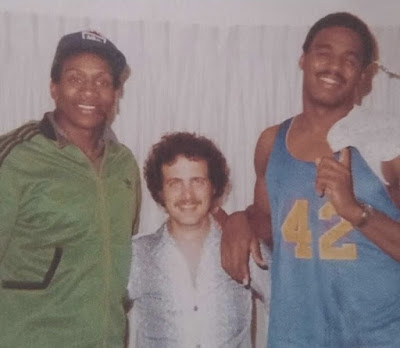
He also lived by example. One of my dad’s best friends from college was a 7’ 1” African American dude named Duke. According to family legend, he was the first person outside my immediate family to hold me after I was born. I fit inside the palm of his hand and he held me at arm’s length like I was a basketball, pointed at me, and asked, “What am I supposed to do with him.” Apparently I was his first encounter with a newborn baby. The stories I was told about Duke are legendary. They helped form my perspectives about race. I always knew that if it I was safe as in infant in the hands of an African American, I would always be safe in the company of my black friends.
Duke is the tallest on the right. My dad is in the middle, in case you were wondering where my short genes came from.

Unfortunately, the black community where I grew up was small. Even today, less than 2% of Marysville’s population is African American. My opportunity to interact with black peers was limited. I also grew up in an era where the white kids at my school were comfortable using the N word as an insult. Despite regional biases, I worked hard to befriend the few black kids I knew. Like Nigel - the buddy who introduced me to the Teenage Mutant Ninja Turtles when I was in third grade. Or Sony who was a star soccer player at my high school and worked at the grocery store with my brother. When I met new black people, I wanted to be friends with them because I felt safer around them than I did around white people.

How? Because black kids didn’t call me names. Black kids didn’t bully me. Black kids didn’t push me or trip me in school hallways. Black kids didn’t pick fights with me or beat me up. There was a reason for their peacefulness but I didn’t understand it back then. All I knew: my African American friends were safe and my bullies were white.

I’m older now. In my adult years I’ve become a student of history and culture. I’ve grown to enjoy seeking out the bits of history left out of school text books. I’ve learned how the darker stories of our past have influenced certain communities of our culture. I’ve also realize how excluding these stories from public education has ill-informed other segments of our population.

George Washington’s abusive treatment of his slaves
The mass suicide of the Igbo in Dunbar Creek
The New Orleans massacre
The abundance of black cowboys in the Wild West
Jim Crow Laws
Redlining
The burning of Black Wall Street and the Tulsa race riots
The Tuskegee experiment
The FBI’s investigations into Martin Luther King Jr
Watts rebellion in LA
Jackson State killings
The Move bombing in Philadelphia
The creation of anti-drug laws
Mandatory minimum sentencing
Mass incarceration

This list barely scratches the surface of how the African diaspora has been mistreated or maligned throughout American history - and often perpetrated by our own government. Many of these segments of our history were unknown to me until I was in my 30s or older.

Then I became a data analyst and began studying statistics. I dug into the numbers around upward mobility, school spending, employment opportunities, wage gaps, wealth accumulation, and uneven policing practices. I looked at how this data affected different racial groups. These numbers tell a story of stacked odds and institutional disadvantages.

Looking at the evidence, the behavior of my childhood black friends made more sense. They were more likely to get into trouble for breaking the same rules as a white kid. And if they both got into trouble for the same thing, the black kid would frequently face harsher consequences than the white kid. I learned about this by analyzing the statistics as an adult. My black friends learned this truth through experience when they were still kids.

My dad did a great job raising Aaron and me to show grace and respect to people of all races. If everyone lived by these values, racial reconciliation wouldn’t be needed. However, reconciliation is still necessary because older generations continue to pass along their racial beliefs raising a new generation of racists. As long as bigotry rears its ugly head, there’s work to be done. As long as discrimination disguises itself in coded language and gets legislated through “reasonable” policies, we still have a struggle to face. And as long as young black men ask how they’re supposed to do their jobs under the hostile pressure of white supremacists, I cannot stay silent.

11.22.2021

There Might be Something Wrong with Me

When I was in elementary school, my parents wanted to know what was wrong with me. Well, maybe that’s a bad way of phrasing it. They didn’t think I was broken, yet they knew I wasn’t normal. So they did what any parents raising kids in the late 80s would do in their situation: they took me to a psychologist to determine why I’m weird. I walked out of the psych office with an ADHD diagnosis and a learning disability that affects the way I read.
in an absence of available pictures of me from 1987, please accept this substitute courtesy of Amblin Entertainment - disclaimer: I was never that cool

One of the tests the doctor asked me to perform was an exercise where I tapped my thumb to each individual fingertip. Starting with the index finder, then the middle, ring, pinky, then reverse to ring/middle/pointer. He explained kids with ADHD struggle with this task while other kids can do it without thinking. I had to concentrate to do complete the test - and even with total focus I still came close to screwing it up a couple times.

These days I can tap thumb to subsequent fingers back and forth at a rapid pace nearly instinctually. It’s a nervous habit for me, a tick I do whenever I’m anxious. If the same shrink who evaluated me over 30 years ago saw me again today, I’m not sure if he’d reaffirm my ADHD diagnosis because I would ace the finger tapping test with unquestionable perfection.

Neurotypical people would describe my compulsive finger taps as fidgeting. For those of us on the autism spectrum, it’s called stimming - or self stimulating. And yes, I said “us” because I have autism too. If my parents wanted to know why I was so quirky, this is why. Perhaps if Reagan era psychology had a better understanding of autism, I would have been given a proper diagnosis. (That’s not to say I don’t have ADHD. ADHD and ASD are frequent co-occurring disorders.)

Stimming helps people with autism regulate themselves. It is great for me in the moment; unfortunately, it is only beneficial while I’m doing it. If I’m unable to reel in my nerves while repetitively thumb tapping my fingers, my nervousness returns as soon as I cease my anxious habit.

I often wonder how different my life would be if the doctors of yesteryear had correctly identified they way my brain worked when my parents took me in to be evaluated. Would I have found adequate support at Pinewood? Would middle school have been more bearable? Would I have been bullied less? Would I have found helpful coping mechanisms in junior high? Would I have fit in with my peers? Would I have been a better student at MPHS? Would I have completed college and garnered a higher paying job? Would I still be who I am now?

My life followed the rough path to here – now grown with the pressures of adult responsibility causing havoc inside my autistic brain. Between parenting three teenagers, a daughter biologically born from a worthless man, and a baby quickly becoming a toddler, my time is often consumed with kids. Then I have a full time dead end job, weekend DJ gigs, a farm requiring daily work, all while trying to maintain this blog and write my first novel. House chores, errands, bills, car repairs, date nights with my wife, maintaining friendships, support groups, doctor appointments, attempting to eat a healthy diet, and manage some semblance of exercise. It frequently feels like it’s all overwhelming.

Much like Elton John, I’m still standing better than I ever did. Fueled by coffee or anxiety, I keep going, looking like a true survivor and feeling like a quirky little hyperactive kid.

Yes, I know I’m weird. It’s not easy being an adult – a thing even more complicated when you’re on the spectrum. I won’t complain though. Autism makes me a better DJ and provides me a unique perspective as a neurodivergent writer. I’m not Ok but it’s OK. There might be something wrong with me but I’m doing fine.

Still, if you see me tapping my fingers, I wouldn’t object to hearing an encouraging remark.

11.29.2020

The Covid Effect

It’s been a year (give or take a couple weeks) since the initial cases of Covid-19 were reported in the city of Wuhan. A little more than a month later, the first documented cases would appear in the US and we were given warnings this would turn into a global pandemic. In the following months, the Coronavirus overwhelmed our culture impacting every American – some through getting sick but most through changes in lifestyle. 

When states begin implementing various orders to wear masks or close non-essential businesses, we thought it would only be a few weeks and life would get back to normal. Spring and summer passed with the pandemic dominating headlines, controlling American life, and a menagerie of state or municipality protections remaining in place. Now in autumn with winter upon us, we’re seeing new government measures issued to try and contain this virus and it seems things will never be the same. 

It’s obvious the shelter in place directives interrupted the way Americans live, work, and play. The three Es of education, employment, and entertainment all drastically altered how they exist and operate. When this pandemic is over (and it will be over eventually) it’s likely some of the changes in our lifestyle will never return to the way it was before. 

But is that a bad thing? 

There is cause for concern, elements of American culture in need of repair. We’re facing an enormous mental health crisis as isolation is not good for the human psyche. There is a generation of school kids falling behind as they’re missing essential learning while schools are scrambling to prevent making the pandemic worse. The masses of newly unemployed workers will need to find new jobs. Many who contracted Covid-19 and recovered have been and will be suffering long term effects of the virus. 

There is also reason for hope. Fewer pollutants have been released into our atmosphere and waterways because less people are travelling. Reduced exhaust and fossil fuel usage means we’re breathing cleaner air; rivers and lakes are clearer. People are paying better attention to basic hygiene – doing the things they should have always been doing like washing their hands frequently, sanitizing high use surfaces, exercising, spending time in the wilderness, and eating at home instead of getting fast food. There’s a greater attention on science and increased appreciation for nurses and doctors. Individuals are investing in acts of kindness and generosity in ways to inspire and renew faith in humanity. 

In this pandemic, as with most things, both the good and the bad inhabit the same space. 

But what about the post Corona life? What lasting affect will Covid have on our culture? With a few different possible vaccines on the horizon, I think it might be beneficial to speculate on what our world will be like after life returns to normal. Or if it ever will be normal again. 

Since business as usual went on lockdown last spring, corporate America adjusted. In the process, we learned to use technology to our advantage, canceling non-essential meetings and moving important group conversations into virtual spaces like Zoom or Google Meet. Employers got creative giving more employees the option to work from home. New remote jobs became available. Those still working on site have been encouraged to stay home when they’re sick. These are changes to American life I hope never return to the way things were before. 

I am optimistic supervisors, managers, directors, and CEOs everywhere have learned some things are better for an email and not every idea is worth a half hour meeting in a conference room. I wish for telecommuting becomes more prevalent as it will make our workforce larger and more diverse. More people working is good for the economy and more people working from home is good for the environment. Side note: I don’t miss my 25 minute commute to the office. I hope more people consider the health of their neighbors, friends, and colleagues before leaving the home with flulike symptoms. As much as we all hate wearing masks, people should keep them – not to wear indefinitely, but for times of illness. Maybe if people wore masks any time they were sick, we would live in a healthier society by limiting the spread of the flu, common cold, and other contagious diseases.
(psst, wear a mask) 


Still, there are things I miss in this Covid world. When this is all over, I hope some elements from our former lives resume as soon as possible. I miss concerts and movie theaters. I miss hanging out in coffee shops. I miss seeing smiles on strangers’ faces. I miss parades and festivals and farmers markets. Of everything we’ve lost, there is experience I miss more than anything else and I hope it isn’t gone forever: the samples at Costco. 

Please bring back the samples as soon as it is safe to do so.

9.03.2020

The Theory of American Everything Part 4: A Personal Lesson

Here is my theory of American everything: we are a nation birthed in rebellion and given the freedom to do, say, and believe anything we want. It’s what makes us the best country in the world, and it makes us the worst ever. 

Why does this matter? Because I share a trait with the common conspiracy theorist: I want my world to make sense. 

In times of unsettling changes, through momentous events or devastating tragedies, in the wake of upheaval, some individuals experience feelings of uncertainty and anxiety. The bigger world seems senseless leading people to feel disconnected and powerless. Then they hear about a grand conspiracy. For reasonable people, the tale is nothing more than a ridiculous or outlandish fantasy with no plausible basis in reality. Yet it is different for the theorist; they cling to it as it makes them feel special. They’re armed with the satisfaction of being one of the select few who have access to a secret truth. Any evidence to disprove their theory is interpreted as proof of the conspiracy. Anyone who doesn’t believe is either a part of the conspiracy or just needs to do their own research. They feel superior because they know something you don't know. The sensation is intoxicating.  

A never before felt sense of belonging leads some people believe the Freemasons are secretly controlling the course of historical events, or think celebrities are members of the Illuminati after rapidly rising from obscurity to superstar popularity. People feel powerful for the first time in their lives believing the moon landing was a hoax or alien aircraft has been hidden in a hangar inside Area 51. 

When events happens with an intensity, magnitude, or suddenness to alter the course of a culture, people look for answers. When a popular president was assassinated during a public parade, theorists rejected the official conclusion of a lone gunman and concocted complex conspiracies of a second or third shooter. When terrorists flew planes into buildings, theorists couldn’t believe a fire was hot enough to weaken the World Trade Center into catastrophic structural failure, so they invented ideas of planted explosive charges and called it an inside job. After every school shooting, theorists ignore the eye witness accounts and live video, declare it a false flag operation, and believe the victims were paid crisis actors. Their theories are absurd and easily debunked, yet it gives them what they want - to make sense of senseless tragedy. They want an explanation for the unexplainable. They want order for the disordered. 

I want the same thing. I want my world to make sense. However, this current era of history is completely illogical. I don’t understand how the nation who collaborated to build the first transcontinental railroad is the same nation who dreamed up pizzagate. I don’t understand how the American mindset which inspired great speeches like the Gettysburg Address also motivated tweets like covfefe. I don’t understand how the voters who claim celebrities shouldn’t share their political opinions elected a celebrity to be president. I don’t understand anyone who can’t see the racism behind statements like “I hit them with neo-Nazi. I hit them with everything. I got the white supremacists, the neo-Nazi. I got them all in there. Let's see. KKK, we have KKK. I got them all." I don’t understand why police officers continue to act like executioners with impunity over and over again. I don’t understand why people are so offended by the phrase “black lives matter.” And I refuse to accept any of this as normal. 

I need clarity because I’m a moderate voter living in the middle of Trump country and need to learn how to show my neighbors grace when they view people like me with disdain. Because I have four inquisitive kids who ask a lot of questions and I need to answer them when they want to know why people act with so much greed and hatred. Because I have a two day old baby and I am filled with grief over the America she has been born into. Because the violence and division in this country is antithetical to the life, liberty, and pursuit of happiness our founders conceived. Because I want to answer those questions which have no easy answers. 

Someday, history books will have to explain the Trump era. 2020 will be discussed in classrooms across America and students of the future will debate the effectiveness of our actions. When they ask why we did what we did, I hope their teachers explain it was because we were birthed in rebellion and given the freedom to believe the most ridiculous ideas imaginable. We were, as Lady Gaga would say, born this way.

5.30.2020

Pondering 40

A year ago, my fortieth birthday arrived and was pleasantly celebrated then ended without much fanfare. However, I crossed this milestone with a measure of optimism. I reached 40 years of life with a wonderful and beautiful standing beside me, supporting me and encouraging me. The two of us had solid plans for our lives and dreams to pursue. I had been losing weight thanks to a healthier diet and more active lifestyle. Our kids were happy, the farm was functioning, and life was good. By the end of the year, we were celebrating New Years Eve with games, drinks, friends, and laughter. 

 Then 2020 began. 

 I know it’s been a tough year for everyone. Weird weather. Earthquakes in the Inland Northwest. Murder hornets. And a pandemic that closed schools and businesses everywhere. Government orders to shelter in place. It’s like the events of the last five months have been scripted by a sadistic 10-year-old member of the Future Anarchists of America. 

 We’ve promised our kids tickets to their first big grown up concert for their sixteenth birthdays. Christian turns sixteen in September so we got tickets to the Hella Mega Tour in Seattle: Green Day, Weezer, and Fall Out Boy. Thanks to the Coronavirus, that tour has been delayed until 2021. 


We had planned and saved and budgeted and planned some more to make a road trip to Cheyenne for Frontier Days in July. This is the first year I’ve planned to take the whole family, and I haven’t been there since I was a teenager. Unfortunately, this is the year it’s canceled. Another casualty of COVID-19.


However, as this year is wild and unprecedented for all Americans, it isn’t the global health crisis that completely derailed the optimism I held last May. I turned 40 in good health and great spirits. This year, things got weird.

In January, we discovered Annie was pregnant. That was a bit of a surprise. Since then, we’ve been hustling to amass all of the necessities of welcoming a newborn to the world, reorganizing the house to fit the eighth member of the family into our small home, and taking measures to protect the baby’s health. All of this during a pandemic making it harder to shop for baby goods and challenging to navigate hospitals for prenatal doctor appointments.


If that wasn’t enough, this is the year my body decided to fall apart. For most of my life, I’ve been healthy. As a kid, I was rarely sick and never missed school due to illness. I reached adulthood healthy and active. As a grown up, my biggest health issue was obesity. Despite being overweight, I didn’t have any other issues. My heart was strong, I had never broken a bone, never endured surgery for any reason, never been hospitalized. My only adult trips to the ER was for a bloody nose that wouldn’t stop bleeding and for chest pains that were diagnosed as a strained muscle. 

My streak of good health ended in 2020. In March, my gut started to hurt with what I thought was constipation. After three days of pain, I drove myself to the ER. They ran labs and took CT scans. Then I was admitted for an extended stay. My diagnosis: acute diverticulitis with perforation. In plain English, my colon was infected and it ruptured, leaving a hole in a place where a hole should not exist. 

When I was discharged, they sent me home with a prescription for a couple different antibiotics, instruction to rest and avoid heavy lifting, a low fiber diet for a couple weeks to be replaced by a high fiber diet, a list of foods to avoid, and hopes that my colon would heal on its own. 

A month later, the stabbing pains returned, worse than before. This time, Annie drove me to the hospital. I was admitted again. The diverticulitis had not healed. The perforation remained, and the infection was worse. In addition to the infected colon, they also discovered an abscess leaning against my bladder. Doctors did a procedure to drain the abscess and scheduled a partial colectomy. When it was time for surgery, plans changed and they gave me an ileostomy instead. They also discovered the infection spread to my appendix so they took that out at the same time. When the operation was complete, my small intestines were disconnected from my large intestines. If you’re familiar of how the body functions after such a procedure, you know what I had attached to my stomach. If you don’t know, you could google it, but I recommend you don’t want to know. 

With protective measures in place at hospitals concerning the pandemic, visitors were not allowed during my second stay at the hospital. This left me lonely and restricted to FaceTime to talk to Annie and the kids. My older daughter struggled with this predicament. More than just missing me, she hated the idea of me being sick and stuck at the hospital. According to her, I was the one who stayed, who was always there. Suddenly, her vision of me was no longer true. I was discharged on her birthday, and the phone call to tell her the news that Sunday morning is probably the best gift I could have given her. And her reaction was priceless.


The Wednesday before my 41st birthday, I returned to the care or surgeons to have an ileostomy takedown – a reversal of the surgery I had four weeks earlier. The doctors reconnected my small and large intestines, and sent me back home to rest and recover. 

My recovery is going well. However, these last few months are not what we imagined they would be. For me to be hospitalized twice while Annie to be pregnant and for all of this to happen during this moment of history seems like a cruel joke. It is also peculiar for my body to suddenly start falling apart after a lifetime of remarkably good health and the progress and changes I’ve made to be healthier. 

2020 in review so far inspires one singular question. What in the name of all that is good and holy is going on? When I pondered what it meant to be 40, this is not what I had in mind.


3.24.2020

Geeks Will Save the World

With a headline like “Geeks Will Save the World,” I know what you’re thinking. It’s all about the social isolation. The geeks and nerds of the world are prepared to isolate because we’ve been doing it for decades. When we were younger, we were developing a very particular set of skills never knowing it would become desperately needed in a future era of crisis.

All of the years you spent alone in your room reading and rereading Harry Potter, Marvel comic books, the collected works of JRR Tolkien and CS Lewis, or the Song of Ice and Fire series? It was preparation for today. The thousands of hours you devoted to playing World of Warcraft, alone in a dark room surviving off Mt Dew and frozen pizzas? That gave you the determination and talent to make it through our current shelter in place orders. Those nights you spent watching horror movies alone because all of your friends were too chicken to join you proves you have the courage to survive a pandemic. The work you committed to research a field of study or perfect a creative craft on your own while everyone else was partying at the beach is the same commitment needed now.

We didn’t know it then but we do now; our nerd powers of self isolation is the one thing that could save our planet and protect vulnerable lives. A word of motivation for all of my geeky friends: we are superheroes.

While all of this is true, it is not the reason I believe geeks will save the world. Life, as volatile and fragile as it may be, is bigger and more enduring than the current pandemic or our personal and political responses to it. Once the orders to shelter in place are lifted, this world will still need nerds and we will continue to rise and meet our noble calling. We’ve been given superpowers, and this week, I met a man who was saved by our nerd powers.

It was a random encounter in a public restroom. I generally loathe conversation in the men’s room. It’s a sacred space and if you really want to talk to me, you can wait until I’ve exited the facilities. However, we were both washing our hands while attempting to maintain a safe social distance when he noticed my t-shirt. It has a spider webbing pattern superimposed over Captain America’s shield with the radioactive spider that bit Peter Parker crawling in the web.


“Spider-Man?” He asked.
“Yup. Spidey and Cap. Mixing the two.”
“Nice,” he said, “Spider-Man is my jam.”
“Cool.”
“If it wasn’t for Spider-Man, I probably would have never learned to read.”
“Oh really?” Despite my aversion to bathroom conversation, he had me interested in his story.
“See, I’m dyslexic. And my dumbass school didn’t teach me anything. I couldn’t read. Didn’t know how until I found Spider-Man comics. I still wasn’t learning at school so I taught myself to read through Spider-Man stories. They literally saved my life.
“That’s awesome,” I said.
“Yeah. And now I’m seeing some of the same signs in my daughter. She’s struggling in school. So I’m like: here...”
“Have a comic book.” I finished his sentence for him.
“Hell yeah. If Spider-Man helped me learn to read, he can help my daughter too.”

Comic books have long been viewed with scorn and disdain. They’ve been blamed as contributing to the delinquency of minors and shaded as a lesser type of literature. However, the vernacular comics use is more complex than most people’s spoken conversations. They employ advanced words comparable to college level communications. Studies into the art form from Boston University and California State University have praised comic books for being a great entry point for people reluctant to read and for helping students improve their reading level and vocabulary.

If you call yourself a nerd, consider this a note of encouragement. Because of writers and artists and perfectly decent geeks like us, my new friend learned to read after public education gave up on him. Our culture has more to contribute to society than our superhuman ability to isolate. We will save the world, even if it’s one dyslexic kid at a time.

11.19.2019

In This Together

High school, sophomore year, health class. The kid who sat next to me wrote the same date on every assignment our teacher handed to us. May 17, 1965. Over and over. Day after day he scribbled his name and that one singular day across the top of his papers. It confused me because my birthday is on May 17, just 14 years further into the future than his repetitive calendar selection.

By mid October, curiosity overwhelmed me so I asked him the purpose for writing that specific date on all of our worksheets. “Because it’s Trent Reznor’s birthday.” He sounded offended that I wasn’t previously aware, but once he provided the answer, it all made sense.

This kid dressed like no one else at our school. He wore ultra-wide leg black JNCO jeans before that brand was popular. It contained more pockets than any human would conceivably ever need and was adorned with an assortment of straps, chains, and enough metal objects to concern a TSA worker. His leather jacket was threadbare and had the NIN logo printed on cloth and safety pinned to the back. Other less memorable patches haphazardly covered the sleeves and the spaces where you might find a name tag. Spiked hair, fingernails painted black, studded collar. He looked like Hot Topic’s first and biggest fan.

His revelation of Trent Reznor’s birthdate connected my brain to the letters affixed between his shoulders: NIN - Nine Inch Nails. Reznor was the lead vocalist and this kid idolized this band. He dressed to show his fandom and memorialized his devotion on every homework assignment. Their song Closer had been released to radio the spring of our freshman year; by the time we started life on the MPHS campus, it was on regular rotation on MTV and KNDD.

At 15, I wasn’t a fan. The vulgar chorus of Closer scandalized the trying-too-hard teenaged version of me who was still entrenched in conservative evangelical culture. It was the music of heathens that good Christian boys shouldn’t listen to. As I got older, my music tastes matured. A few years later, NIN recorded The Perfect Drug and I was intrigued. When they released The Fragile in ‘99, I was impressed. By the time With Teeth came out six years later, I was hooked.

In the middle of this era, the band released a single called We’re In This Together, an aggressive paean to raw determination and a defiant middle finger held up into the face of discouragement, angry and empowering at the same time. It contained the perfect tempo for exercising at the gym, hard hitting and motivating, enough to keep you moving through pain and exhaustion of an intense workout.

Over the years, the song has taken on new meaning for me. This is the sign of a great songwriter, when they can pen words that mean one thing when you’re 20 and something completely different when you’re 40.

This last year hasn’t been an easy one. It started with a car crash and we’ve been on our toes ever since trying to hold it all together. While we have had cause to celebrate, life has a way skewing toward complicated. Over the last couple months, we discovered mold inside bales from a recent hay delivery, had a truck break down in the middle of nowhere stranding us in darkness while waiting on a tow truck, and put down a pair of horses. School has been a challenge as Christian navigates his first year of high school and we’ve struggled to keep Chloe focused. We’re working to save up money to fund Christmas and a destination wedding, then our washing machine quit working and I received some disappointing news from my attorney. In a phrase coined by a younger generation: adulting is hard.

Thankfully, I have an amazing partner walking through this journey with me. We encounter setbacks and we recover. We hit roadblocks and find a detour. She is raw determination in human form. Every time Annie texts me, “It’ll be OK, we got this,” I hear this song playing in my head. As she does her best to ease my fears, my internal karaoke machine begins to sing Trent’s lyrics. “You and me, we're in this together now. None of them can stop us now. We will make it through somehow. You and me, if the world should break in two. Until the very end of me. Until the very end of you. When all our hope is gone we have to hold on.”

We’re In This Together no longer sounds angry or defiant to me. Instead, it sounds like love, the kind of love that is committed through all of the better and worse that life has to offer. It is a love that endures all things. In heathen music good Christian boys shouldn’t listen to, I’ve found the biblical definition of love.

Though industrial beats, distorted guitars, and strained vocals, I hear echoes of devotion. You and me, we’re in this together now. Because of love, it’s patient and kind. None of them can stop us now. It keeps no record of wrongs. We will make it through somehow. It always protects, always trusts, always hopes, always perseveres. Until the very end of me. Until the very end of you. Love never fails.

Whatever challenges the future holds for Annie and me, I know it will be OK. We got this because we’re in this together.